

Reviewed and last updated on October 28, 2026 by Awais Ahmed, Founder & Editor-in-Chief, Urban Scope News.
What Does Fascisterne Mean?
Fascisterne is a Danish word that translates into English as the fascists. It refers to people who support or belong to fascist movements, but it is not the name of one particular political party or organisation. Which group a writer has in mind depends entirely on the historical or political context in which the word appears.
The word is tied to fascism, an authoritarian political ideology that took shape in Europe in the early twentieth century. Fascism is associated with extreme nationalism, concentrated political power, the suppression of opposition and the rejection of democratic government. Its history is closely linked to Benito Mussolini in Italy and Adolf Hitler in Germany.
Understanding fascisterne therefore involves more than translating a Danish word. It also means understanding the movements, events and social conditions that gave fascism its influence across Europe, and knowing how the term differs from the neighbouring words readers tend to confuse it with.
How the Word Fascisterne Is Formed in Danish
Danish often expresses the definite article through an ending attached to the noun instead of a separate word placed in front of it. That is exactly what happens here. The noun fascist refers to one person who supports fascism. Its plural, fascister, means fascists, and adding the definite ending gives fascisterne, meaning the fascists.
A second distinction matters just as much. Fascisterne refers to people, whereas fascisme is the Danish word for the ideology itself. Mixing the two up can change the meaning of a sentence, which is a common problem when Danish historical material is translated into English.
The word also does not automatically point to Danish fascists. A Danish author writing about Italy in the 1920s might use fascisterne for the followers of Mussolini, while another writing about the Second World War might use it for fascist groups elsewhere in Europe. The surrounding text is what identifies the people being described.
| Danish word | English meaning |
|---|---|
| fascist | a supporter of fascism (singular) |
| fascister | fascists |
| fascisterne | the fascists |
| fascisme | fascism, the ideology |
How Did Fascism Begin in Europe?
Modern fascism grew out of the political and economic upheaval that followed the First World War. Many countries faced social unrest, economic hardship and bitter arguments over national identity. Fear of revolution and dissatisfaction with existing institutions gave radical movements an opening.
Italy produced the first major fascist movement. Mussolini founded the Fasci Italiani di Combattimento in 1919 and went on to build the National Fascist Party, which was formally established in 1921. Fascists promised national renewal and a decisive end to instability, presenting authoritarian leadership as an alternative to parliamentary democracy.
In October 1922, fascist supporters staged the March on Rome. Amid the resulting political crisis, King Victor Emmanuel III appointed Mussolini prime minister. Over the following years Mussolini dismantled Italy’s democratic institutions, suppressed opposition and established a dictatorship.
Fascism spread because it paired nationalist appeals with organised mobilisation, propaganda and intimidation. Its leaders portrayed opponents as threats to national unity and argued that individual freedoms should give way to the interests of the state. Historians at the United States Holocaust Memorial Museum describe fascism as an ultranationalist, authoritarian political philosophy that emerged in the early twentieth century and was most successful in Italy and Germany.
The Main Beliefs and Characteristics of Fascism
Fascism took different forms in different countries, yet historical fascist movements shared several traits. The first is ultranationalism, the belief that the nation comes before the rights of the individual and that its strength must be restored or expanded.
A second trait is authoritarian leadership. Fascist movements concentrate power around a leader who claims to embody the will of the nation, and they treat independent institutions, opposition parties and democratic checks on power as obstacles to unity.
Fascist governments also relied on propaganda, censorship and intimidation to control public debate. Opponents were cast as enemies of the nation, and violence was presented as a legitimate way to achieve political goals. Militarism and the glorification of national power played a large part in many of these movements.
Exclusionary nationalism is another defining feature. Fascist movements typically drew a line between people regarded as true members of the national community and groups portrayed as outsiders or threats. Under Nazi rule, these ideas merged with racial persecution, antisemitism and genocide.
For that reason fascism is generally understood as something distinct from ordinary patriotism or a preference for strong government. What sets it apart is hostility to pluralism and democratic freedoms, combined with an insistence on authoritarian national unity.
Fascisterne and Nazi Germany
The story of fascism cannot be told without Nazi Germany. Adolf Hitler became chancellor in January 1933, and within months the Nazi Party had used emergency powers to destroy parliamentary democracy, ban rival parties and build a one-party dictatorship.
Nazism is generally regarded as a form of fascism, but the two terms are not identical in every context. Italian Fascism developed its own traditions, whereas Nazism placed exceptional weight on racial hierarchy, antisemitism, territorial expansion and the persecution and murder of groups it considered undesirable.
The Holocaust resulted in the systematic murder of six million European Jews. Millions of other people, including Roma, disabled people, Soviet prisoners of war and political opponents, were also persecuted or killed by Nazi Germany and its collaborators.
This history is why the word fascisterne carries such weight in twentieth-century European writing. At the same time, accurate history means distinguishing between particular movements, their beliefs and what their members actually did. Not every use of the word refers to the Nazi Party, even though Nazism sits at the centre of the wider history of fascism.
What Was the Role of Fascism in Denmark?
Denmark had its own political movements inspired by fascist and Nazi ideas during the interwar years. The most significant was the Danmarks Nationalsocialistiske Arbejderparti, known as DNSAP. According to Lex, Denmark’s national encyclopaedia, the party was founded on 16 November 1930 by Cay Lembcke and led from 1933 by Frits Clausen. It copied the German Nazi Party in its organisation, symbols and programme, including its racial doctrine and antisemitism.
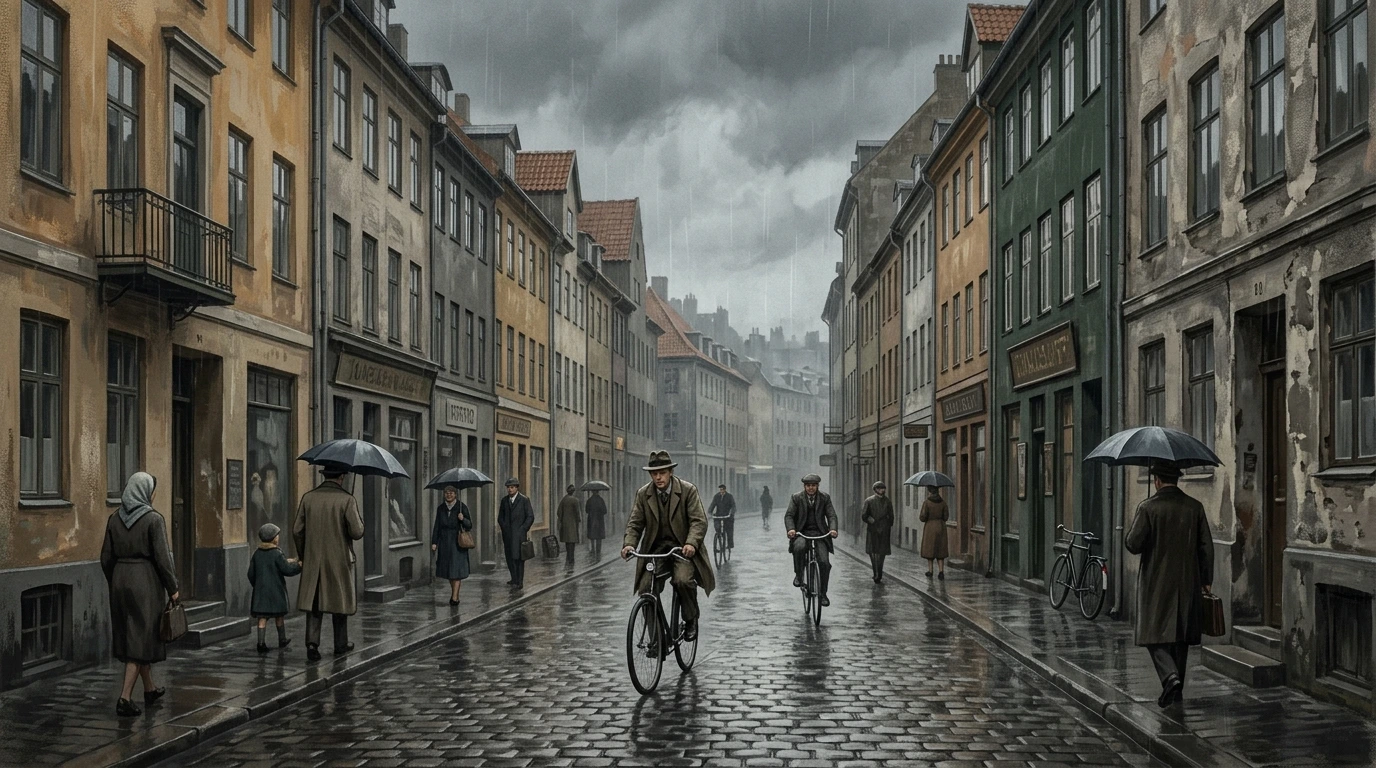
Despite those ambitions, support stayed small. The party had roughly 5,000 members in 1939 and around 21,500 by early 1943. It won three seats in the Folketing in the 1939 election, with 1.8 per cent of the vote, and three seats again in March 1943, with 2.1 per cent. Lex notes that the party mattered mainly because the German authorities could present it as an alternative to the sitting Danish government. Its modest results show that a fascist movement existing in a country is not the same thing as that country’s voters supporting it.
Germany occupied Denmark on 9 April 1940. The Danish government and police reluctantly accepted the occupation, and the Holocaust Encyclopedia notes that German authorities took a relatively restrained approach to Denmark until 1943, allowing the Danish government to keep control of domestic affairs. That changed in the summer of 1943, when strikes and sabotage grew and the Danish government resigned on 29 August rather than accept new German demands. In October 1943, Danish citizens, police and resistance networks helped around 7,200 Jews and some 700 of their non-Jewish relatives escape to neutral Sweden.
Danish history during these years therefore includes Nazi sympathisers and collaborators, ordinary people trying to get through the occupation, and an organised resistance. It cannot be reduced to a simple split between a small party and everyone else.
Is Fascisterne the Same as Nazisterne?
The two Danish words are related but they do not mean the same thing. Fascisterne means the fascists, while nazisterne means the Nazis.
Fascism is the broader political category, associated with authoritarianism, ultranationalism and opposition to democratic pluralism. Nazism refers specifically to the movement led by Adolf Hitler and the system the Nazi Party built in Germany. The two shared authoritarian leadership, political repression, militarism and extreme nationalism, but Nazi ideology had its own racial doctrine and an especially central commitment to antisemitism.
The distinction matters when reading historical accounts or translating Danish texts. A Danish author who writes fascisterne is not necessarily referring only to Nazi Germany. The country, period and organisation under discussion need to be established before drawing that conclusion.
How Is the Word Fascisterne Used Today?
Today fascisterne appears in historical writing, political commentary, translations and discussions about authoritarian movements. In historical contexts it can be a plain description of people tied to fascist organisations or regimes.
In modern political argument, however, the related word fascist is often thrown around as an insult. That kind of usage may have little to do with the historical meaning of fascism, and calling an opponent a fascist does not by itself show that the person belongs to a fascist movement.
A more careful assessment looks at evidence rather than labels. Useful questions include whether a movement rejects democratic competition, seeks to concentrate power in a single leader, accepts or encourages political violence, or systematically attacks the rights of groups it treats as outsiders. Asking those questions helps separate grounded historical analysis from rhetorical accusation.
Why Understanding Fascisterne Matters
Knowing what fascisterne means helps readers interpret Danish-language material and follow the wider history of European politics. The word links a simple point of grammar to an ideology that shaped governments, international relations and the lives of millions.
It also shows why precise language matters. Fascism, Nazism, authoritarianism and nationalism are related ideas, but they are not interchangeable, and each has its own history and consequences. Keeping them apart makes it easier to read historical documents and modern debates carefully, and to avoid misleading translations or sweeping claims about political groups.
Frequently Asked Questions About Fascisterne
What does fascisterne mean in English?
Fascisterne is a Danish word meaning the fascists. It is the definite plural form of fascist and refers to a group of people associated with fascism.
Is fascisterne the name of a political party?
No. It is a general Danish term, not the official name of one party. The group it describes depends on the context of the text in which it appears.
What is the difference between fascisterne and fascisme?
Fascisterne means the fascists and refers to people. Fascisme means fascism and refers to the ideology and the political movement.
Was there a fascist movement in Denmark?
Yes. Denmark had Nazi-inspired political movements, the largest of which was DNSAP, founded in 1930. The party never gained broad support and won three seats in both the 1939 and 1943 elections.
Is fascism the same as Nazism?
No. Nazism is generally considered a form of fascism, but it had distinctive features, particularly its radical racial ideology and antisemitism. The terms are closely related and should be used precisely.
Why is fascisterne relevant to European history?
The word appears in discussions of the fascist movements that shaped European politics in the twentieth century. Understanding it helps readers make sense of accounts of dictatorship, political repression, the Second World War and the consequences of fascist rule.
Conclusion
Fascisterne is the Danish term for the fascists, and its meaning becomes clearer once it is set against the history of fascism in Europe. From Mussolini’s rise in Italy to Nazi Germany and Denmark’s small Nazi-inspired party, the subject shows how authoritarian ideologies developed and affected European societies.
The word can also surface in modern political discussion, but its historical meaning should not be confused with every contemporary use of the label. By paying attention to linguistic context, political background and the available evidence, readers can work out what fascisterne means in any given text and why the term still matters in discussions of European history.
