
Reviewed and last updated on October 9, 2026 by Awais Ahmed, Founder & Editor-in-Chief, Urban Scope News.
Felix O. Adlon is a German-born filmmaker, writer and producer, born in Munich on 26 June 1967. He is the son of the late director Percy Adlon, a great-great-grandson of the man who founded Berlin’s Hotel Adlon, and the former husband of actress Pamela Adlon. They have three daughters, including the actresses Gideon Adlon and Odessa A’zion. Many people first come across his name through Pamela, but his own story, from film sets to a courtroom battle over a family name, is more interesting than that.
A Munich childhood spent around film sets
Felix grew up in a household that made films for a living. His parents, Percy and Eleonore Adlon, were a filmmaking couple who ran their own production company, and by his teens he was already helping out on their productions in small roles. At around twenty he moved to the United States to study film and photography at Ithaca College in New York. His graduation film, Till Death Do You Part, won the school’s award for best final project in 1991.
Growing up in the shadow of Bagdad Cafe

To understand Felix’s background, it helps to know how his father became famous. Percy Adlon had been working for years in German television, making around 150 documentaries, and his first fiction feature, Céleste, reached the Cannes Film Festival in 1981. He was linked to the New German Cinema movement. Then one film changed everything.
In 1985, Percy and Eleonore were driving along Route 66 in California when they spotted a town called Bagdad on the map and decided to visit. That detour inspired Bagdad Cafe, released in 1987 in Germany under the title Out of Rosenheim. It was Percy’s first English-language production. The story follows a German tourist, played by Marianne Sägebrecht, who ends up at a run-down motel and café in the Mojave Desert, run by a tired owner played by CCH Pounder. Jack Palance appears as a former Hollywood set painter living nearby.
The film opened in limited release in the United States in April 1988. It became a lasting favourite, helped by Bob Telson’s song “Calling You”. The Japanese director Akira Kurosawa later named it among his favourite films, and it led to a CBS television series that ran from 1990 to 1991. Percy followed it with Rosalie Goes Shopping, which also screened at Cannes, in 1989.
For Felix, this was the family business in the making. By 1989 his parents had also settled in California, and in 1996 the family founded Leora Films there. He had already worked on his father’s projects as a writer, and the company later produced his own directing debut.
Early work with his parents
His first credits came in the early 1990s. In 1991 he co-wrote Salmonberries, an award-winning drama directed by his father and produced by his mother. He later co-wrote Younger and Younger, which starred Donald Sutherland, and took an associate producer credit on it.
In 1996 he took the lead in The Glamorous World of the Adlon Hotel, a docudrama about his own family’s hotel, for which his father won a Bavarian Television Award. The same year the family founded Leora Films, with Felix as senior vice president. It was an early sign that the hotel’s story would keep running through his career.
Directing Eat Your Heart Out
Felix made his debut as a feature film director with Eat Your Heart Out in 1997. It is a romantic comedy about a young chef in Los Angeles who is turned into a television star and risks losing the person he loves. His parents produced it through Leora Films, and Pamela Adlon appeared in it. It reached German cinemas in 2000 but made little impression on critics or audiences, according to Germany’s national film portal.
Away from the camera, he became managing director of the family’s Munich company, pelemele Film, in 2006, and co-president of Leora Films in 2007.
Co-directing Mahler on the Couch
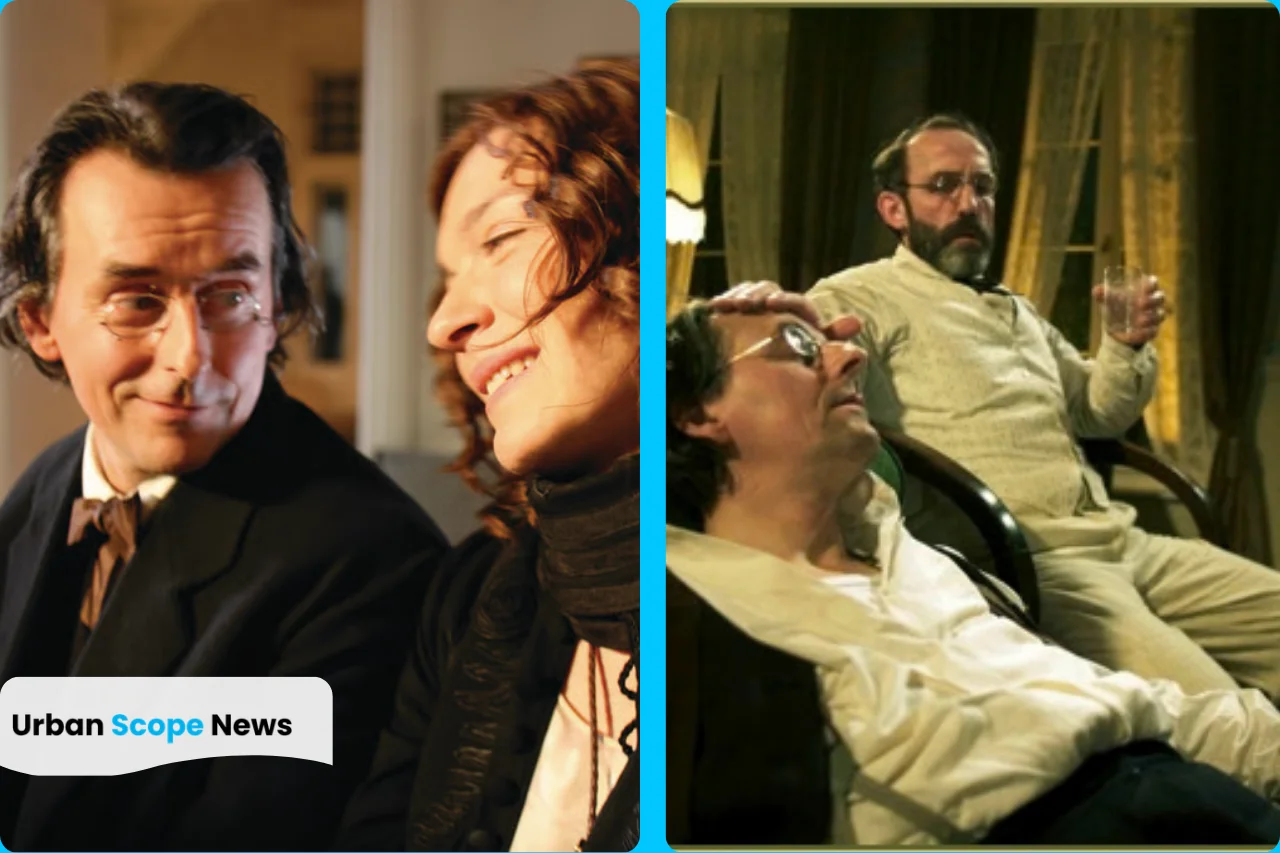
His best-known film as a director came in 2010, when he and his father co-directed Mahler on the Couch. The drama follows the composer Gustav Mahler and the strains in his marriage to Alma against the backdrop of Viennese society around 1910. It was a German-Austrian production and it was Percy Adlon’s last film. For Felix, it was a return to directing after more than a decade, and a chance to work alongside his father on a project they had both shaped.
His credits, training and production roles are all listed in the profile held by Germany’s national film portal.
Felix O. Adlon’s marriage to Pamela Adlon and their daughters
Felix married Pamela Adlon in 1996. They divorced in 2010, and he later moved back to Europe. Recent German press reports say he now lives in Austria. The couple have three daughters, Gideon, Odessa and Valentine, who is known as Rocky.
Gideon and Odessa have both built acting careers, with Odessa working under the name A’zion. Rocky has kept a much lower profile. Odessa has spoken about keeping parts of her family life private in an interview covered by People. Nothing about the reasons for the divorce has been made public, so it is best left there.
The Hotel Adlon story behind the family name
The name Adlon carries more weight in Germany than almost any hotel brand. Lorenz Adlon opened his grand hotel in Berlin on 24 October 1907, close to the Brandenburg Gate, and it quickly became the address for wealthy travellers. After the First World War, the hotel’s motto, Adlon oblige, summed up the standard the family set for itself. In the 1920s it was a social hub for Berlin’s elite. According to one account, the hotel was also where Marlene Dietrich’s casting in The Blue Angel was arranged.
The Nazi years were the most difficult chapter. Hermann Göring gave speeches at the hotel, and the foreign minister Joachim von Ribbentrop moved his regular press briefings for foreign journalists there. Louis Adlon, Lorenz’s son, ran the hotel at the time. His wife Hedda later wrote that refusing the regime would have been almost suicidal for them. Records cited in German press reports say the couple belonged to the Nazi party from 1941, and that membership is a central point in the family’s legal case.
The hotel came through the war with little structural damage, but a fire in 1945 destroyed all but one wing, and the ruins were demolished in 1984 in East Berlin. After reunification, the site was rebuilt to the original plans, and the new Hotel Adlon opened on Pariser Platz on 23 August 1997. The new hotel was built by the Jagdfeld property group and is run by Kempinski, without the Adlon family. That gap between a famous family and a famous brand is exactly what Felix has been trying to close.
Felix’s claim and what he wants
Felix has become the family’s public voice on the subject. He represents the heirs in a long-running claim to recover the property, which the authorities first rejected in the 1990s, partly because the hotel was seized under Soviet occupation rules. A Berlin administrative court later dismissed the heirs’ attempt to reopen that earlier process, and Felix said he would pursue further legal steps, up to Germany’s constitutional court if needed. The ruling was reported as not yet final at the time.
What drives him, by his own account, is reputation as much as property. He has argued that Hedda and Louis Adlon were not Nazis and joined the party under pressure, to protect the hotel. In August 2026 he told the Süddeutsche Zeitung, in an interview reported by the news agency dpa, that he would love to buy back the hotel and his own name, adding that he cannot sell a bar of soap with it. He was surprised by the owner’s plan to sell, and he praised the way Kempinski runs the hotel and the care taken in rebuilding it. The dpa report is in German.
Writing the family story
Felix has also told the story in print. In September 2021 he published Adlon, a family history written with Kerstin Kropac. It follows the hotel and its dynasty from the end of the imperial era through to the fall of the Berlin Wall and beyond, and it grew out of his own search into his family’s past.
Where Felix O. Adlon stands today
At 59, Felix O. Adlon remains a quiet figure compared with the famous names around him. His father died in March 2024, his former wife and daughters are the more visible faces, and the hotel that carries his name is run by others. Yet his work as a filmmaker, and his insistence on how the Adlon story should be told, keep him at the centre of a very German piece of cultural history.