
Reviewed and last updated on October 20, 2026 by Awais Ahmed, Founder & Editor-in-Chief, Urban Scope News.
Matarecycler is the name of a website, matarecycler.com, that publishes general articles about recycling and sustainability. The same name has also appeared in articles on other websites that describe it as an AI-powered recycling system with sensors and automated sorting. As of 20 October 2026, the site’s own About page describes an educational platform, and none of the pages reviewed for this article identified a manufacturer, a technical specification or a named installation for a matarecycler machine. That does not prove the technology does not exist, but it does mean the bolder claims should be treated as unconfirmed.
For readers, the distinction is worth understanding before relying on anything written about it. Recycling technology is a real and growing field, and local recycling rules genuinely matter to households and businesses. A name that appears on many websites is not the same thing as a documented product, and this guide separates what can be checked from what has simply been repeated.
What is matarecycler?
The most dependable answer comes from the primary website. Matarecycler.com describes itself in its About page as a platform dedicated to promoting responsible recycling, sustainable practices and environmental awareness, and says its content is intended for educational and informational purposes. It lists activities such as publishing articles on recycling processes, guides on reducing and reusing waste, and general sustainability resources. Nothing in that description presents the site as a manufacturer, a software developer or an operator of recycling facilities.
The homepage adds a slightly different flavour. It frames matarecycler as an idea about resource optimisation and digital responsibility, and suggests that recycling is no longer limited to physical materials but also extends to digital assets and operational workflows. That is a broad, conceptual description rather than a product description, and it leaves room for the term to mean different things to different readers.
Two details are worth noting for anyone assessing the site’s identity. The footer copyright notice on the homepage does not name an owner, and the posts listed on the homepage are credited to an email address rather than a named author. Neither detail is evidence of wrongdoing, since many small publishing sites are run this way, but they explain why it is difficult to say who stands behind the name.
What else does the matarecycler website publish?
A recycling-focused name might lead a reader to expect recycling-focused content throughout, but the homepage lists a mix of subjects. At the time of checking, recent posts covered topics such as short-term loans, a video game, AI video tools, online learning platforms and a property lawsuit, alongside the sustainability material. The latest dated post visible on the homepage was from June 2026.
This matters because it shows that the site operates as a general-interest publication in which recycling is one subject among many, rather than as the website of a dedicated recycling technology business. Readers who arrive expecting a product page, pricing or a way to buy equipment will not find one on the pages reviewed.
Why do some articles describe matarecycler as an AI recycling machine?
The most detailed technical description appears in an article published on 10 April 2026 in the environment section of The Business Standard, under the byline of its Special Content Desk. It describes matarecycler as a cutting-edge system that uses artificial intelligence and sensors to sort plastics, metals, paper, glass and electronics, and it cites figures such as sorting accuracy above 95 per cent and a 40 per cent rise in recyclable material collected in one neighbourhood.
Those figures cannot be verified from the article itself, because it does not name the neighbourhood, the operator, the equipment or any independent test. The same article also contains an inconsistency. Its closing FAQ describes matarecycler as an app-based recycling platform that sends reminders and sorting instructions and coordinates with local collection schedules, which is a very different thing from a machine that physically sorts waste on a conveyor. A product described as both a robotic sorting system and a phone app, without a named developer, is a good reason to hold back before accepting either description.
It is also worth remembering that repetition is not corroboration. If several websites carry similar wording about the same unverified claim, that is still one claim, repeated. Genuine confirmation would come from a named manufacturer, product documentation, a customer or municipality willing to be identified, or a test with a published method.
What real AI recycling technology looks like
None of this means that AI-assisted recycling is a myth. Smart sorting is an established area of development in which cameras, sensors and machine learning software are used to identify materials and direct them into separate streams. The details vary widely between systems, and results depend on the quality of the equipment, the condition of the incoming waste and how the facility is run. The same combination of sensors and software is also behind sensor-led building systems that adjust temperature and air quality automatically, which shows how widely this approach is now used beyond waste.
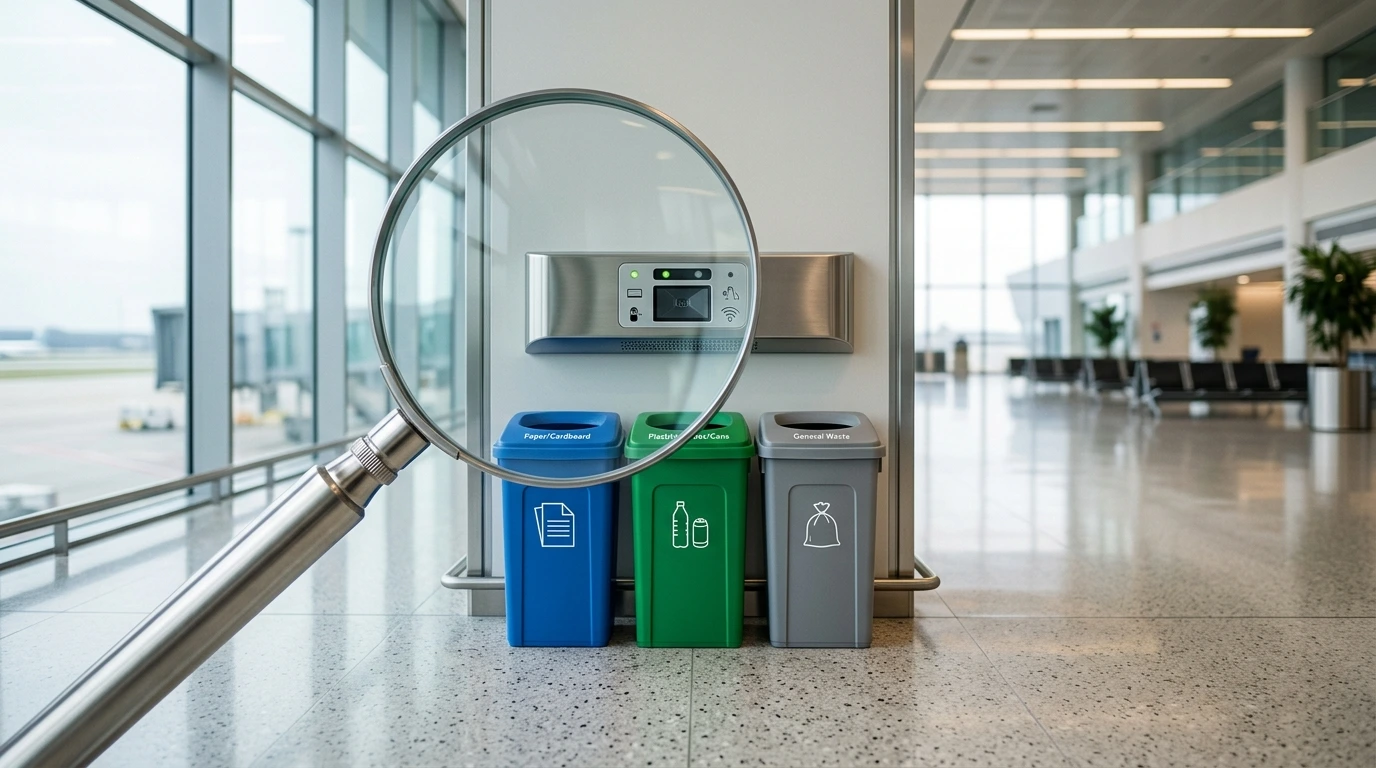
A documented example is TrashBot, a smart recycling bin developed by CleanRobotics. The Environmental Protection Agency supported the development of TrashBot through its Small Business Innovation Research programme, and describes a unit that uses machine learning to identify what has been dropped into it and how contaminated the item is, then sorts it into recycling, compost or landfill streams. It is designed for busy public places such as airports, hospitals and event venues. The example is useful mainly as a benchmark: a real product of this kind has an identifiable company, a documented purpose and a public record, which is exactly what is missing for the machine some articles attribute to matarecycler.
How readers can judge claims about matarecycler and similar technology

The most practical habit is to ask what evidence sits behind each specific claim. A statement that a system reaches a certain accuracy or cuts landfill costs by a certain amount should point to who measured it, where, over what period and how. If the source is a promotional or sponsored-style article with no named reporter and no method, the number is better treated as an assertion than as a result.
There is also a regulatory angle that helps frame how environmental claims should be made. The Federal Trade Commission’s Green Guides advise businesses against broad, unqualified statements such as eco-friendly and ask that general claims be qualified with specific, supportable benefits. The FTC’s plain-language summary of the Green Guides also says recyclable claims should be qualified when recycling facilities are not available to at least 60 per cent of the consumers or communities where a product is sold. These guidelines are aimed at marketers rather than publishers, but they offer a sensible yardstick for reading any sustainability claim, including those made about matarecycler.
For everyday recycling questions, the better source is usually closer to home. What your household can recycle depends on your local collection service, and the rules differ from one community to the next. The EPA’s consumer pages on reducing, reusing and recycling explain the basics and cover items such as used electronics and batteries, while your city or county waste authority can confirm what is actually accepted at the kerb.
Finally, treat any request for money, personal details or account credentials in connection with an unverified brand with caution. Nothing on the pages reviewed for this article asked visitors for payment, but the general principle applies to any online name whose owner cannot be identified.
Is matarecycler legitimate?
The honest answer depends on which claim is being tested. As a website publishing recycling and general-interest articles, matarecycler.com clearly exists, and its About page describes its purpose in plain terms. As a commercial AI recycling technology, matarecycler is not established by anything reviewed here, because there is no identified manufacturer, no technical documentation and no independently confirmed deployment.
It would be equally unsupported to call it a scam. Nothing reviewed for this article shows that anyone has been defrauded, and no enforcement action or official warning was identified. The fairest description is that matarecycler has low verifiability: a real website, a loosely defined concept, and a set of third-party claims that nobody has substantiated. Readers who want to learn about recycling can use it as one informational source among many, while anyone considering a purchase, partnership or investment should insist on documents they can check independently.
Frequently asked questions about matarecycler
What does matarecycler mean?
Matarecycler is the name used by the website matarecycler.com, which publishes articles about recycling and sustainability. Other websites use the same name to describe a smart recycling system, but those descriptions are not backed by a named manufacturer or product documentation, so the term currently has no single verified commercial meaning.
Is matarecycler an AI-powered recycling machine?
Some articles describe it that way, but this has not been confirmed. The primary website describes itself as an educational platform, and the most detailed technical article found also describes an app-based service in its FAQ, which does not match the idea of a physical sorting machine. Until a manufacturer, specification or confirmed installation is published, the AI machine claim should be regarded as unverified.
Is matarecycler a company or a website?
The evidence supports a website. The About page describes a platform that shares recycling information, and the pages reviewed do not name a company, founder or business address. Whether a registered business operates behind the site could not be established from those pages.
Can matarecycler improve recycling rates or save money?
No verified results can be attributed to matarecycler. Figures such as high sorting accuracy or reduced landfill costs appear in third-party articles without a named site, method or independent test. Smart sorting technology in general can help some facilities, but the outcome depends on the specific equipment and how it is used.
Where can I find reliable recycling information?
Start with your local city or county waste and recycling authority, since accepted materials vary by area. For national guidance, the Environmental Protection Agency publishes consumer information on reducing, reusing and recycling, including advice on electronics and batteries.
Conclusion
Matarecycler is best understood as a website name rather than a proven product. The site itself presents recycling information for educational purposes, while the claims of an AI-powered sorting system come from third-party articles that do not provide the evidence needed to confirm them. Real smart recycling technology exists and is being developed, but its existence does not transfer to a name that has not been shown to belong to a documented machine.
The sensible approach is to read the available material with care, look for the original source behind any statistic, and rely on official guidance such as the EPA and your local recycling authority for decisions that affect your household or business. If a manufacturer, test results or a confirmed customer ever come forward for matarecycler, the picture would change, and this guide should be updated accordingly.

