Reviewed and last updated on August 12, 2026 by Awais Ahmed, Founder & Editor-in-Chief, Urban Scope News.
A partial solar eclipse is visible across the UK this evening, Wednesday 12 August 2026, with the Moon covering up to 96% of the Sun in the southwest of England. The eclipse begins shortly after 6pm BST, peaks between roughly 7:05pm and 7:13pm BST, and ends by around 8pm BST, making it the deepest solar eclipse seen from Britain this century.
When is the eclipse today?
The eclipse unfolds in three stages, and exact timings shift slightly depending on where you are in the UK.
- First contact (eclipse begins): around 6:00pm to 6:17pm BST. In London, first contact falls at approximately 6:17pm.
- Maximum eclipse: between 7:05pm and 7:13pm BST for most of the UK. London reaches maximum at around 7:13pm.
- Eclipse ends: around 8:00pm to 8:06pm BST.
From start to finish, the partial eclipse lasts around 1 hour 50 minutes. Because it happens so close to sunset, the Sun will already be low in the western sky for the whole event, so timings and visibility depend heavily on your local horizon rather than just the clock.
What time is the eclipse in London specifically?
For London, expect first contact at roughly 6:17pm BST, maximum eclipse at around 7:13pm BST, and the eclipse ending by about 8:06pm BST. At its peak, the Sun will only be about 10 degrees above the horizon, so a clear, unobstructed view to the west or west-northwest is essential. Tall buildings, trees or hills will block the view even on an otherwise clear evening.
Is there an eclipse today, and how much of the Sun will be covered?
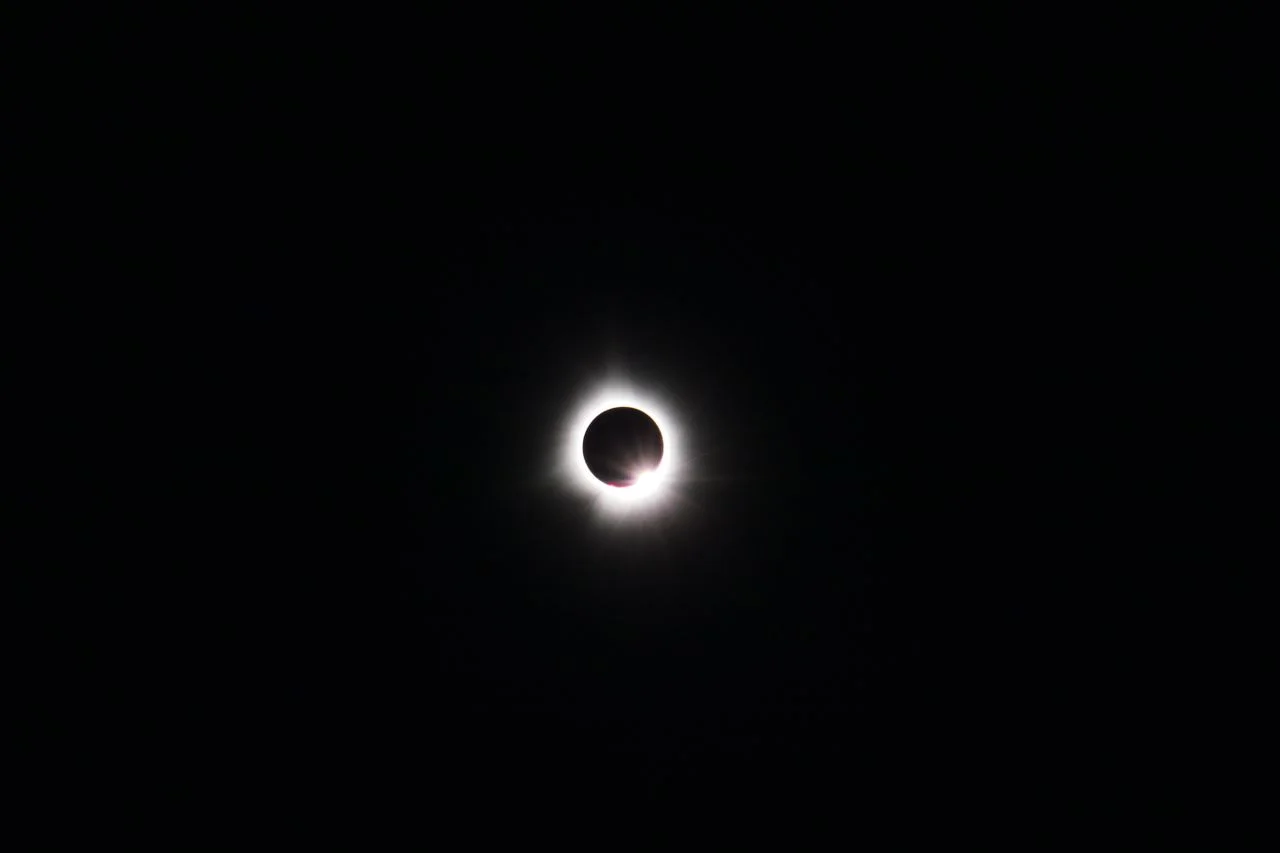
Yes. Today’s event is a partial solar eclipse across the whole of the UK and Ireland, part of a larger total solar eclipse whose path of totality passes over Greenland, Iceland and northern Spain, where the Moon fully blocks the Sun for around two minutes. In the UK, coverage ranges from about 90% in the northeast to as much as 96% in Cornwall and the Isles of Scilly, since the southwest sits closest to the path of totality. This is widely described as the best solar eclipse visible from the UK so far this century.
How to watch the eclipse safely
At no point during a partial eclipse is it safe to look directly at the Sun with the naked eye, sunglasses or an unfiltered camera or phone screen. The safest ways to view it are:
- Certified eclipse glasses meeting the ISO 12312-2 safety standard, worn throughout the entire partial eclipse.
- A solar filter fitted to binoculars, telescopes or camera lenses, again for the whole event.
- Indirect projection methods, such as a pinhole viewer, which let you watch a projected image of the Sun rather than the Sun itself.
Check your glasses or filters for scratches, punctures or wear before use, and never remove them while any part of the Sun remains uncovered. Since this eclipse never reaches totality in the UK, protective eyewear must stay on for the entire 1 hour 50 minutes.
Can you look at the solar eclipse with sunglasses?
No. Ordinary sunglasses, including polarised ones, do not block anywhere near enough sunlight or harmful radiation to protect your eyes. Only glasses certified to the ISO 12312-2 standard are safe for direct solar viewing. Looking at the Sun through standard sunglasses can cause serious and permanent eye damage within seconds.
How to make a pinhole viewer at home
A pinhole projector is a simple, free way to watch the eclipse without ever looking towards the Sun.
- Take two sheets of stiff card or paper plates.
- Use a pin or needle to poke a small, clean hole in the centre of one sheet.
- Stand with your back to the Sun.
- Hold the pinhole sheet up so sunlight passes through the hole, and hold the second sheet a short distance behind it to act as a screen.
- Adjust the distance between the two sheets until you see a small, clear projected image of the Sun’s crescent shape on the second sheet.
You can also use a kitchen colander, a straw hat or even gaps between tree leaves to see multiple small crescent projections on the ground during the eclipse. A cardboard box pinhole camera works the same way and gives a slightly steadier, shaded image if you cut a viewing window into one side of the box.
How long does the eclipse last?
The full partial eclipse, from first contact to the Moon moving completely away from the Sun, lasts around 1 hour and 50 minutes across the UK and Ireland. Within the narrow path of totality in Greenland, Iceland and northern Spain, the total phase itself, when the Sun is fully blocked, lasts only around two minutes at its longest.
Best places to watch the eclipse
Because the Sun will be so low in the sky, location matters more than usual. Look for:
- An elevated position, or a coastal or open site with a clear, unobstructed view to the west or west-northwest.
- Somewhere free of trees, buildings or hills along that horizon.
- A spot checked the evening before at the same time, to confirm the Sun will actually be visible from there.
Cornwall, the Isles of Scilly and the wider southwest of England will see the deepest coverage in the UK, with the Scilly Isles reaching around 96% just before sunset.
When is the next solar eclipse after this one?
The next solar eclipse worldwide will be an annular eclipse on 6 February 2027, visible across parts of Africa and South America. The next total solar eclipse will follow on 2 August 2027, crossing North Africa and the Middle East, with totality lasting as long as six minutes and 23 seconds, nearly three times longer than today’s event.
For the UK specifically, nothing this deep will be seen again for decades. The next notably deep partial eclipse from Britain is not expected until 2081, and the next true total solar eclipse visible from the UK is not due until 2090.
How often does a solar eclipse happen?
Partial solar eclipses occur somewhere on Earth every few months, but a total solar eclipse, where the Moon fully blocks the Sun from a given location, happens roughly every 18 months on average. Whether any particular eclipse is visible from where you live depends entirely on the alignment of the Earth, Moon and Sun and your position relative to the narrow path of totality.
This article will be updated if official timings change ahead of the eclipse.