Reviewed and last updated on July 29, 2026 by Awais Ahmed, Founder & Editor-in-Chief, Urban Scope News.
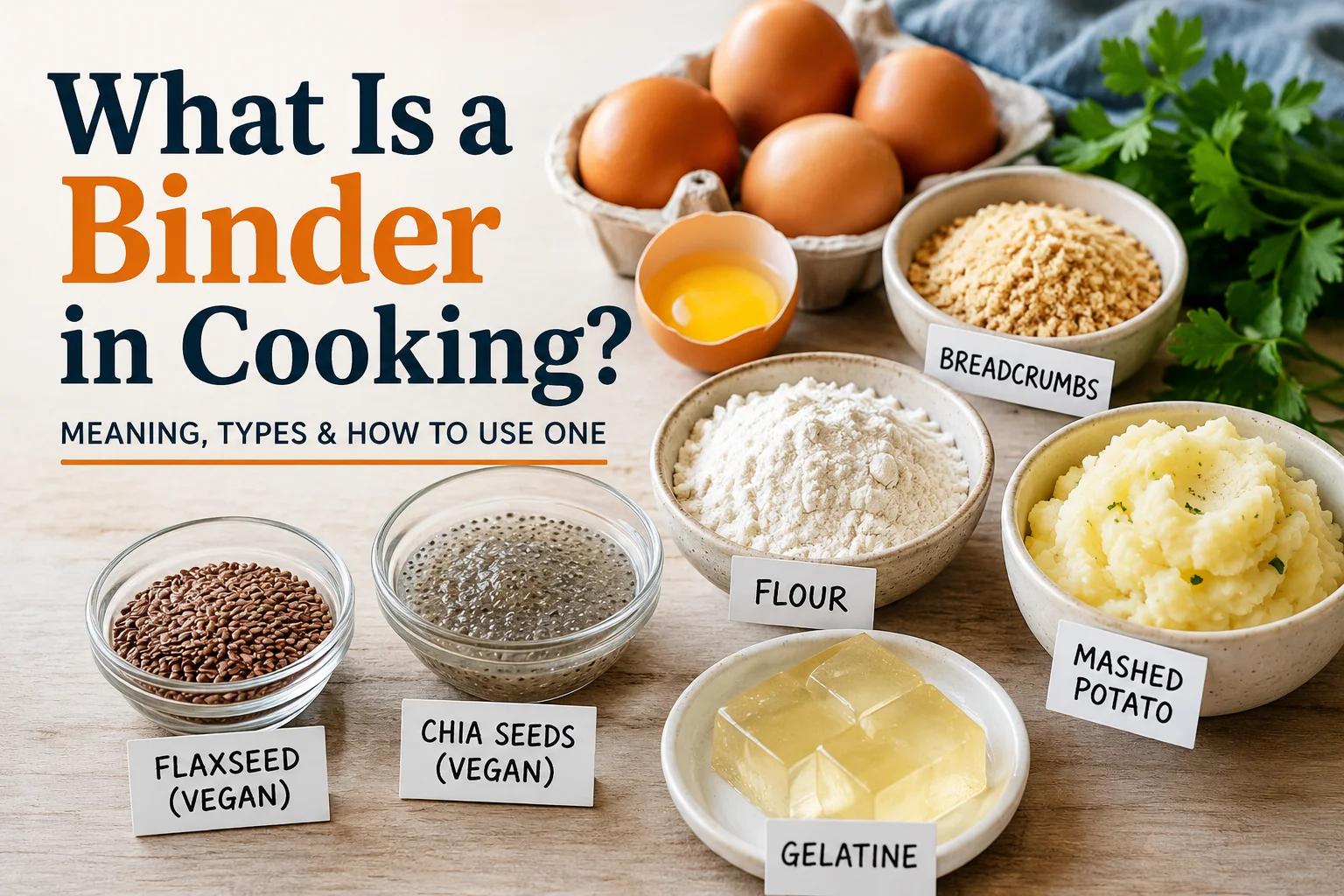
A binder in cooking is an ingredient that helps separate ingredients stick together and hold their shape. Eggs, breadcrumbs, mashed potato and ground flaxseed are common examples. They are often used in meatballs, fishcakes, vegetable patties, croquettes and baked goods.
A binder is not always the same as a thickener or an emulsifier. A binder holds a mixture together, a thickener makes a liquid less runny, and an emulsifier helps ingredients such as oil and water remain mixed. Some ingredients can perform more than one role, depending on how they are used.
This guide explains what a binder does, how common binding agents work and how to choose the right one for your recipe.
What Does a Binder Do in a Recipe?
A binder gives a loose mixture enough cohesion to be shaped, cooked, sliced or served without falling apart. It may work by setting when heated, absorbing excess moisture, forming a sticky gel or creating an adhesive layer between food and a coating.
For example, egg proteins firm as they cook and help hold a meatloaf together. Breadcrumbs absorb liquid and give meatballs or fishcakes more body. Ground flaxseed forms a gel when mixed with water, making it useful in some vegan bakes and vegetable patties.
Not every recipe needs an added binder. A properly formed beef burger can often hold together through the natural proteins in the meat. Adding egg and breadcrumbs may give it a denser, meatloaf-like texture.
Main Types of Binding Agents
Protein Based Binders
Egg is the best-known protein binder. When heated, its proteins unfold and join into a network that traps moisture and supports the surrounding ingredients. This helps set foods such as quiches, savoury bakes, meatloaf and cakes.
Meat proteins can also bind minced mixtures when they are mixed. However, too much mixing can make the finished food firm or rubbery.
Starch and Fibre Based Binders
Breadcrumbs, flour, oats and mashed potato absorb moisture and add structure. They are useful when a mixture is soft, wet or difficult to shape.
In meatballs and meatloaf, bread mixed with liquid can form a panade. This helps retain moisture and can create a more tender texture rather than merely making the mixture firmer.
Gel Forming Binders
Ground flaxseed and chia seeds absorb water and develop a sticky gel. Gelatine behaves differently: it dissolves in warm liquid and forms a gel as it cools. It is best described as a gelling agent, although it can provide structure in terrines and chilled desserts.
Common Binders and When to Use Them
Eggs
Eggs work well in meatloaf, meatballs, fishcakes, fritters, savoury bakes and many baked goods. Both the white and yolk contain proteins that contribute to setting, while the yolk also contains natural emulsifiers.
One egg for roughly 450 to 500g of mixture is common in some meatball and meatloaf recipes, but it is not a universal rule. Too much egg can make a mixture wet before cooking and overly firm once set.
Breadcrumbs
Breadcrumbs absorb moisture and give loose mixtures more body. They are commonly used in meatballs, fishcakes, croquettes and vegetable patties.
Fresh and dry breadcrumbs absorb liquid differently, so their amounts are not always interchangeable. Add them gradually because too many can make food dry or heavy.
Plain Flour and Cornflour
Plain flour can help bind fritters, patties and some fillings. Cornflour may also help ingredients cling together in coatings or certain mixtures.
In sauces, soups and gravies, however, flour and cornflour are mainly thickeners. Cornflour has greater thickening power than plain flour, so less is normally needed. Mix it with a little cold liquid before adding it to a hot sauce to reduce lumping.
In UK recipes, cornflour usually means the fine white starch called cornstarch in the United States.
Mashed Potato
Mashed potato is useful in fishcakes, croquettes and vegetable patties. Its starch absorbs moisture, while its texture adds bulk and makes mixtures easier to shape.
Relatively dry mash works best. Mash containing a lot of milk or butter may make the mixture too soft.
Ground Flaxseed and Chia Seeds
A common flax substitute for one egg is one tablespoon of ground flaxseed mixed with three tablespoons of water. Leave it for five to ten minutes until gel-like. A similar chia mixture may also work.
These substitutes suit foods such as cookies, muffins, pancakes and vegetable patties. They help bind and add moisture, but they do not provide exactly the same structure or lift as egg. They are unsuitable for recipes that depend heavily on eggs, such as meringues or soufflés.
Gelatine
Gelatine is derived from animal collagen. It dissolves in warm liquid and sets as the mixture cools. It is used in panna cotta, jellies, mousses and terrines.
Gelatine is not vegetarian or vegan. Agar may work in some plant-based recipes, but it sets differently and is not a direct one-for-one replacement.
Aquafaba and Fruit Purées
Aquafaba, the liquid from cooked chickpeas, can help bind and add moisture in some recipes. Mashed banana or apple purée may also bind soft baked goods, but they add flavour, sweetness and moisture, so they are not neutral egg substitutes.
Choosing the Right Binder for Your Dish
| Dish | Suitable binder | Practical note |
|---|---|---|
| Meatballs or meatloaf | Egg, breadcrumbs or a panade | Follow the recipe and avoid too much egg |
| Beef burgers | Often no added binder | Chilling and careful handling may be enough |
| Vegetable burgers | Egg, flax gel, oats, flour or mashed potato | Squeeze excess water from vegetables first |
| Fishcakes and croquettes | Mashed potato, egg or breadcrumbs | Chill before cooking for a firmer shape |
| Fritters | Egg and a little flour | Drain wet ingredients before mixing |
| Vegan cookies or muffins | Flax gel, chia gel or fruit purée | Best for soft, fairly dense bakes |
| Terrines and chilled desserts | Gelatine or another gelling agent | The mixture normally sets as it cools |
| Sauces and gravies | Flour or cornflour | These act mainly as thickeners |
Binder vs Thickener vs Emulsifier
These terms describe different functions:
- Binder: Holds solid or semi-solid ingredients together, as in a fishcake or vegetable patty.
- Thickener: Makes a liquid more viscous, as flour or cornflour does in gravy.
- Emulsifier: Helps normally separate liquids, such as oil and water, remain mixed. Egg yolk performs this role in mayonnaise and hollandaise.
An ingredient can have more than one function. Egg may bind a meatloaf, thicken a custard and help emulsify a sauce.
Cream and butter should not be listed as general-purpose binders. They can enrich or affect the stability of some sauces, but they are not direct substitutes for egg, breadcrumbs or another structural binder.
How to Stop a Mixture Falling Apart
Before adding more binder, check whether the mixture contains too much liquid. This is common with grated courgette, mushrooms and spinach.
Drain or squeeze out excess moisture, add dry binder one tablespoon at a time and chill shaped patties or fishcakes before cooking. A small test piece can show whether the mixture needs adjusting. Allow the first side to set before turning it.
Adding another egg is not always the best solution. It can make the uncooked mixture wetter and the cooked texture firmer.
Frequently Asked Questions
What is the best binder for cooking?
There is no single best option. Egg and breadcrumbs suit many meat dishes, mashed potato works well in fishcakes, and flax or chia gel can suit some vegan recipes.
What is a good egg substitute for binding?
Ground flaxseed mixed with water works in many soft bakes and vegetable patties. Chia gel, aquafaba, mashed potato and commercial egg replacers may also work, depending on the recipe.
Can flour be used instead of egg?
Flour can bind some fritters, patties and fillings, but it is not a direct one-for-one egg replacement. Too much can make food pasty or dense.
Why are my meatballs falling apart?
The mixture may be too wet, lack enough structural support or need chilling. It may also have been turned before the first side had time to set.
Is cornflour a binder or a thickener?
Cornflour can help bind some coatings or mixtures, but its main culinary role is thickening sauces, soups, gravies and fillings.