Reviewed and last updated on August 30, 2026 by Awais Ahmed, Founder & Editor-in-Chief, Urban Scope News.
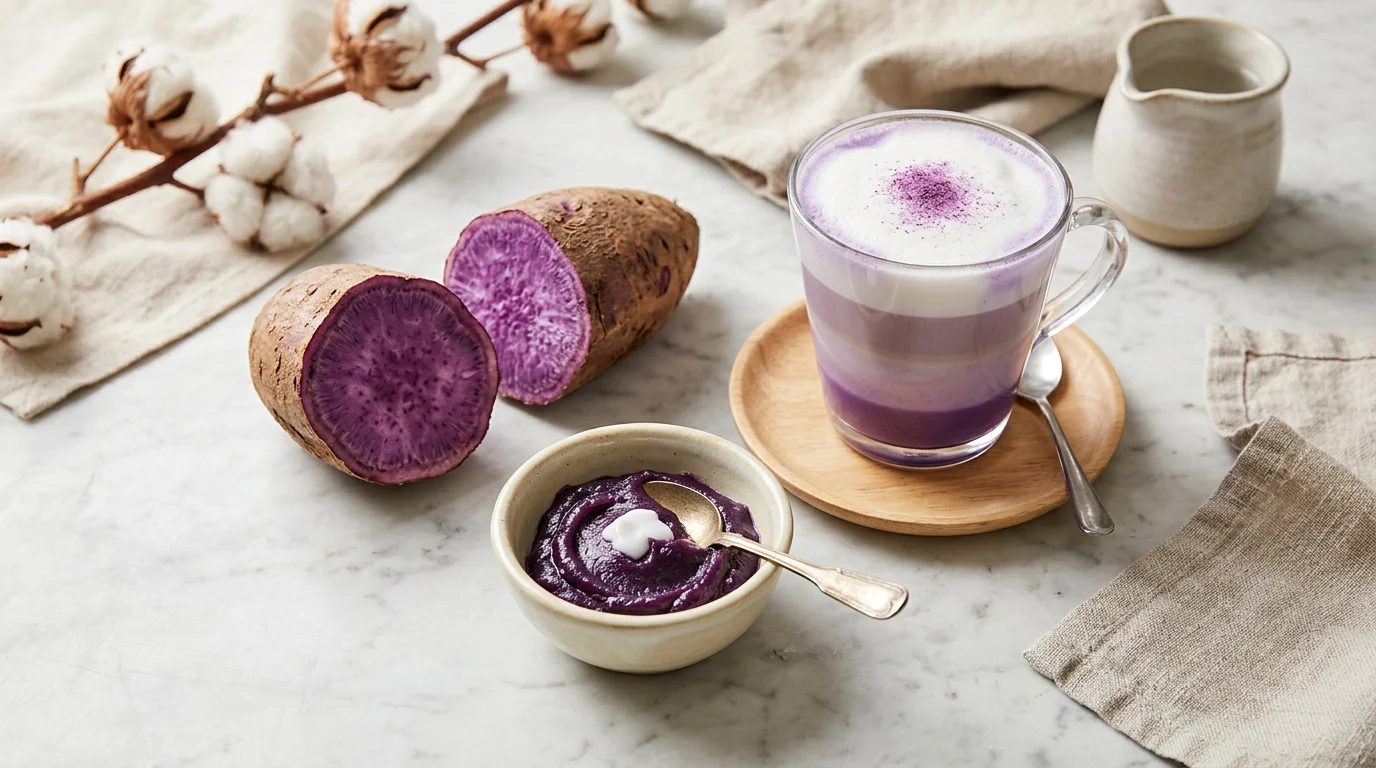
Ube is a purple yam best known for its striking violet colour and its important place in Filipino food culture. Pronounced “oo-beh,” it is commonly used in cakes, ice cream, pastries, drinks and traditional desserts. Its flavour is mild rather than overpowering, with a gently sweet, earthy and nutty character that is often described as having vanilla-like notes.
Although ube has recently become highly visible in cafés, bakeries and social media recipes around the world, it is far from a new ingredient. Purple yam has been cultivated and eaten in tropical Asia for generations, while ube has a particularly long and important history in Filipino cuisine. Botanically, it belongs to the species Dioscorea alata, a true yam in the Dioscoreaceae family.
What Is Ube Made Of?
Ube is not something manufactured from other ingredients. Real ube is the edible underground tuber of Dioscorea alata, also known as purple yam, greater yam or water yam. The plant grows as a climbing vine and forms large starchy tubers below the ground.
Not every Dioscorea alata tuber is intensely purple. Different varieties can have white, ivory, lavender or deep purple flesh. In purple varieties, much of the distinctive colour comes from natural pigments called anthocyanins, including cyanidin- and peonidin-based compounds.
When fresh ube is used for cooking, it is normally peeled and cooked before being mashed or incorporated into a dish. One of its best-known preparations is ube halaya, a thick purple-yam dessert traditionally made by cooking mashed ube with ingredients such as milk or coconut milk and sugar until it develops a rich, smooth consistency.
Ube halaya can then be eaten on its own or used in cakes, pastries, ice cream and other sweets.
Is Ube a Fruit?
No. Ube is not a fruit.
It is an underground tuber produced by a yam plant. Calling it “ube fruit” is therefore botanically incorrect, even though the term sometimes appears in online searches.
The confusion is understandable because ube is now strongly associated with sweet foods such as ice cream, cakes, cookies, doughnuts and colourful drinks. Botanically, however, it belongs with yams rather than fruits.
What Does Ube Taste Like?
Freshly cooked ube has a relatively gentle flavour. It is mildly sweet, starchy, earthy and slightly nutty rather than tasting intensely sugary.
People often describe prepared ube desserts as having hints of vanilla, coconut or nuttiness, but some of these flavours may also come from the ingredients traditionally combined with the yam. Coconut milk, condensed milk, butter, vanilla and sugar are commonly paired with ube in desserts, which can make the finished flavour much richer than the cooked tuber itself.
That distinction matters when trying ube for the first time. An ube-flavoured latte or cake may taste much sweeter and more vanilla-forward than fresh cooked purple yam.
What Is Ube vs Taro?
Ube and taro are often confused because both appear in colourful Asian desserts and drinks, but they are completely different plants.
Ube (Dioscorea alata) is a true yam belonging to the Dioscoreaceae family. Purple varieties can have strongly violet flesh and are commonly associated with sweet, earthy and nutty flavours.
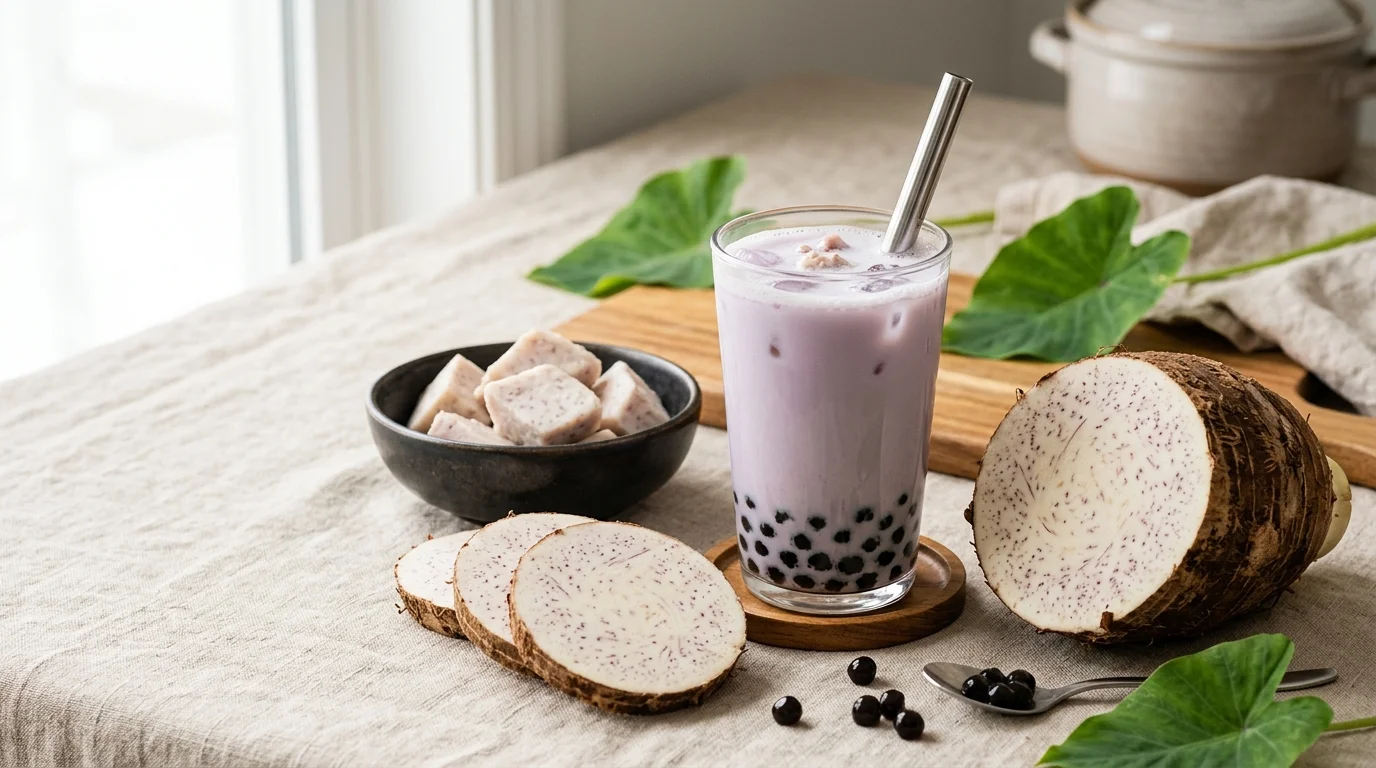
Taro (Colocasia esculenta) belongs to the Araceae family. Its edible underground structure is usually described botanically as a corm. The inside is commonly white, cream or pale with purple or pinkish flecks, depending on the variety. Taro usually has a more earthy, starchy and subtly nutty flavour.
So although ube and taro can appear similar in desserts, taro is not ube and ube is not taro.
Is Ube the Same as Purple Sweet Potato?
No. Ube and purple sweet potato are also different plants.
Ube belongs to the genus Dioscorea, while sweet potato is Ipomoea batatas and belongs to the morning glory family, Convolvulaceae.
Purple sweet potatoes generally have a denser texture and their flavour can differ considerably depending on the variety. Ube tends to have the distinctive yam-like, mildly earthy and nutty character associated with traditional ube desserts.
Their similar purple colour means the two ingredients are sometimes confused in photographs, packaged foods and drinks, so checking the ingredient list is more reliable than judging by colour alone.
Is Ube Naturally Purple?
Yes, purple-fleshed ube is naturally purple.
Research on Dioscorea alata has identified anthocyanins responsible for violet and purple pigmentation in the flesh. These are naturally occurring plant pigments also found in many red, blue and purple fruits and vegetables.
However, not every product labelled “ube” gets all of its colour directly from purple yam.
Commercial sauces, powders, cake mixes and drinks may contain flavourings or additional colouring ingredients. For example, some café ube-flavoured sauces have used vegetable concentrates and natural flavourings rather than fresh purple yam. Ingredient lists therefore provide a better indication of what a product actually contains than its bright purple appearance.
How Is Ube Used?
Ube is extremely versatile, although it is most famous for desserts. Traditional and modern uses include ube halaya, ice cream, cakes, cheesecake, bread, cookies, pastries, doughnuts, pancakes and frozen desserts.
It is also increasingly used in lattes, matcha drinks, milkshakes and other café beverages.
For home cooking, ube may be sold in several forms:
- Fresh ube – the whole tuber, which needs to be peeled and cooked.
- Frozen grated ube – useful for making halaya and baked desserts.
- Ube halaya – prepared sweetened purple-yam paste or jam.
- Ube powder – a dehydrated product that can be added to baking and dessert recipes.
- Ube extract or flavouring – mainly used to strengthen flavour or colour in cakes and other sweets.
These products are not interchangeable in every recipe. Ube extract, for example, provides flavour but does not have the same starch, moisture or texture as real mashed yam.
Is Ube Healthy?
Ube is primarily a starchy carbohydrate food. The exact nutritional composition varies considerably between cultivars and preparation methods, but Dioscorea alata naturally provides starch along with smaller amounts of fibre, protein, vitamin C and minerals.
Purple varieties also contain anthocyanin pigments. Laboratory research has investigated their antioxidant properties, but that should not be interpreted as evidence that ube desserts provide specific medical benefits.
How nutritious an ube product is depends heavily on how it is prepared. Plain cooked yam is very different nutritionally from an ube cake, sweetened halaya, ice cream or syrup-based drink containing substantial amounts of sugar and fat.
Why Has Ube Become So Popular?
Ube combines several qualities that work particularly well in modern food culture: an unusual natural colour, a mild flavour that pairs easily with other ingredients and a long-established dessert tradition.
Its bright violet appearance has also made ube highly visible on social media, where purple cakes, lattes, ice creams and pastries photograph particularly well.
Large café and food brands have increasingly introduced ube-inspired products, bringing the word to people who may never previously have encountered Filipino desserts. However, it is worth remembering that ube itself existed long before the current purple-food trend. Its growing international popularity represents the wider discovery of an established ingredient rather than the invention of a new flavour.
Where Can You Buy Ube?
Availability depends on where you live, but Filipino and Asian grocery stores are often the best places to look.
Fresh whole tubers can be difficult to find outside areas where tropical yams are commonly grown or imported. Frozen grated ube, ube halaya, powder and flavouring are usually easier to store and distribute, so these forms are often more widely available.
When buying powder, paste or extract, check the ingredient list carefully. Products labelled “ube flavour” may not contain the same amount of real yam as products labelled grated ube, purple yam powder or ube halaya.
Frequently Asked Questions About Ube
What does ube mean?
Ube is the Filipino name commonly used for purple yam, particularly purple-fleshed forms of Dioscorea alata used in Filipino cooking.
How do you pronounce ube?
Ube is usually pronounced “oo-beh,” with two syllables.
Is ube taro?
No. Ube is a yam from the Dioscorea genus, while taro is Colocasia esculenta. They belong to different plant families.
Is ube a sweet potato?
No. Sweet potatoes belong to Ipomoea batatas. Ube belongs to Dioscorea alata.
Why is ube purple?
Purple ube varieties contain naturally occurring anthocyanin pigments that give their flesh its violet colour.
Is ube naturally sweet?
Ube has some natural sweetness, but fresh cooked ube is much less sweet than most ube desserts. Sugar, condensed milk, coconut milk and other ingredients are commonly added when preparing sweet ube foods.
The Bottom Line
So, what is ube? It is a starchy yam best known for its naturally purple varieties, subtle sweet and nutty flavour and long-standing importance in Filipino cuisine. It is not taro, purple sweet potato or a fruit, even though all three comparisons commonly appear online.
Fresh ube has a much more delicate flavour than its dramatic colour might suggest. Its modern popularity in cakes, ice cream, pastries and drinks has introduced it to a much wider audience, but behind the trend is an ingredient with a far longer culinary history.