Reviewed and last updated on November 5, 2026 by Awais Ahmed, Founder & Editor-in-Chief, Urban Scope News.
Searching for the best caldereta de cordero near me starts with finding a restaurant that actually serves this slow-cooked lamb stew. Look for the dish on current menus, check recent reviews that mention it specifically, and confirm availability before travelling. Spanish restaurants and traditional tapas bars are useful starting points, although the stew may appear under a different name.
There is good reason to seek it out. A well-made caldereta brings together tender lamb, garlic, paprika and a savoury sauce that deserves a piece of bread. Yet the name can lead to different dishes, from rustic regional stews to Filipino caldereta and modern pastry-covered interpretations. Knowing those differences makes ordering easier and helps if you decide to cook it yourself.
What Is Caldereta de Cordero?
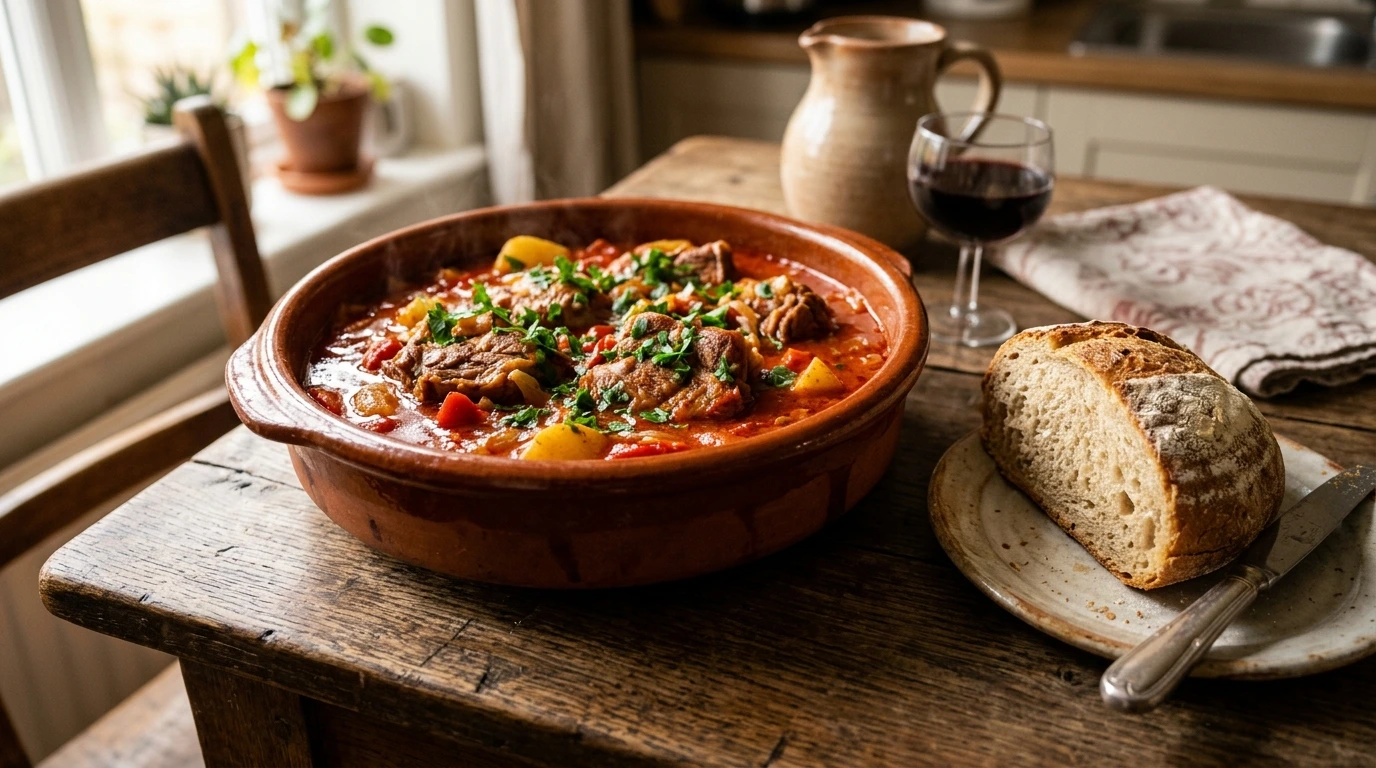
Caldereta de cordero is a traditional Spanish lamb stew. Pieces of lamb cook gently with aromatic ingredients until the meat becomes tender and the cooking liquid develops into a rich sauce. Onion, garlic, peppers, paprika and herbs appear in many recipes, while wine, tomatoes, potatoes and liver depend on the version being prepared.
It is better understood as a family of regional recipes than a single fixed formula. One kitchen may serve a paprika-forward stew with a sauce thickened using liver and bread. Another may prepare a lighter version with vegetables and herbs. A tomato-based sauce is familiar, but tomatoes are not essential to every traditional preparation.
The defining feature is the lamb and how it is cooked. The meat should soften through patient braising, with the sauce carrying its flavour rather than overwhelming it.
The History Behind the Dish
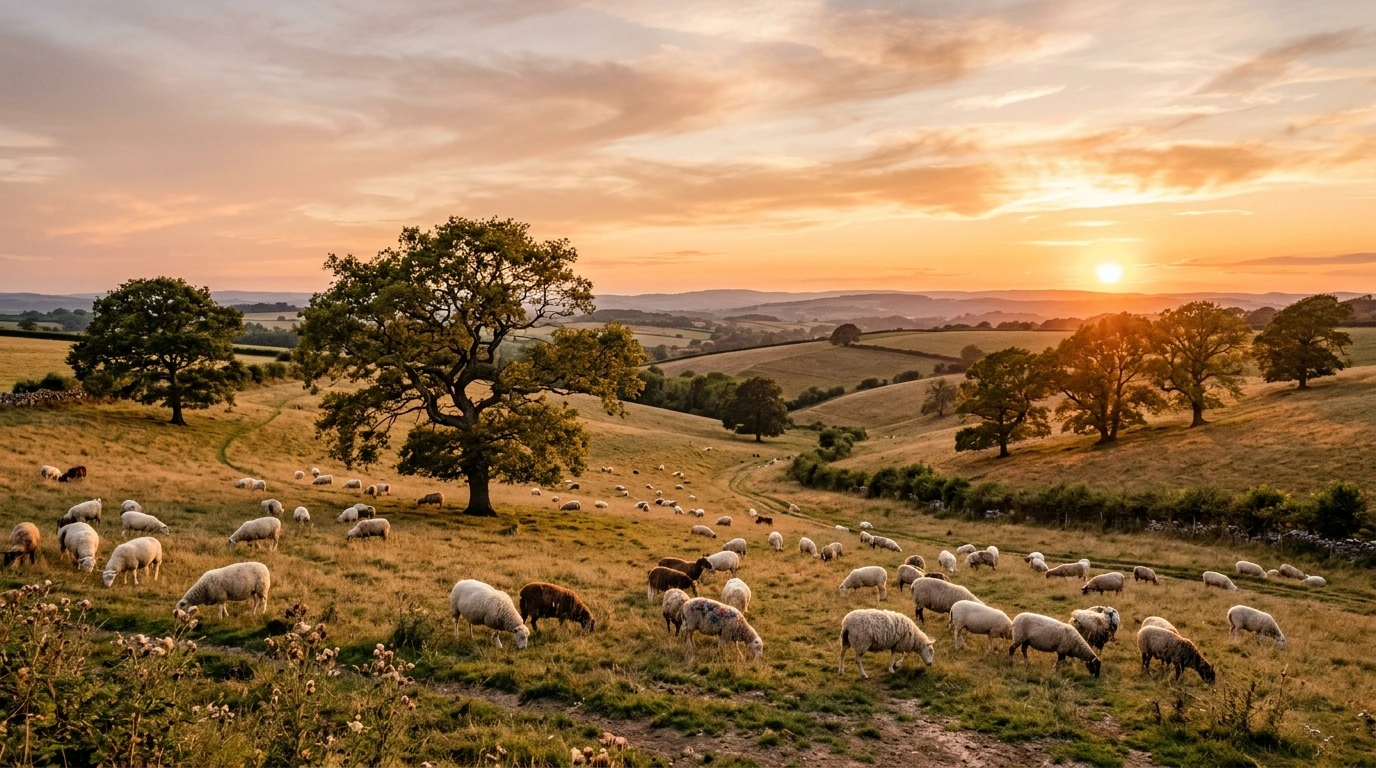
Caldereta de cordero is closely tied to rural Spain and to Extremadura in particular, where the national tourism portal presents it as a typical regional dish. Lamb stews of this kind are often linked with shepherding communities. Spain’s Royal Academy of Gastronomy cautions, however, that stews such as caldereta were usually prepared for festivals and special occasions rather than eaten as everyday shepherd’s fare. The same stew is also cooked in other parts of central Spain, including Castilla-La Mancha and Castilla y León, which is one reason recipes differ so much.
There is no need to attach an exact invention date to a dish that developed through local cooking traditions. Regional and household variations are part of its history. The traditional Extremaduran preparation published by the official tourism portal uses lamb, lamb liver, onion, red pepper, garlic, bread, paprika, herbs and dry white wine. The liver is blended with garlic, herbs, wine and paprika, and the bread is fried with the vegetables, so both help give the sauce body. That is quite different from a straightforward tomato-based lamb casserole, and the portal gives a cooking time of about three hours.
For diners, that history offers a useful lesson: an unfamiliar ingredient does not automatically make a version less traditional. Ask how the kitchen prepares its caldereta before deciding what to expect. It also explains why the alcohol-free recipe later in this guide is an adaptation rather than a classic, since the traditional Extremaduran version includes wine.
How to Find the Best Caldereta de Cordero Near Me
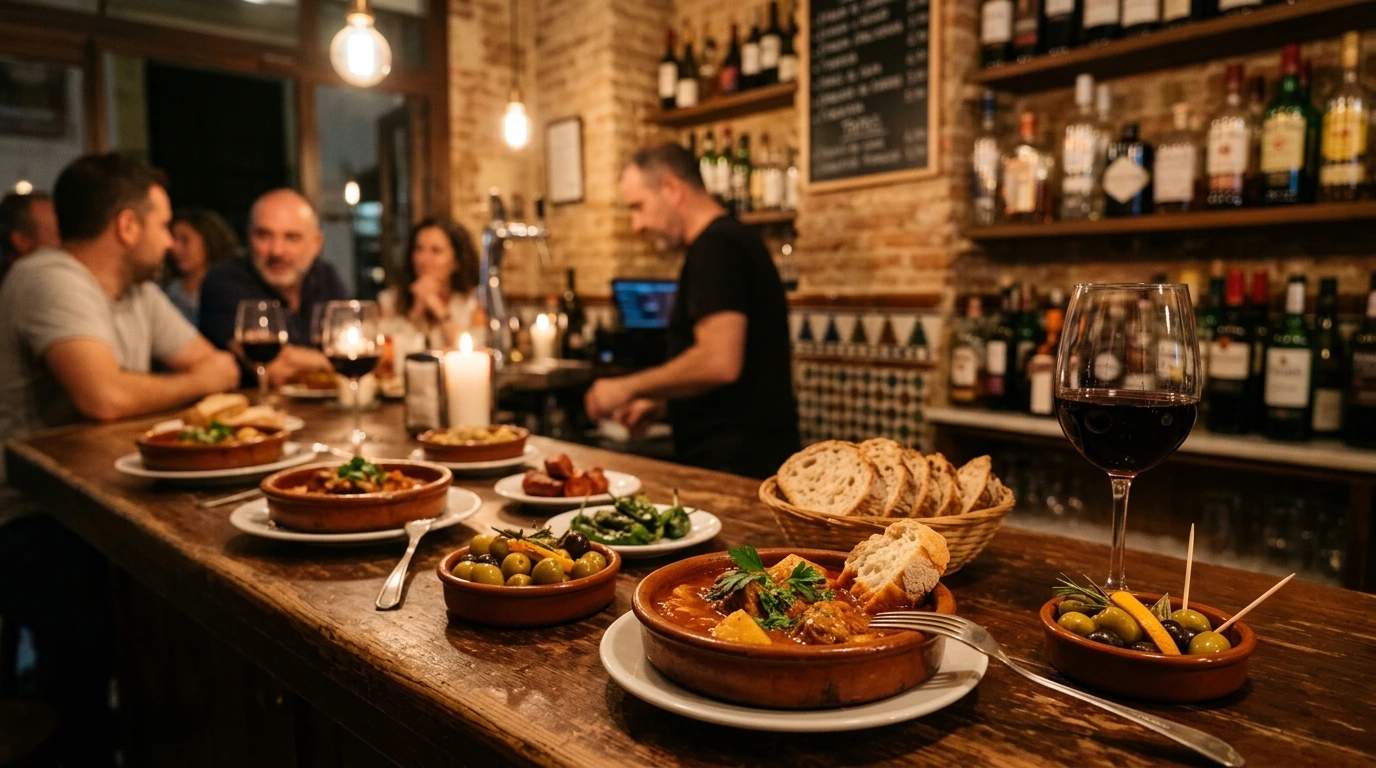
Begin with the menu rather than the restaurant’s overall star rating. A highly rated tapas bar might specialise in seafood, grilled meat or small plates without serving lamb stew at all. An explicit listing for caldereta de cordero is stronger evidence than a broad description such as “authentic Mediterranean food”.
Search using your town or neighbourhood alongside the dish’s name. If that produces few results, try cordero en caldereta, Spanish lamb stew or Spanish lamb casserole. These terms can uncover menus that use a different wording. A general listing for cordero needs closer inspection, because it may refer to lamb chops or roast lamb.
Next, compare the restaurant’s own menu with recent customer photographs. Old menu images are useful clues, but they cannot confirm present availability. A direct call is especially worthwhile when you are making a journey for one dish.
Ask whether the caldereta is currently served, whether it is a tapas portion or a main course, and whether it needs advance ordering. Those three questions often tell you more than several pages of general reviews.
What Makes a Good Caldereta?
Tenderness is the first thing to notice. The lamb should give way easily under a fork while retaining enough structure to feel like a piece of meat. Firm, chewy shoulder can indicate that it needs longer cooking; very dry meat can suggest an unsuitable cut or poor handling.
The sauce should taste of lamb, softened aromatics and its chosen seasonings. Paprika can contribute warmth and sweetness, but a burnt, bitter flavour is undesirable. Some surface fat is natural in a lamb stew, although an excessive greasy layer can make it heavy.
Consistency varies between recipes. A rustic caldereta may have a textured sauce because of its vegetables or thickening mixture. It does not need to be perfectly smooth, but the liquid should feel connected to the meat rather than like a separate, watery broth.
When reading reviews, look for specific observations about the lamb, sauce and portion size. “The meat was tender and the sauce well balanced” is more useful for this search than praise for the décor.
Spanish Caldereta and Filipino Kaldereta: Why the Difference Matters
Spanish caldereta de cordero and Filipino kaldereta should not be treated as interchangeable menu descriptions. The Filipino stew takes its name from the same Spanish word for a cauldron, but it is commonly made with goat and a tomato-based sauce containing potatoes, peppers, olives and liver paste, although recipes vary considerably.
Modern restaurants may also reinterpret caldereta as a pie. Donia, a modern Filipino restaurant, offers a lamb shoulder caldereta pie that it cooks slowly, layers with potatoes, peppers and tomatoes, and wraps in puff pastry, and it asks diners to pre-order it. That is a very different eating experience from a bowl of Spanish lamb stew.
Neither style needs to be judged against the other. The useful question is which one you want. If you are looking for a traditional Spanish stew, confirm the preparation instead of relying on the word “caldereta” alone.
Can Caldereta de Cordero Be Made Without Alcohol?
Yes. An alcohol-free version can use lamb or vegetable stock in place of wine, with a small amount of lemon juice added at the end if the sauce needs brightness. The result will differ from a wine-based preparation, but careful browning and gentle cooking still produce a satisfying stew.
For restaurant orders, ask about the cooking ingredients directly. A dish described as lamb stew may contain wine even when it is not mentioned in the short menu description. If avoiding alcohol completely matters to you, do not assume that a long cooking time makes a wine-based dish suitable.
At home, check the stock and any prepared sauces as well as leaving out the wine. Alcohol-free cooking and halal suitability are separate considerations; halal preparation also depends on the meat and other ingredients.
An Alcohol-Free Caldereta de Cordero to Cook at Home
This recipe serves four and takes around 20 minutes to prepare, followed by roughly two and a half to three hours of cooking, including browning the meat. It is a Spanish-style home adaptation with tomatoes and optional potatoes, rather than a claim to reproduce every regional tradition.
Ingredients and Preparation
Use 800 g of boneless lamb shoulder, cut into roughly 4 cm pieces. You will also need two tablespoons of olive oil, one large chopped onion, four finely chopped garlic cloves and one red pepper cut into chunks.
For the sauce, measure two teaspoons of sweet Spanish paprika, two tablespoons of tomato purée, a 400 g tin of chopped tomatoes and 500 ml of alcohol-free lamb or vegetable stock. Have extra stock or water available in case the pan needs topping up.
Add two bay leaves, one teaspoon of dried thyme or three fresh sprigs, half a teaspoon of black pepper and salt to taste. If you want potatoes in the stew, prepare 400 g in large chunks. Keep a little lemon juice and chopped parsley for finishing.
Lamb shoulder suits this method because it benefits from slow cooking. Ask the butcher for pieces of reasonably even size so they become tender at a similar rate.
Brown the Lamb and Soften the Vegetables
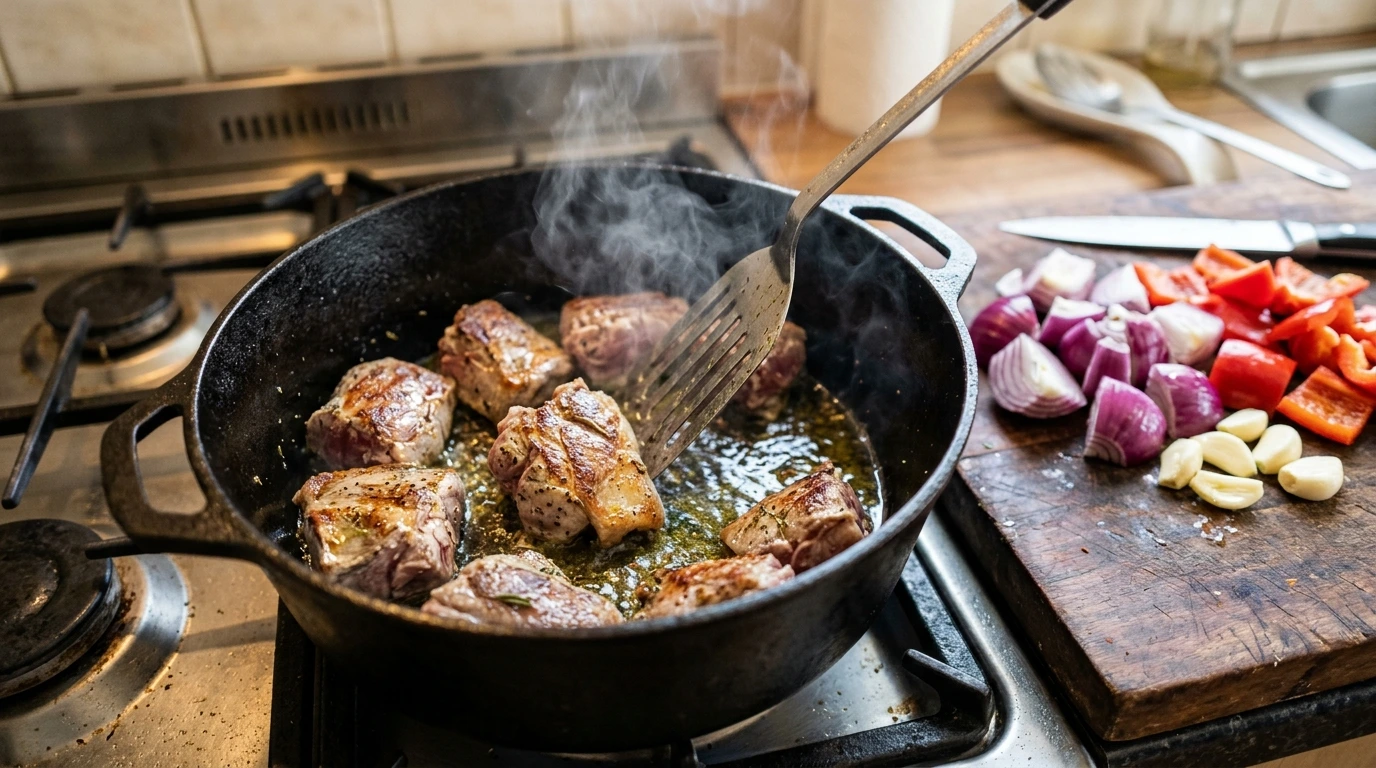
Pat the lamb dry and season it lightly. Heat the olive oil in a heavy casserole over medium-high heat, then brown the meat in batches. Leave space between the pieces and allow colour to develop before turning them. Transfer each batch to a plate.
Reduce the heat to medium and add the onion and red pepper. Cook for eight to ten minutes, stirring regularly, until softened. Add the garlic and cook for another minute.
Stir in the tomato purée and cook briefly. Lower the heat before adding the paprika, stir for about 15 seconds, then pour in a splash of stock. Scrape the browned cooking juices from the base of the pan into the liquid.
Simmer Until the Lamb Is Tender
Return the lamb and its collected juices to the casserole. Add the chopped tomatoes, remaining stock, bay leaves and thyme. The liquid should come close to covering the meat; add a little more if necessary.
Bring the stew to a gentle simmer, cover and reduce the heat. Cook for around an hour and a half, checking occasionally and stirring to prevent sticking. The surface should bubble quietly.
If using potatoes, add them at this stage and continue cooking for approximately 30 to 45 minutes. Check both the meat and potatoes before serving. Cooking time depends on the cut and size of the lamb pieces, so use fork tenderness as your final guide.
Adjust the Sauce Before Serving
If the sauce looks thin once the lamb is tender, remove the lid and simmer gently until it reduces. If it becomes too thick earlier in cooking, add a splash of stock or water. Skim away excess surface fat and remove the bay leaves and herb stalks.
Taste before adding lemon juice. Start with a teaspoon only if the sauce needs a brighter finish, then adjust the salt and pepper. Scatter with parsley and let the casserole rest briefly before bringing it to the table.
Home-grown produce can also find a place in this version. Tomatoes, peppers and herbs are useful kitchen crops, and growing them in a small space at home can supply ingredients for future batches without needing a large garden.
What to Serve With Caldereta de Cordero
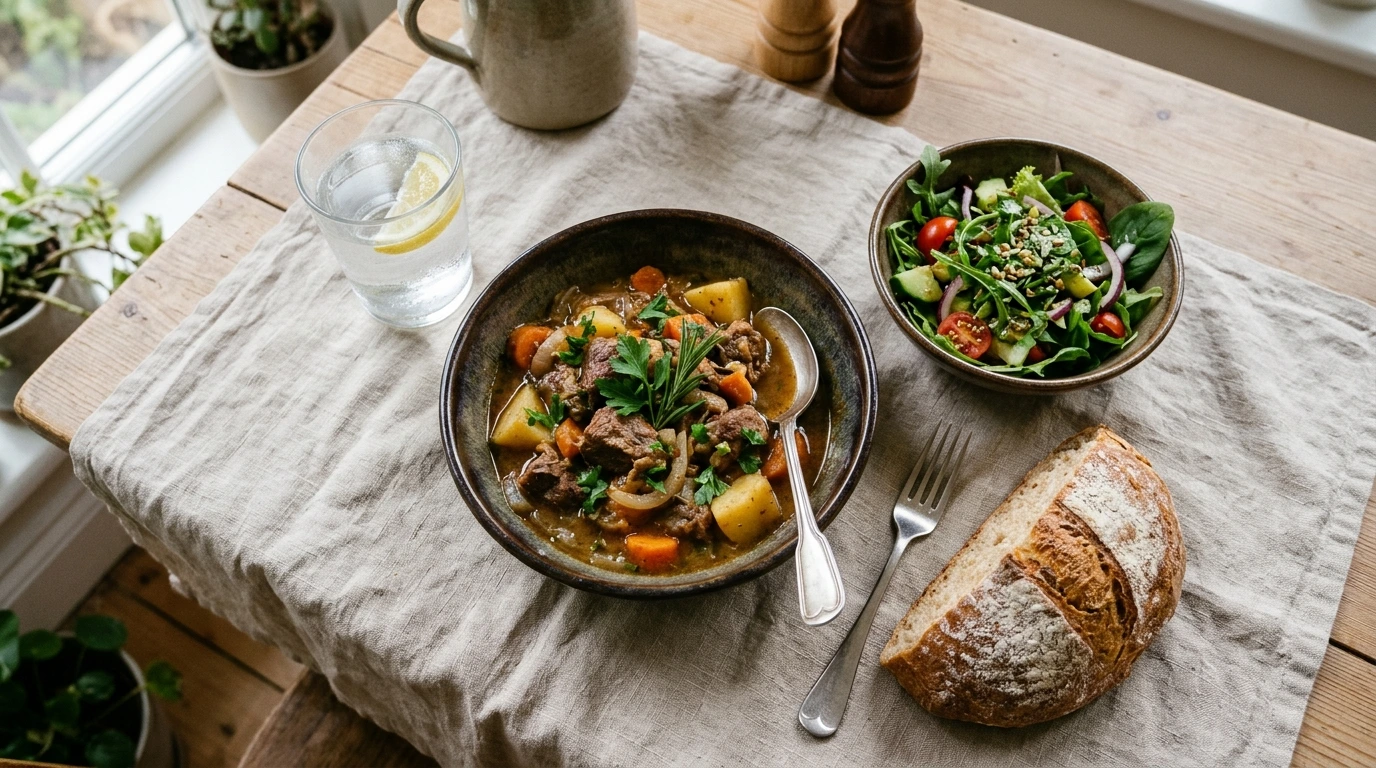
Crusty bread is an easy accompaniment because it catches the sauce without competing with the stew. A green salad provides a fresher contrast, especially when the lamb is rich.
If the casserole already contains potatoes, it may need little else. Without them, rice, boiled potatoes or a modest helping of mash can make the meal more substantial. Keep strongly flavoured sides in the background so the lamb remains the focus.
When ordering in a restaurant, check what comes with the dish. A tapas portion intended for sharing can look good value but may need bread, vegetables or another plate to make a full meal.
Common Mistakes When Cooking Lamb Caldereta
Rushing the simmer is a frequent problem. Raising the heat does not reliably turn a tough braising cut into tender meat faster; it can instead reduce the sauce before the lamb is ready. Keep the heat gentle and allow extra time when necessary.
Adding too much liquid can also leave you with a diluted stew. Start with enough to almost cover the meat and adjust as it cooks. Potatoes need similar attention: add them too early and they may break down long before the lamb softens.
Paprika deserves care because it can burn quickly in a hot, dry pan. Have the stock ready before adding it. Finally, season again after reducing the sauce, since both salt and other flavours become more concentrated as liquid evaporates.
Storing and Reheating Leftovers
Divide leftover stew into smaller containers so it cools promptly, then refrigerate within two hours. Eat it within two days or freeze it. When reheating, warm only the portion you need, stirring so the centre heats evenly, and reheat it once only. Food safety regulators stress reheating leftovers until they are steaming hot throughout, because bacteria that grew after cooking will not be killed by gentle warming.
A splash of water can loosen a thickened sauce during reheating. Stir gently if the stew contains potatoes, which may soften further.
Frequently Asked Questions
Where should I look for caldereta de cordero nearby?
Start with Spanish restaurants, regional dining rooms and tapas bars that publish current menus. Search for both caldereta de cordero and cordero en caldereta, then confirm the dish is available before booking.
Is caldereta de cordero spicy?
It does not have to be. Sweet paprika gives warmth without strong chilli heat, while hot paprika creates a spicier version. Ask the restaurant which preparation it serves.
Does traditional caldereta always contain tomatoes?
No. Regional recipes differ, and some preparations build the sauce around peppers, garlic, paprika, wine or stock and a thickening mixture rather than tomatoes. A red sauce alone is not a measure of authenticity.
Which lamb cut works well for a homemade version?
Shoulder is a practical choice for slow cooking. Neck can also suit a braised stew, although bone-in pieces require care when serving. Tender cuts intended for quick cooking are usually a less economical choice for this method.
Can an alcohol-free caldereta still have a rich flavour?
Yes. Browning the lamb, softening the vegetables and using a good stock create depth without wine. A small amount of lemon juice at the end can balance the richness if needed.
Choosing a Caldereta Worth Trying
The most useful result for the best caldereta de cordero near me is a restaurant with a confirmed dish, a clear description and recent feedback about the food itself. Check the style, portion size and ingredients before you travel, particularly if you want an alcohol-free preparation.
And if there is no suitable local option, a heavy casserole and a few hours of gentle cooking offer another way to enjoy it. The recipe can vary; tender lamb and a well-developed sauce are what make the meal memorable.