Reviewed and last updated on November 10, 2026 by Awais Ahmed, Founder & Editor-in-Chief, Urban Scope News.
Incestflox is most likely a variant spelling of the name of an adult video website rather than a product, company or platform in its own right. The spelling sits a single letter away from Incestflix, a name that security reputation services classify as adult content, and no reliable source identifies an independent service that uses the version with an o. Add the fact that the term is scattered across spam pages and copycat domains, and a quick search for it carries more risk than most people expect.
This article does not link to or describe any of those sites. It sets out what can reasonably be said about the name, why it turns up in strange places, how to judge whether a site using it is safe, and how households can keep it out of search results.
What the name appears to be
The word begins with incest, which refers to sexual activity between close relatives and is treated as taboo in many societies and as a criminal offence in many places. That opening tells you which part of the internet the name belongs to, however the ending is spelt. The ending is where the confusion starts. Swap the o for an i and you get a name that website safety reviewers list as an adult streaming site, alongside a handful of lookalike domains that copy its branding. The version with an o appears to be a misspelling or a deliberate variant of that name, although nobody has publicly documented where the spelling began, so this remains a reasoned inference rather than a confirmed fact.
Other explanations are on offer. One publisher suggested the word may blend incest with flock, and the same piece called it slang for a fascination with taboo storylines in media. Neither claim cites an original source, a creator or an early use of the term, which makes them guesses dressed up as definitions. Garbled spellings that harden into apparent brand names are common online, and a mangled Latin phrase that began circulating as though it were a product name shows how quickly a typo can collect its own set of explainers.

Why it appears on pages that have nothing to do with it
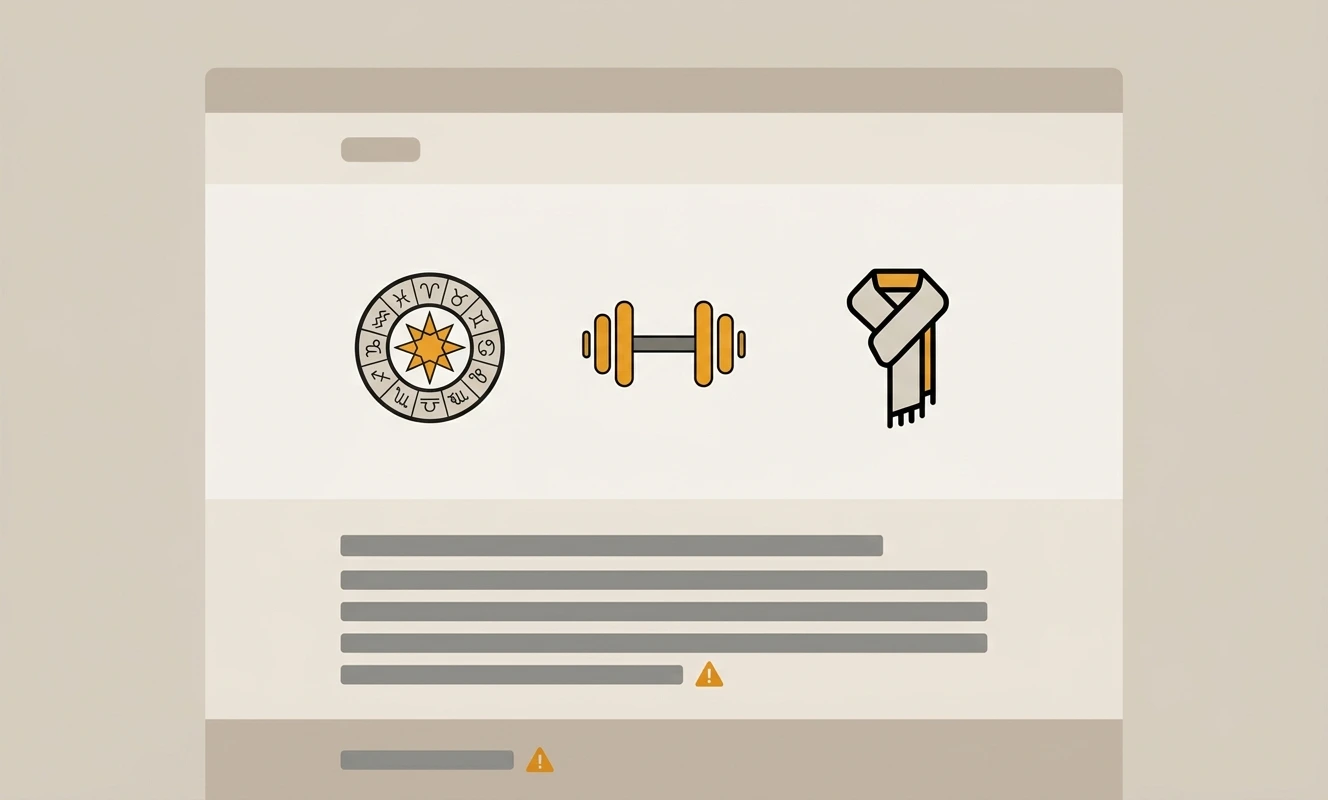
Search the spelling and some of the results are baffling. The name is attached to the foot of pages about zodiac signs, gym exercises, cashmere scarves and strategy games, usually inside a block of sensational headlines promising secrets and confessions. The text around those headlines says nothing about the term, and several of the pages look automatically generated or scraped, built to catch traffic from whatever phrase happens to be rising. In these cases the name is bait rather than subject matter.
This matters because it inflates the impression that something significant is going on. Each of those pages looks like a separate mention, yet together they add up to repetition rather than evidence. The explainer articles published since suffer from a similar problem, with many repeating the same unsourced claims. When a name has no documented origin, competing explanations multiply, as they have with other unfamiliar names that publishers have tried to define.
What the search numbers do and do not show
Keyword tools estimate thousands of searches a month for the spelling, but a number cannot say why people typed it. Some are curious about a word they saw in a spam headline, some mistyped a longer name, and some are looking for the site the spelling echoes. Parents and carers also search for unfamiliar terms they have spotted in a browser history or a message. Rising search volume is not evidence that a legitimate product exists. It shows only that the word is circulating.
Is it safe to visit sites that use the name?
There is no single Incestflox to rate, so safety depends on the specific address. What can be said is that reputation services, including Malwarebytes and Gridinsoft, list domains using the Incestflix spelling as adult content, and some of them as suspicious or blocked for risky behaviour. Several are recent copycats of an older site, a pattern often seen with clone domains that exist mainly to harvest clicks.
Adult sites of this kind commonly lean on aggressive advertising, including fake virus warnings, bogus software updates and prize notices designed to push visitors into installing something or handing over details. If a page claims your device is infected, asks you to download a player or extension, requests payment details for free content or asks permission to send notifications, close it. A padlock in the address bar means the connection is encrypted, not that the owner is honest, so it should never be the only reason to trust a site. Our look at whether an unfamiliar web tool is safe to use considers a comparable question about another unfamiliar online service.
Anyone who has landed on a page that looks like a scam can report a suspicious website to the National Cyber Security Centre, which has the power to investigate and remove scam websites. Anyone who has already entered personal details should change the affected passwords promptly.

Keeping it out of search results at home
Households that would rather not see this kind of result at all can use Google’s SafeSearch settings. The Filter option blocks explicit results, while Blur only obscures explicit images, so explicit text and links can still appear when they match the query. Administrators of a device or network can lock the setting, which suits shared family computers and school equipment. SafeSearch works only on Google Search, so it will not stop someone opening a site they type in directly, and a separate content filter on the device or router is needed for that.
The subject behind the name
Behind the label sits a real and serious subject. Sexual contact between a child and a relative is child sexual abuse, and it is not a genre or a storyline. Material that markets itself with this theme can blur that line for some viewers, and it can be distressing for anyone with personal experience of abuse. Anyone affected, or worried about a child, can speak to a doctor, a trusted professional or a local support or child protection service, and no one should feel they have to deal with it alone.
Frequently asked questions
What does incestflox mean?
It has no documented definition. It appears to be a variant spelling of an adult website name, and explanations that call it slang or a media trend are unsourced.
Is incestflox a real website?
No reliable source identifies a separate service operating under the version with an o. Sites using the spelling with an i exist and are classed as adult, and lookalike domains come and go, so any page claiming to be official deserves suspicion.
Is incestflox safe to search for?
Typing the word into a search engine does no harm to a device, but the results can include explicit links, spam pages and fake warnings. Turning on SafeSearch filtering and avoiding unfamiliar links reduces the exposure.
Why does incestflox appear in unrelated articles?
Spam pages append sensational headlines containing trending terms to attract clicks. The unrelated text around them has no connection to the term.
What to take away
Incestflox is best treated as a misspelt echo of an adult site’s name that has been amplified by spam and speculative explainers. It is not evidence of a new platform, trend or brand. Anyone who wants certainty about a particular address should rely on independent reputation checks rather than the claims of the page itself, and anyone who simply wants the term out of their searches has the tools to do so.