Reviewed and last updated on November 11, 2026 by Awais Ahmed, Founder & Editor-in-Chief, Urban Scope News.
Hormita has no single settled meaning. In Spanish it reads most naturally as a small horma, the mould used to shape shoes and hats. In wellness writing it is attached to the idea that the body adapts when mild stress is followed by rest, an idea borrowed from hormesis. On a few other pages it is described as a supplement, though nothing shows who makes it or what is in it. Which meaning a writer intends depends entirely on the page, and nobody appears to have documented where the wellness use began.
Why one word gives readers so many answers
Search for the word and the results quarrel with each other. One page says it is a Spanish word for a little ant, another calls it a philosophy of balance and sustainable living, a third treats it as a fitness mindset, and a handful describe it as a spice or a weight-loss aid. These descriptions have little in common, which is unusual for a term with a genuine origin. When a real concept exists, independent sources tend to describe it in broadly the same way, even if they disagree about its value.
Words with no authority behind them spread in a predictable way. Small sites notice rising search interest, publish an explainer, and borrow the framing of whichever page came before. Several articles repeating one unsourced line are still one claim, not several confirmations. The same thing happened with a misspelt Latin phrase that collected near-identical explainers, and it is worth keeping in mind here, because the most useful question is not which definition sounds best but which one can be traced to something checkable.
The Spanish reading: horma, not hormiga
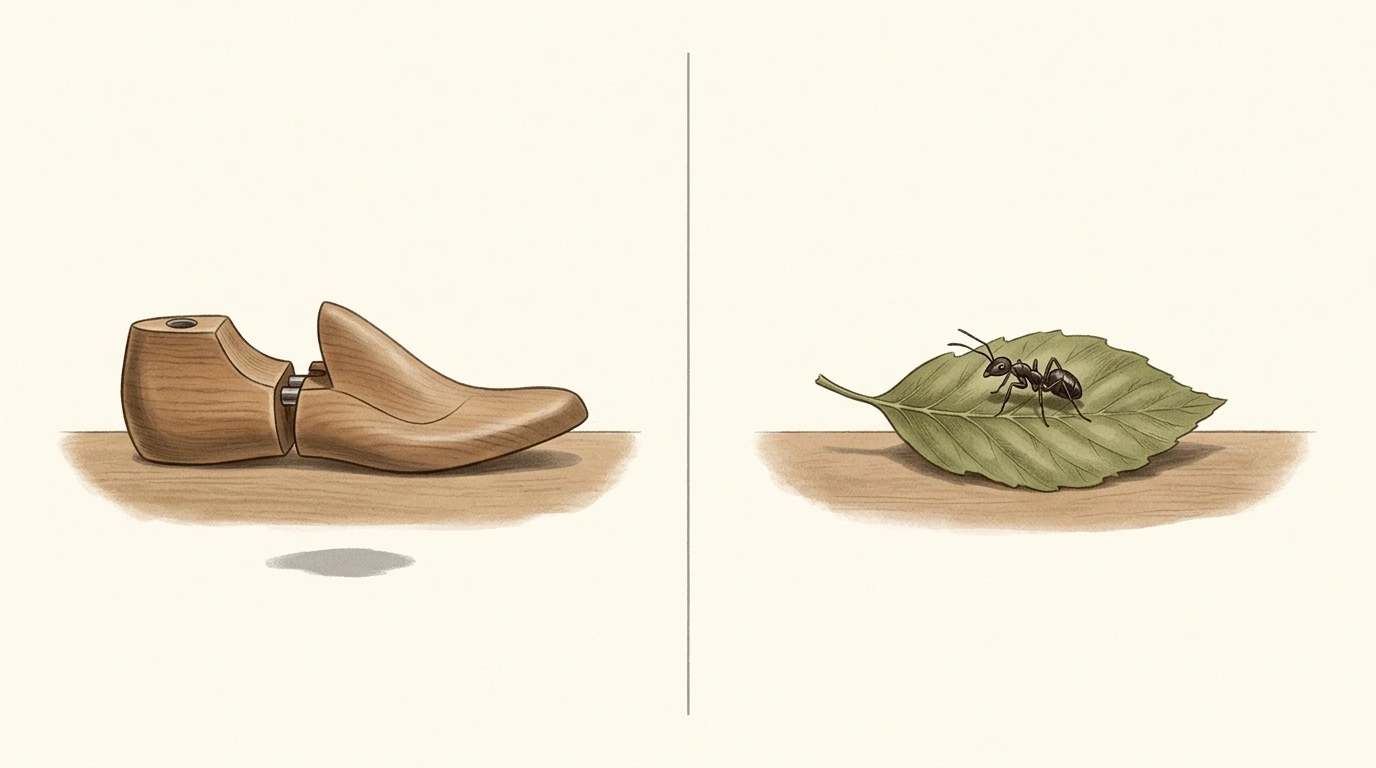
The strongest linguistic footing comes from horma. The Real Academia Española’s dictionary entry traces the word to the Latin forma and defines it as a mould used to make or shape things, especially shoes and hats. It also lists the piece placed inside footwear to stop it losing its shape, and a dry-stone wall. Anyone who has heard the Spanish saying about finding the horma of one’s shoe, meaning to meet exactly what suits you or to meet your match, has already met the word in everyday speech.
Adding -ita is the ordinary way Spanish speakers make a diminutive, so hormita would be understood as a small horma. In a conversation about shoemaking or hat-making, that could be a small shoe last. The dictionary documents horma, though, not hormita, so the diminutive is an interpretation that depends on context and not an entry readers can look up.
The other popular reading is little ant. The Spanish word for ant is hormiga, and its regular diminutive is hormiguita. Several websites present hormita as a term of affection for an ant, but none of the pages I checked pointed to a dictionary or any other reference to support it. The two words do look alike, which may explain the confusion, although nobody seems to have shown that this is how the idea started. If a text really is about insects, hormiguita is the spelling to expect.
Where the wellness version comes from
In wellness articles, hormita usually describes a simple cycle: give the body a manageable challenge, allow time to recover, then repeat. The examples attached to it tend to be exercise, fasting, cold exposure and breathing practice. Many of these pages link the idea to hormesis, which is a genuine scientific term, and that link is the reason the word sounds more established than it is.
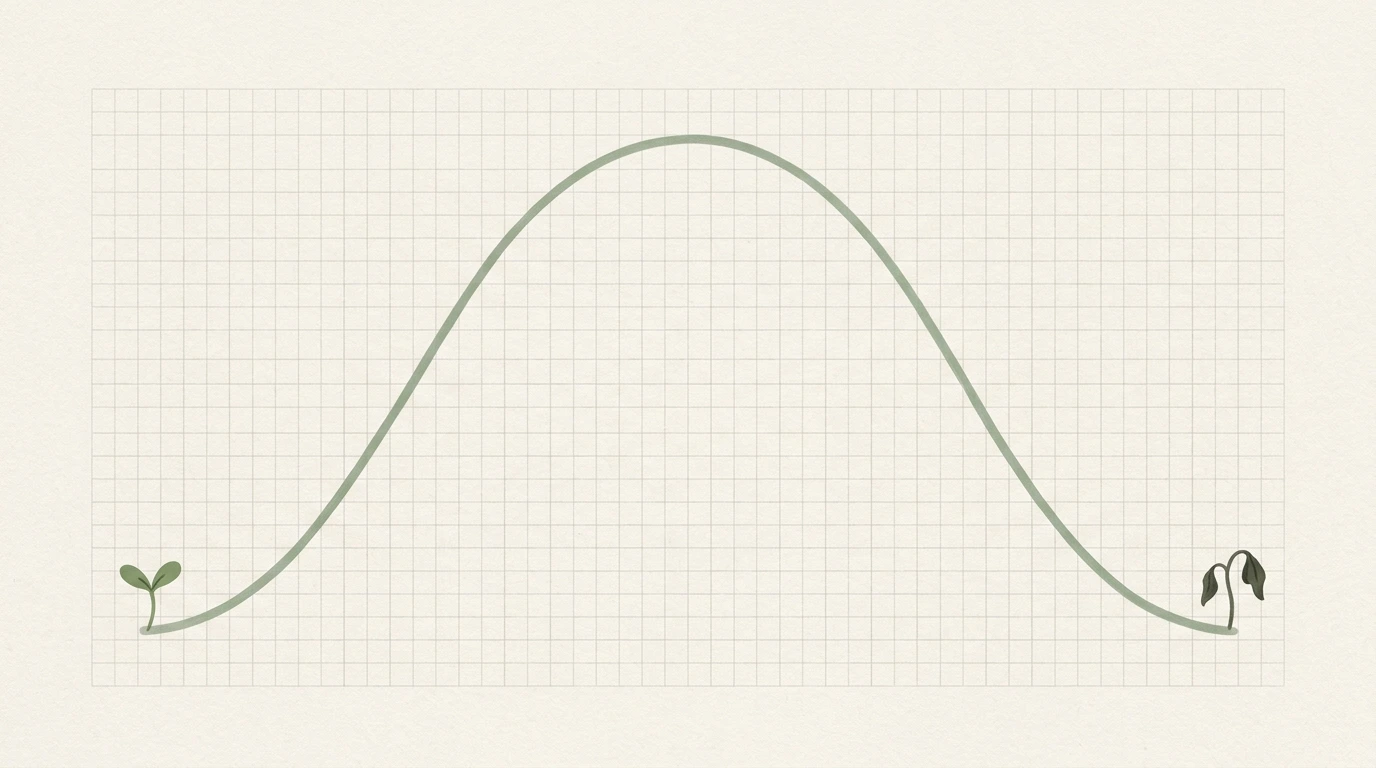
Hormesis describes a dose-response pattern in which a low dose of something stimulates a response while a higher dose inhibits it. A widely cited review of hormesis in toxicology sets that pattern out and argues it appears across many agents, biological models and measured outcomes. What the pattern means in practice still depends on the substance or stressor, the dose and what exactly is being measured. A change in a measured response shows that something happened under the study conditions, and whether that change is good for a person’s health is a separate question.
That gap is where the trouble starts. Hormesis is a research concept, while hormita is a label that some writers have laid over it. Exercise, fasting, cold exposure and breathing exercises each have their own evidence and their own risks, and none of that evidence is evidence for a routine sold under the name hormita. Cold exposure and prolonged fasting in particular are not suitable for everyone, so anyone with a heart condition, anyone who is pregnant and anyone taking regular medication should speak to a doctor before trying them. A sensible reader can take the general idea of building up gradually and resting properly without needing the word at all.
When hormita is sold as a supplement
Some pages go further and describe hormita as a supplement, crediting it with effects on hormones, sleep, energy or weight. The sources I reviewed did not identify a manufacturer, an official ingredient label with amounts, or research on a formulation sold under that name. Without those three things there is nothing to evaluate, and an article that lists ingredients or suggests a dose is describing the writer’s idea of a product, not a documented one.
The same problem has surfaced before with look-alike names. In our reporting on a supplement name that was easily confused with a real branded range, details belonging to one product were being attached to another because the spellings were close. If a product listing uses the word hormita, rely on the exact name and manufacturer printed on the packaging to find out what is being sold, and treat information about any similarly named product or a common herbal ingredient as information about something else.
What to check before trusting a hormita claim
Start with what the writer means by the word, because two articles using it may be describing unrelated things. Then ask whether the evidence offered is about that thing or about a neighbouring idea such as exercise, hormesis in general or an unrelated product. Finally, notice who benefits from the claim. A page that sells a product has a reason to present a loose label as an established method.
As of November 2026, hormita is best understood as a word with a plausible Spanish reading and an informal wellness use, and without a documented origin, a standard definition or verified evidence behind its supplement claims. Pages change quickly around terms like this, so it is worth checking the date on anything you read.