Reviewed and last updated on November 13, 2026 by Awais Ahmed, Founder & Editor-in-Chief, Urban Scope News.
Blazertje is the Dutch word for a little blazer: the everyday word blazer with the diminutive ending -tje attached. That is the whole of its logic, and it is worth holding on to, because a lot of what has been published about the word online treats it as the name of a distinct kind of jacket. It is not. The ending says something about how a speaker feels about a blazer, and very little about how that blazer is cut.
Most readers meet the word by accident, in a shop listing, a caption or a search result, and wonder whether they have missed a fashion term. Phrases such as zwart blazertje, which simply means a little black blazer, look exotic enough to suggest a trend. They are ordinary Dutch, and the answer to the puzzle sits in how the language builds small words.
How a Dutch ending turns blazer into blazertje
Dutch makes diminutives by attaching -je or one of its variants to a noun. Huis, a house, becomes huisje, and boon, a bean, becomes boontje. Which variant appears depends on the sound at the end of the base word, and after blazer it is -tje. Every Dutch diminutive is neuter, so speakers say het blazertje, and the plural is blazertjes.
The textbook sense of the ending is smallness, which is why the standard English rendering is little blazer or small blazer. In practice Dutch speakers use diminutives constantly and for much more than size. The ending can add warmth, make something sound modest or casual, or soften a request, so it often carries more tone than measurement. Someone who calls a favourite jacket their blazertje may be telling you they are fond of it, not that it is undersized. Spanish forms diminutives in a comparable way with -ita, a pattern that comes up in our look at another much-discussed word, and the same caution applies there: the ending shifts the tone more reliably than it shifts the object.
Where the word blazer itself comes from
The base word is English. Blazer is generally traced to the bright red jackets worn by the Lady Margaret Boat Club, the rowing club of St John’s College, Cambridge, in the nineteenth century, with the name playing on the idea of a jacket that seemed to blaze. A second story links it to a naval ship called HMS Blazer, whose crew supposedly wore smart matching jackets for a royal inspection. That version is repeated widely, but some historians of rowing dress call it a false etymology, and the boat club account has the better support. Dutch simply borrowed the word and gave it a native ending, as it has done with many imports.
When little does not mean small
The Dutch ending can also fade into the background. Jasje began as the diminutive of jas, a coat, yet a dictionary entry from the Dutch Language Institute treats it as a word in its own right, defining it as a short coat worn as outer clothing and, in particular, a tailored jacket, with colbertje listed as a synonym. In everyday use it names an ordinary jacket, not a miniature one. Dutch also has its own word for the tailored jacket, colbert, and a major Dutch online fashion retailer sorts these garments under blazers and colberts, with no category called blazertje.
Blazertje sits in similar territory without having become a fixed term. The entries I found for it describe it only as the diminutive of blazer, which matches how speakers appear to use it: loosely, often affectionately, and with no garment definition behind it. That is also why claims that a blazertje must be cropped, lightweight or relaxed do not hold up. Those are descriptions of particular jackets, and a speaker could apply the word to a jacket with any of those traits or none of them.
An older meaning with nothing to do with clothing
A dictionary of popular Dutch usage records a separate informal sense of blazertje dating from the 1940s: a makeshift substitute for a cigarette or cigar. Its examples include a later recollection of wartime shortages in which the writer guessed the substitute was made of dried dandelions and stale potato peel. The entry does not connect this sense to the jacket, and nothing in it suggests the two are related.
It reads as a historical usage, so a reader who meets the word beside fashion vocabulary is almost certainly dealing with the jacket. It does explain, though, why an older Dutch text can use the word in a way that seems to make no sense in a wardrobe.
Reading the word in a listing or an article
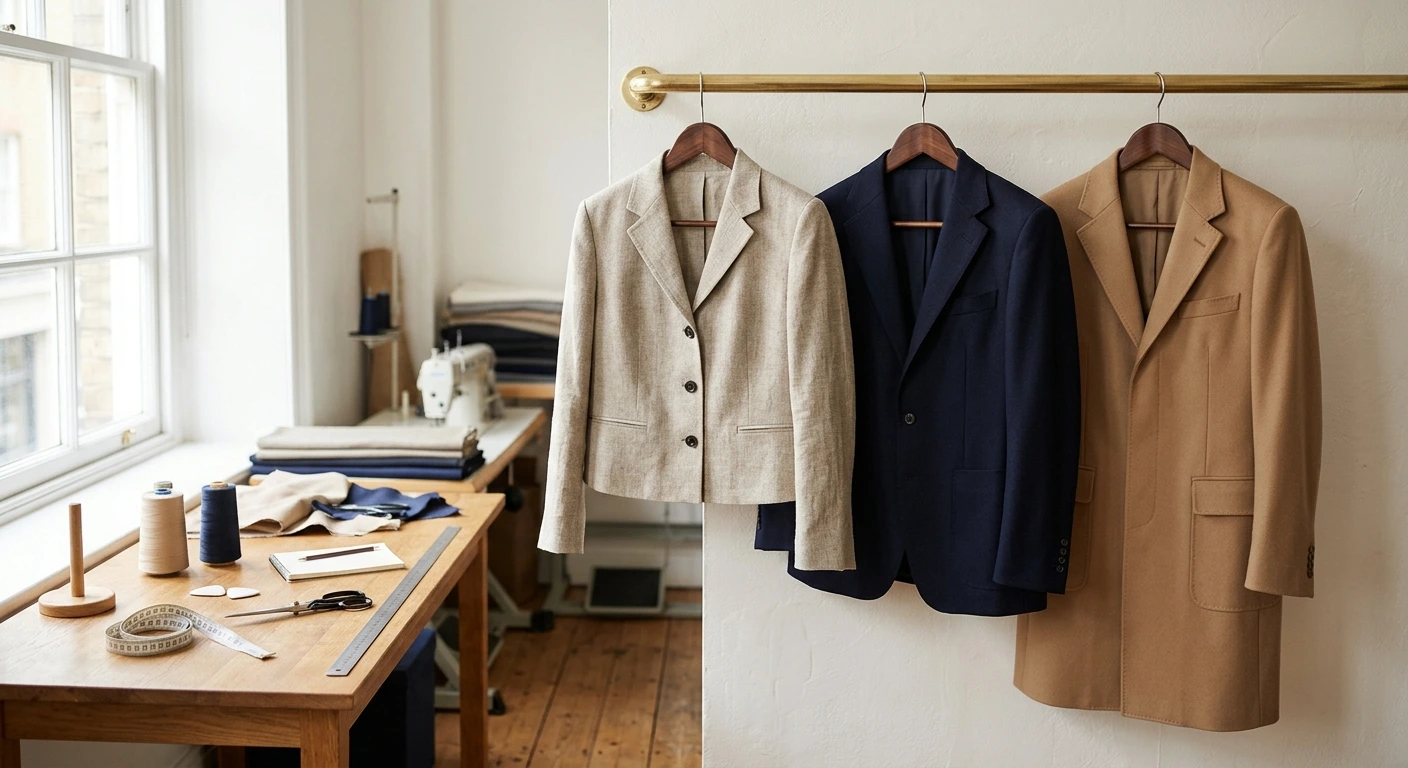
Because the word does not fix a cut, the most reliable guide to any jacket described as a blazertje is the information around it. Length comes first, since a cropped jacket that ends near the waist, a classic one that covers the hips and a longer line can all sit comfortably under the same label. Fabric comes next. Linen and cotton blends are lighter and suit warmer days, while wool and heavier weaves give more structure and warmth.
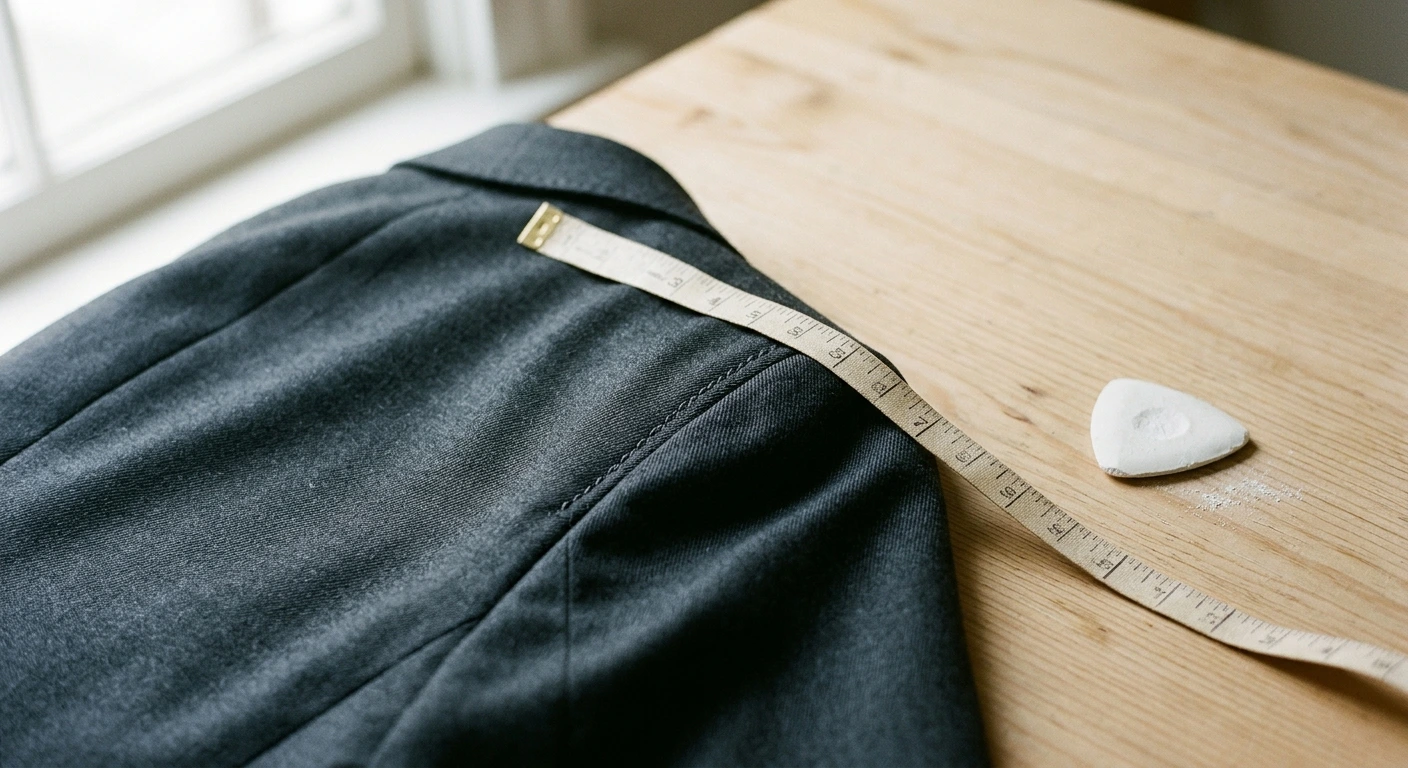
Fit matters most of all. The shoulder seam should sit at the edge of the shoulder, the jacket should close without pulling across the chest, and the sleeves should leave a little shirt cuff visible instead of swallowing the hand. Size charts differ between brands, so it helps to measure a jacket you already own and compare it with the listed dimensions. Neutral shades such as black, navy, grey and beige combine easily with most wardrobes, while stronger colours make more of a statement.
Why so many pages call it a trend
Search for the word and the explanations disagree with one another. One page presents it as a streetwear category built on oversized fits, another as a smart-casual staple, another as the name of a sustainable brand with ethical manufacturing, and several as a style movement. None of those descriptions follows from the Dutch, and the ones I reviewed did not cite a Dutch reference for what they claimed.
The mechanism is familiar. A word with unexpected search interest attracts explainers, and each new publisher borrows the framing of the last. Repetition looks like agreement, but a line copied across ten sites is still one line. The same pile-up happened around a misspelt Latin phrase that we looked at earlier.
As of November 2026, nothing in Dutch dictionaries or in fashion retail points to blazertje being a recognised garment category. It is a diminutive that English-language websites have recently started to define, and the sensible way to read those definitions is to check them against what Dutch sources actually say.
Quick answers about blazertje
What does blazertje mean in English?
It means little blazer or small blazer. The Dutch ending can also signal affection or a casual tone, so the English phrase captures only part of what a speaker may intend.
Is a blazertje a different kind of jacket?
No. It is the Dutch diminutive of blazer, not a garment category. A jacket called a blazertje could be cropped, lightweight or fully tailored, and the word alone will not tell you which.
What does zwart blazertje mean?
Zwart is Dutch for black, so a zwart blazertje is a little black blazer.
Is blazertje the same as jasje?
They are related but not identical. Both are diminutives, formed from blazer and from jas, a coat. Jasje has become an ordinary word for a short jacket, while blazertje is used more loosely and has no fixed definition as a garment.
What the word is really telling you
A blazertje is a blazer spoken about in a small, familiar voice. That is useful to know if you are reading Dutch, shopping in Dutch, or working through articles that claim more for the word than the language supports. The jacket itself is whatever the listing, the measurements and the photographs say it is.