Reviewed and last updated on October 5, 2026 by Awais Ahmed, Founder & Editor-in-Chief, Urban Scope News.
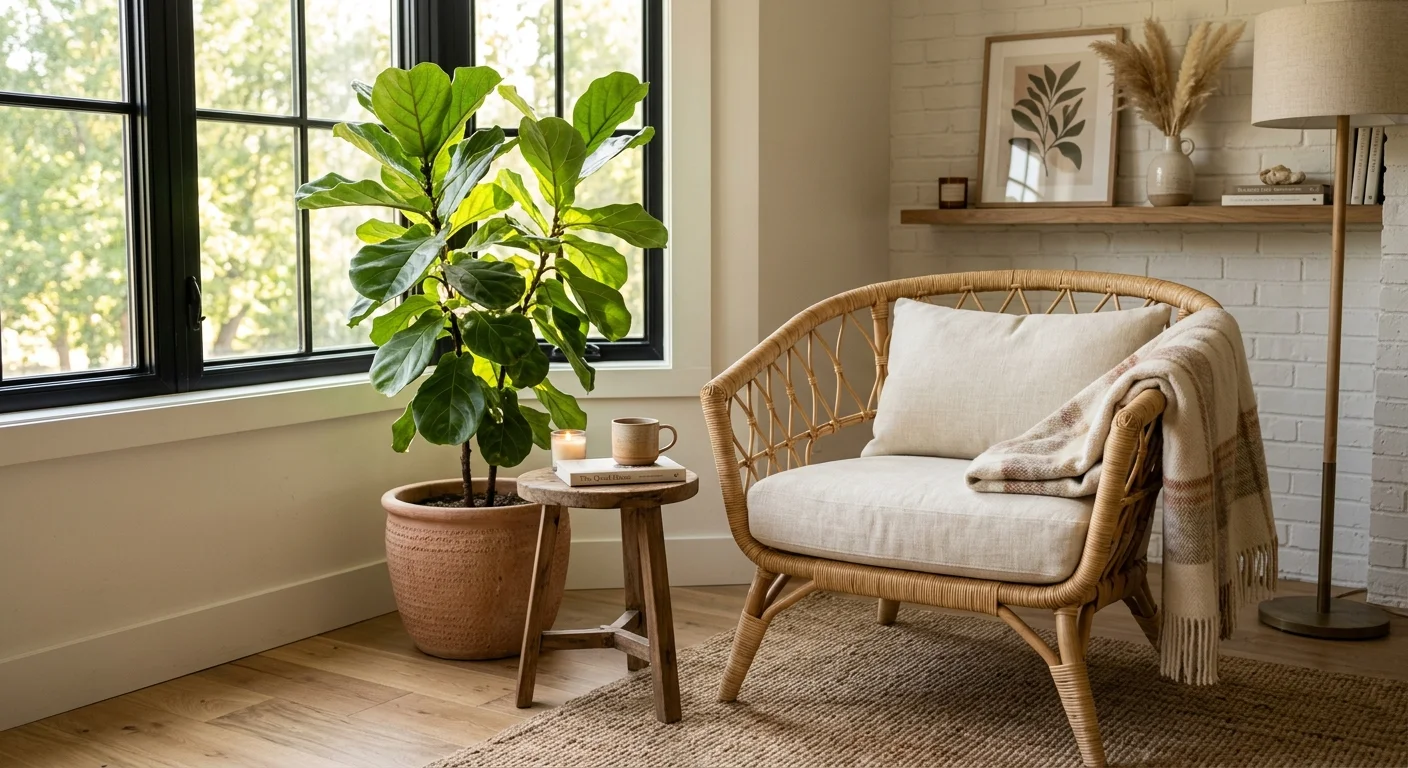
A rattan chair is a piece of seating furniture made from rattan, a flexible climbing palm native to the tropical forests of Asia, Africa and Australia. The material is prized for its warm, woven texture and relatively light weight, and it has been shaped into furniture for centuries by hand, either left as natural rattan or, in many modern pieces, reproduced in a synthetic form designed to survive rain and sun outdoors.
That short definition answers the headline question, but it only opens the door to what most people actually want to know when they start looking at rattan furniture: how it is made, whether it is the same thing as wicker, whether it will survive on a patio through a British winter or an American summer, and how long a well-made chair should last. This guide works through all of that, drawing a clear line between the traditional, plant-based material and the weatherproof synthetic alternative that now dominates much of the garden and patio furniture market.
What Rattan Actually Is
Rattan is not a type of wood, and it is not the same plant as bamboo, even though the two are often confused. Botanically, rattan palms belong to the subfamily Calamoideae within the palm family Arecaceae. The largest genus within that group, Calamus, contains roughly 400 species on its own, most of them native to tropical and subtropical regions of Asia, with smaller numbers found in Africa and Australia. Rather than growing upright like a tree, rattan grows as a climbing liana, scrambling up through surrounding vegetation toward the forest canopy using spines and hooked leaf tips, with some individual stems recorded growing well over a hundred metres long in the wild.
This growth habit is exactly what makes rattan so useful for furniture. The stem is solid, not hollow like bamboo’s jointed, segmented structure, and it combines a tough outer skin with a flexible interior that can be steamed, bent and woven without splitting. Most of the rattan that reaches furniture workshops still comes from the same regions that have supplied it for generations: Indonesia, Malaysia and the Philippines are the dominant sources, a point confirmed by the detailed overview of rattan’s botany and global trade maintained by ScienceDirect’s reference collection, which also notes that the rattan furniture and matting trade is worth billions of dollars a year worldwide.
From Harvested Cane to Finished Chair
Turning a rattan stem into a chair is a slower, more hands-on process than most mass-produced furniture goes through. It starts with harvesting mature canes from established plants, which are then cleaned, dried and treated to protect the material from insects and the mould that untreated rattan is prone to in humid conditions. Without this treatment stage, natural rattan can crack or deteriorate relatively quickly once it is out of the forest.
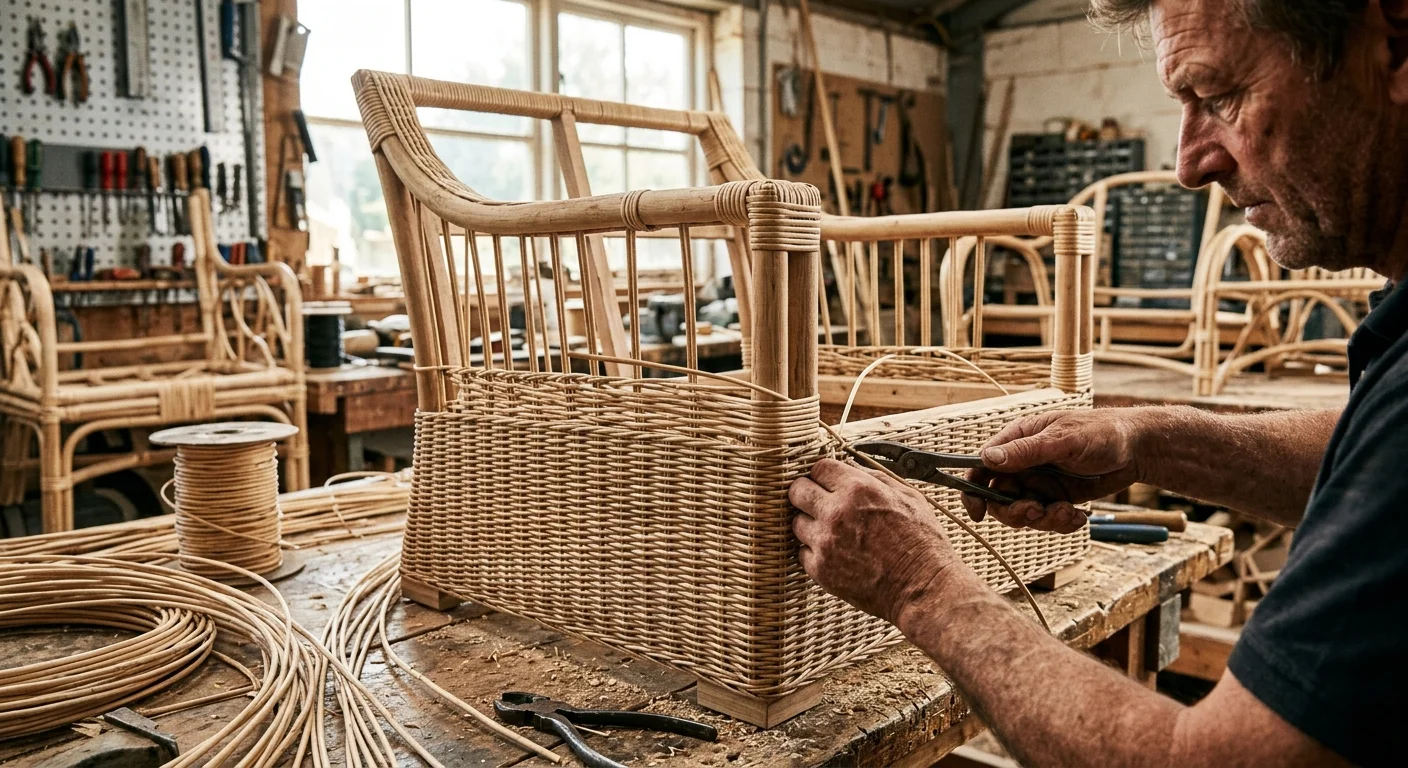
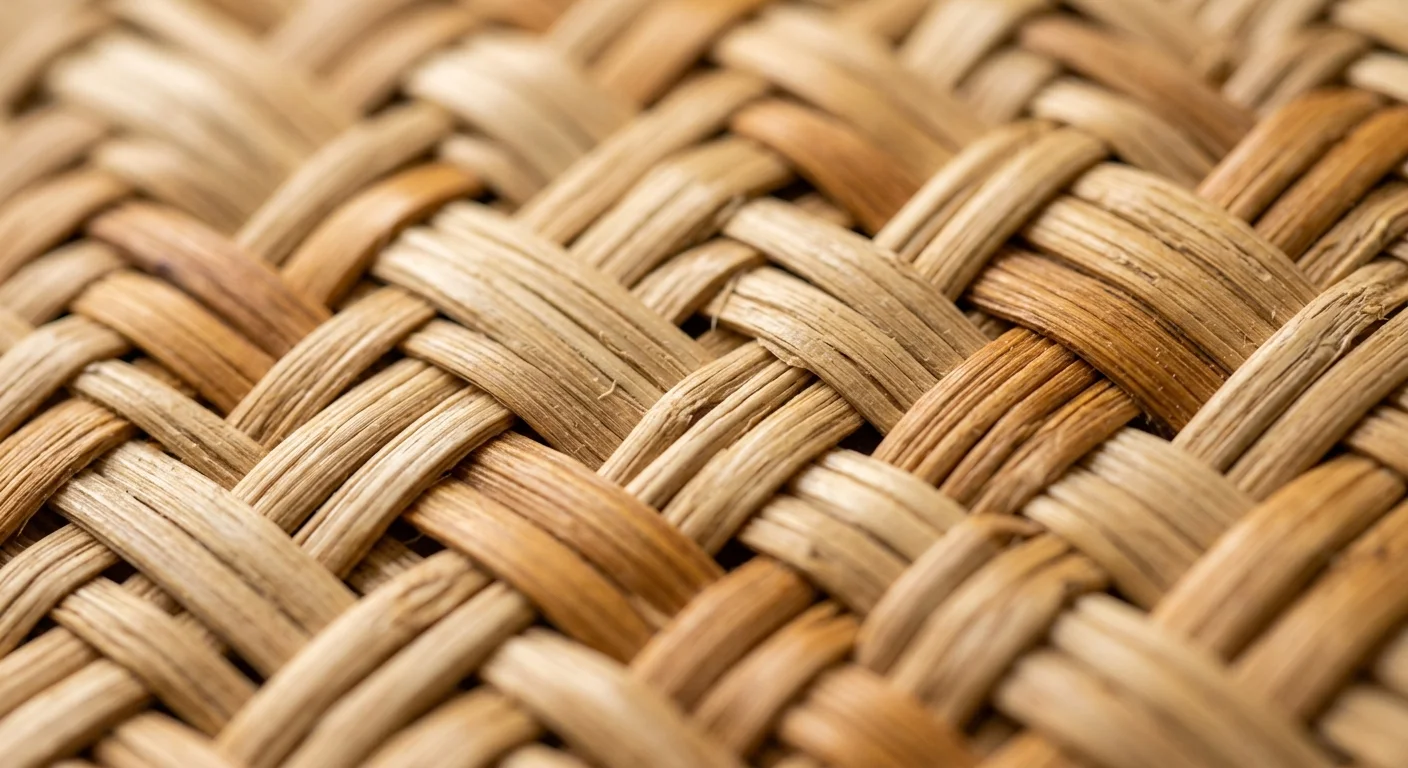
Once the canes are prepared, a frame maker heats and bends them into the chair’s basic shape. This is where curved backs, rounded armrests and the chair’s overall silhouette are formed, and because much of this bending is still done by hand, two chairs from the same workshop will rarely be perfectly identical. The woven sections come next, where thinner strips of rattan are interlaced across the seat, back and any decorative panels. The tightness and pattern of this weave affects both how the chair looks and how it will feel to sit in, with looser, open lattice patterns suiting a more relaxed, airy design and tighter weaves giving a firmer, more structured seat. Finally, the finished frame is polished, stained or coated, depending on whether the maker wants to preserve rattan’s natural colour or match it to a particular interior palette.
A Short History of Rattan Furniture
Rattan’s journey into Western homes has roots in colonial-era trade. Portuguese, Dutch and British merchants began bringing rattan back from Southeast Asia from the sixteenth and seventeenth centuries onward, but it was the Victorian era that turned it into a genuine furniture trend rather than a curiosity. Rattan and wicker furniture appeared at London’s Great Exhibition in 1851 and became closely associated with the fashion for exotic, handcrafted pieces that defined Victorian parlours and conservatories, a period of popularity well documented in Wikipedia’s overview of wicker furniture’s history, which also notes the material’s practical appeal: it was lightweight, relatively inexpensive, and considered more hygienic than heavily upholstered Victorian furniture.
Rattan’s popularity has risen and fallen more than once since then. It faded in the early twentieth century as more industrial materials came into fashion, resurfaced through mid-century modern design in the 1950s and 60s, became closely tied to the bohemian look of the 1970s, and has returned again in recent years as part of a broader interest in natural, tactile materials in home design. That back-and-forth history is part of why rattan furniture rarely feels dated for long; it has already cycled through several design eras and keeps finding its way back into fashion.
Why Rattan Chairs Have Stayed Popular
Much of rattan’s lasting appeal comes down to how differently it behaves compared with more common furniture materials. Its woven texture brings an organic, handmade quality into a room that smoother, more uniform materials rarely achieve, which is part of why it works so comfortably across such a wide range of styles, from coastal and bohemian interiors to pared-back Scandinavian rooms and tropical-themed spaces. It also tends to be noticeably lighter than equivalent wooden or heavily upholstered furniture, making it easy to move around when rearranging a room or carrying a chair out to a balcony for the afternoon. The open, woven structure allows air to pass through the seat and backrest rather than trapping heat the way a solid or densely upholstered chair can, which is one reason rattan furniture has always suited warmer climates and sunrooms particularly well.
The Main Types of Rattan Chairs
Rattan furniture now spans a much wider range of styles than the classic wicker armchair most people picture first. A traditional rattan armchair, with a woven seat, supportive back and armrests, remains a common choice for living rooms, reading corners and hotel lounges, usually finished with cushions for everyday comfort. Dining versions tend to pair a rattan-woven back or seat panel with a sturdier frame in wood or metal, giving the chair enough structure for daily use around a table while still bringing in that woven texture as a contrast to smoother surfaces like glass or marble. Lounge chairs take the same material further toward comfort, with deeper seats and wider frames built for lingering rather than sitting upright at a table.
Two more distinctive styles are worth knowing by name. Hanging rattan chairs, often sold as egg chairs or pod chairs, suspend from a ceiling hook or a freestanding frame and have become especially popular for gardens, balconies and bedrooms over the past decade, largely because the gentle swinging motion and cocoon-like shape make them feel like a piece of furniture in their own right rather than just a chair. The peacock chair, with its dramatic, fan-shaped high back, is one of the most recognisable rattan designs in existence, and it has moved in and out of fashion as a striking statement piece, often used more for visual impact and photography than for everyday seating.
Natural Rattan and Synthetic Rattan
Anyone shopping for a rattan chair today will quickly run into a choice between natural rattan and synthetic, or PE, rattan, and understanding the difference matters more than almost any other decision in the buying process.
Natural rattan is the real plant material, prepared and woven by hand, and it offers an authenticity that manufactured alternatives still struggle to fully replicate: slight irregularities in colour and texture from piece to piece, a genuinely organic feel, and a connection to traditional craft that many buyers value in itself. It performs best indoors, where it can be kept away from prolonged damp and direct, harsh sunlight.
Synthetic rattan, sometimes labelled PE rattan in the UK or resin wicker and all-weather wicker in the US, is a manufactured alternative usually made from polyethylene, engineered specifically to solve natural rattan’s biggest limitation: its vulnerability to weather. The table below summarises how the two compare.
| Feature | Natural Rattan | Synthetic (PE) Rattan |
|---|---|---|
| Material | Natural plant fibre | Manufactured polyethylene resin |
| Appearance | Organic texture, natural variation | Designed to imitate natural weaving |
| Best suited to | Indoor use | Indoor or outdoor use |
| Outdoor durability | Limited without shelter | Generally strong, especially with UV-resistant grades |
| Maintenance | Needs more careful handling | Easier to clean and maintain |
| Typical cost | Often higher for handmade pieces | Available across a wide price range |
Neither option is universally “better”. For an indoor reading chair or a dining set kept out of the weather, natural rattan’s authentic character is usually the stronger choice. For an exposed patio, garden or balcony setup, a good-quality synthetic rattan chair, with UV-resistant fibres and a rust-resistant aluminium or treated frame, will hold up far better over time than natural rattan left unprotected outdoors.
Is a Rattan Chair the Same as a Wicker Chair?
This is one of the most common points of confusion in furniture shopping, and the short answer is no, though the two terms get used almost interchangeably in everyday conversation, particularly in the US. Rattan is a material. Wicker is a weaving technique that can be applied to several different materials, including rattan, bamboo, willow and various synthetic fibres. A chair can therefore accurately be called both a rattan chair, because of what it is made from, and a wicker chair, because of how it has been constructed, and in practice most “wicker furniture” sold today is in fact made from woven rattan or a rattan-style synthetic fibre rather than any other material.
Rattan Chairs Outdoors: What Buyers Should Know
Whether a rattan chair can live outside comes down almost entirely to which type of rattan it is made from, though the terminology differs slightly depending on which side of the Atlantic you are shopping from. In the UK, outdoor rattan seating is usually marketed as garden furniture; in the US, the equivalent category is more often called patio furniture, and synthetic rattan is just as likely to be labelled resin wicker as PE rattan.
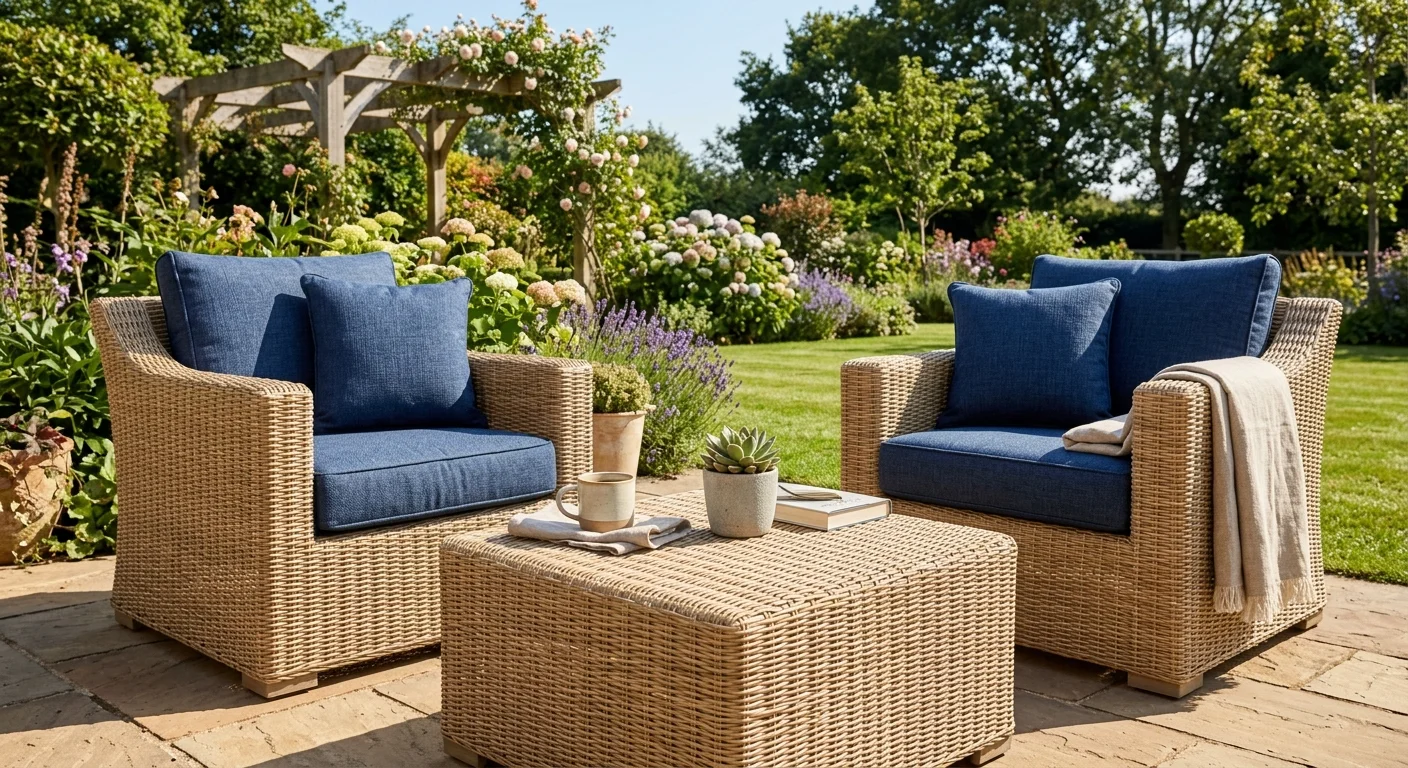
Natural rattan left outdoors without shelter is at real risk from rain, strong sun, humidity and temperature swings, which can lead to cracking, fading, mould and a general weakening of the woven fibres over time. It can still work on a covered patio, veranda or sheltered balcony, particularly with a protective cover during wet weather, but it was never designed to withstand a British winter or a humid American summer unprotected. Synthetic rattan was built for exactly this scenario, and quality PE or resin wicker furniture can generally handle sun, rain and shifting temperatures without the same deterioration, though cheaper synthetic pieces can still fade or become brittle over several years, so it is worth checking for UV-resistant fibres and a rust-resistant frame before buying anything intended to live outdoors year-round.
How Long a Rattan Chair Should Last
Durability depends on a combination of material quality, construction, where the chair lives and how well it is looked after. A well-made natural rattan chair kept indoors and away from damp and direct sun can realistically last for many years, in some cases decades, while good-quality synthetic rattan furniture built for outdoor use can also perform well over a long period when it uses genuinely weather-resistant materials rather than budget alternatives. The frame underneath the weaving matters just as much as the rattan itself; a beautifully woven chair built on a weak or poorly treated frame will eventually fail at its joints long before the weaving shows any wear, so a strong internal structure in treated hardwood, aluminium or properly coated steel is worth checking before you buy.
Comfort and Everyday Use
Rattan chairs have a reputation for being more decorative than comfortable, but that is not really accurate once cushions enter the picture. The woven structure itself gives a small amount of natural flex, which many people find more forgiving than a completely rigid chair, and it stays breathable in a way that solid wood or fully upholstered seating does not, so it rarely feels stuffy to sit in during warmer weather. How comfortable any individual chair feels in practice still comes down to the specifics: seat depth, back support, armrest height and, above all, whether it comes with a decent cushion, since most rattan chairs are designed with the expectation that cushions will do a good share of the comfort work rather than the woven frame alone.
Cleaning and Caring for a Rattan Chair
Looking after a rattan chair properly is one of the biggest factors in how long it lasts, and the right routine depends on which type you own. Natural rattan needs gentle, regular dusting, ideally with a soft cloth or a vacuum brush attachment, since dust tends to collect in the small gaps of the weave if it is left too long. For a deeper clean, a soft cloth dampened with mild soap and warm water works well, but the chair should never be soaked, and it should be left to dry completely afterward, because trapped moisture is what tends to encourage mould in natural fibres. Keeping natural rattan away from prolonged direct sunlight matters too, since it can dry the fibres out and cause fading over time.
Synthetic rattan is considerably more forgiving. Most pieces can be wiped down with mild soap, warm water and a soft brush, or even hosed off outdoors, without the same risk of damage, though harsh chemicals and abrasive scrubbing tools are still worth avoiding, since they can dull or scratch the resin’s finish over time.
Choosing the Right Rattan Chair
The most useful starting question when buying a rattan chair is simply where it will live. For an indoor spot, natural rattan is usually the stronger pick on looks and character, and the decision mostly comes down to style and comfort. For anywhere exposed to real weather, a weather-rated synthetic option with UV protection and a corrosion-resistant frame will save a lot of disappointment a year or two down the line.
Beyond location, it is worth looking closely at the quality of the weave itself before buying: an even pattern, securely fixed strands, smooth finished edges and no loose or fraying fibres are all signs of a well-made chair, while visible gaps or loose weaving tend to be an early warning sign of a piece that will not hold up to regular use. The frame deserves the same scrutiny, since wood, aluminium and steel each bring different strengths, wood suiting a traditional indoor look, aluminium offering a lightweight and rust-resistant option for outdoor furniture, and steel adding strength as long as it has proper protective coating against corrosion. Finally, basic comfort measurements, such as seat height, depth and armrest position, along with how well the chair actually fits the room or garden space available, matter just as much with rattan as with any other type of seating.
Is Rattan a Sustainable Material?
Rattan is often described as an environmentally friendly material, and there is a real basis for that: compared with hardwood trees, which can take decades to mature, rattan canes grow relatively quickly, and because harvesting typically cuts the stem while leaving the root system intact, a well-managed plant can regenerate and be harvested again within a few years rather than needing to be replanted from scratch.
That said, the full picture is more complicated than “renewable and eco-friendly” on its own suggests, and it is worth knowing before assuming every rattan chair on the market is automatically a sustainable choice. The great majority of commercial rattan is still collected from wild forest stands rather than grown on dedicated plantations, and decades of rising demand combined with inconsistent harvesting controls have led to well-documented declines in wild rattan populations across parts of Southeast Asia. An assessment summarised by the UN’s Food and Agriculture Organization notes that wild rattan stocks have fallen sharply in several producer countries due to overexploitation and shrinking forest habitat, with the IUCN Red List identifying well over a hundred rattan species as threatened in the wild as a result. Organisations including WWF have since worked with producer countries on certified, better-managed rattan supply chains, but buyers who care about sustainability specifically are better off looking for furniture with a credible sourcing certification rather than assuming “natural” and “renewable” automatically mean responsibly harvested.
Synthetic rattan sidesteps the forest-harvesting question entirely, since it is manufactured rather than grown, but it carries its own environmental trade-offs around plastic production and end-of-life disposal. Choosing a durable, well-made piece in either material, natural or synthetic, that will genuinely last for years rather than needing early replacement, is one of the more reliable ways to reduce the overall environmental footprint of a furniture purchase.
Frequently Asked Questions
What is a rattan chair? A rattan chair is a chair made from rattan, a flexible climbing palm woven into furniture, or from synthetic rattan designed to copy the look of the natural material while offering better resistance to outdoor weather.
Are rattan chairs waterproof? Natural rattan is not waterproof and should be sheltered from prolonged rain and damp. Synthetic rattan, particularly PE rattan or resin wicker built for outdoor use, is designed to handle weather exposure far better, though quality still varies between products.
Is rattan the same as wicker? No. Rattan is a material, while wicker describes a weaving technique that can be applied to rattan, bamboo, willow or synthetic fibres. A chair can accurately be called both a rattan chair and a wicker chair at the same time.
How long do rattan chairs last? A well-made natural rattan chair kept indoors away from damp and direct sun can last many years, and a good-quality synthetic rattan chair built for outdoor use can also last a long time, provided the underlying frame is sturdy and well constructed.
Can rattan chairs stay outside all year? Natural rattan is not suited to being left outdoors through harsh weather unprotected. Synthetic rattan designed for outdoor use can generally stay outside, though a cover during extreme weather and periodic cleaning will help it last longer.
Is rattan furniture sustainable? It can be, since rattan grows faster than most hardwood trees and regenerates after cutting, but much of the world’s commercial rattan is still wild-harvested, and overharvesting has caused documented declines in wild rattan stocks in parts of Southeast Asia. Looking for certified or responsibly sourced rattan is a more reliable sustainability signal than assuming all natural rattan is automatically eco-friendly.
Final Thoughts
A rattan chair is, at its simplest, a chair woven from a tropical climbing palm, but that simple description undersells how much craft, history and material science actually sits behind it. Knowing the difference between natural and synthetic rattan, understanding that rattan and wicker describe two different things, and matching the right type to where the chair will actually live are the three decisions that matter most, whether you are furnishing a reading corner, a dining room or a garden that needs to survive a British winter. Handled thoughtfully, a well-chosen rattan chair is one of the few pieces of furniture that genuinely works across indoor and outdoor spaces, traditional and modern interiors, and has already proven, across more than a century of shifting design trends, that it tends to come back into fashion rather than stay out of it for long.