Reviewed and last updated on July 17, 2026 by Awais Ahmed, Founder & Editor-in-Chief, Urban Scope News.
Most people ask the wrong first question when they want to grow their own food. They ask, which seeds should I buy? The better question is: what does my space actually offer, and what do I want to get out of it?
Learning how to start a vegetable garden isn’t about buying every seed packet on the shelf and planting it all on the same Saturday. It’s a simple, repeating system:
Observe → prepare → sow → protect → water → harvest → record → improve.
Whether you’ve got a windowsill, a balcony, a modest back garden, a raised bed or a full allotment, the same principles apply, you’re just scaling them up or down. This guide walks through everything a beginner needs, plus enough depth that experienced growers will still find something useful.
You Don’t Have to Wait for Spring
One of the most common myths about growing your own vegetables is that there’s only one start window each year. In reality, there’s almost always something you can sow. Even deep into summer, you can still get turnips, spring cabbage, Chinese cabbage, pak choi, tatsoi, mizuna, chicory, fennel and autumn or winter salads into the ground. Carrots can go in too, ideally under fine mesh to keep carrot fly off them, and in milder southern gardens a late sowing of French or runner beans can still produce a worthwhile crop.
The lesson: don’t let a missed ideal month stop you from starting. There’s almost always a suitable crop for the weeks you’re in.
Start With Your Space, Not Your Shopping List
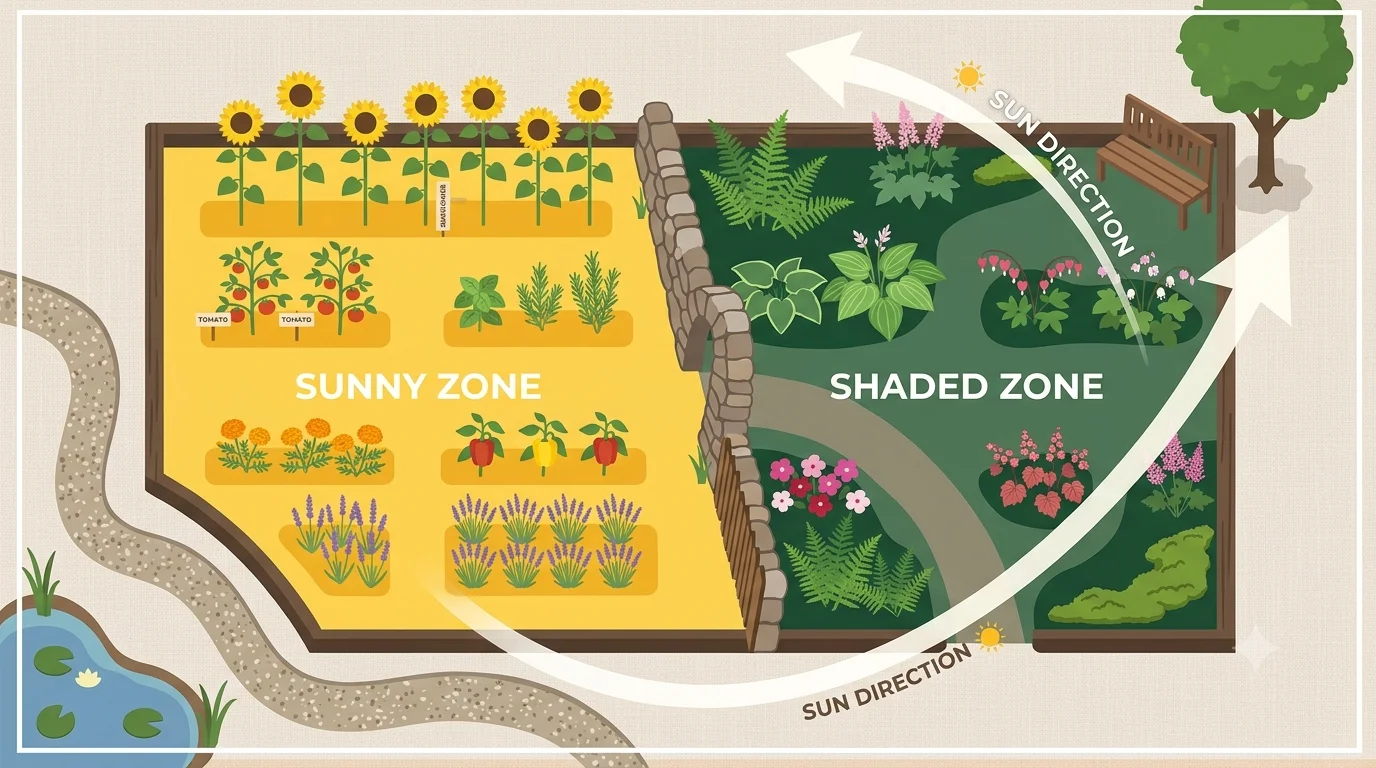
Before opening a seed catalogue, answer these questions honestly:
- How much sunlight does the site actually get?
- Where will water come from, realistically?
- What soil or compost will you be working with?
- How much time can you give it each week?
- What does your household actually eat?
- Which vegetables taste noticeably better fresh, or cost more to buy?
Sunlight
Spend a day watching your space. Note where you get full sun, morning-only sun, afternoon-only sun, light shade and deep shade. Fruiting crops, tomatoes, peppers, aubergines, cucumbers, courgettes and sweetcorn, want your sunniest spot. Leafy crops like lettuce, spinach, chard, rocket, peas and coriander will tolerate partial shade, and in a hot summer that shade can actually stop salad leaves turning bitter or bolting.
Wind
Wind dries out soil and containers fast, snaps bean and tomato stems, and puts off pollinating insects. A solid fence might feel like better protection, but a semi-permeable barrier, trellis with climbers, a hedge, or windbreak mesh, slows wind down more effectively without creating turbulence on the sheltered side.
Water access
Think about how far you’ll be carrying a watering can. A vegetable patch that’s a long walk from a tap becomes a chore in a dry spell. A water butt with a lid, a hose with a trigger nozzle, or simple drip irrigation for containers can save you a lot of effort.
Drainage
Standing water, a sour smell, grey or blue-tinged soil, and moss taking over are all signs of poor drainage. Avoid putting beds in the lowest, wettest corner of the garden unless you’re prepared to improve the drainage or raise the growing level with a raised bed.
Choosing Your Vegetable Garden Layout
There’s no single correct vegetable garden layout, the right one depends entirely on your space, mobility, budget and how long you’ll be in the property.
Growing vegetables at home in pots and containers

Containers are ideal for balconies, patios, rented homes, poor soil, or anyone who simply wants to start immediately. Tomatoes, peppers, chillies, salad leaves, radishes, beetroot, carrots, dwarf beans, peas, potatoes and spring onions all do well in pots, provided the container is large enough and has drainage holes. As a rough guide:
| Crop | Practical container size |
|---|---|
| Salad leaves | 15–20cm deep trough |
| Radish | 15cm deep |
| Short carrots | 20–30cm deep |
| Beetroot | 25cm deep |
| Dwarf beans | 25–30cm deep |
| Tomato | roughly 25–40 litres per plant |
| Pepper or chilli | roughly 10–20 litres |
| Courgette | 40 litres or more |
| Potatoes | 30–50-litre bag or pot |
Bigger containers dry out more slowly, hold nutrients better and need less frequent watering, so when in doubt, size up.
Traditional ground-level beds
Best where your existing soil is reasonably fertile and drains well. Cheaper to set up and easy to expand, though there’s more bending involved and poor soil may take a couple of seasons to improve.
Raised beds

A strong option for heavy clay, poor drainage, limited mobility, or where you want clearly defined sections for crop rotation. A width of around 1.2 metres lets most people reach the middle from either side without ever standing on the soil.
Allotments
If you’re taking on a plot, check water access, shade from nearby trees, existing weed problems (bindweed, couch grass and horsetail are the big three), site rules on sheds, bonfires and pesticides, and whether fruit trees are allowed. A large neglected allotment can be overwhelming, a half plot, properly managed, beats a full plot left to run wild.
Greenhouse or polytunnel
Protected growing lets you start earlier, finish later, and grow better peppers, chillies, cucumbers and aubergines. It also means daily ventilation in summer, more frequent watering, and closer attention to whitefly, aphids and red spider mite. It doesn’t remove problems, it just changes which ones you’re dealing with.
Designing the Layout Itself
A workable plot needs more than growing beds, allow room for paths, a compost area, tool storage, somewhere to pot on plants, and supports for climbing crops. Don’t be tempted to plant every last centimetre, narrow paths look efficient on paper but become genuinely annoying once courgettes and squash start sprawling.
Place tall crops, runner beans, peas, sweetcorn, cordon tomatoes, where they won’t shade smaller plants. In many gardens, the north side of the plot is the sensible spot for these, though your own orientation, buildings and hedges will affect exactly where shade falls. It’s worth sketching a simple scale plan on paper, marking sun, shade, water access and permanent structures, before you commit to a layout.
Getting the Soil Right

Healthy soil is a living system of minerals, organic matter, air, water, fungi, bacteria and earthworms, not just brown filler.
- Sandy soil warms early and is easy to work, but drains and loses nutrients quickly.
- Clay soil holds moisture and nutrients well but is slow to warm and easily compacted, never dig or walk on wet clay.
- Loam is a balanced mix of sand, silt, clay and organic matter, though even loam still needs good structure and drainage.
A simple squeeze test tells you a lot: gritty and crumbly is sandy, a smooth sticky ribbon means clay, silky with a weaker ribbon suggests silt, and a crumbly ball that isn’t especially sticky or gritty points to loam.
Aim for a pH around 6.5 for most vegetables, and test before assuming you need to add lime, potatoes are more prone to scab in alkaline soil, while brassica clubroot tends to be worse in acidic ground. Well-rotted manure, garden compost, leaf mould and composted bark are all good ways to build organic matter; avoid fresh manure, which can burn plants, carry weed seeds and, if unfamiliar, occasionally contain herbicide residues that distort growth in beans and tomatoes.
Peat-Free Compost
Look specifically for compost labelled peat-free, words like organic or natural don’t guarantee it. Peat-free blends (bark, wood fibre, coir, green compost) behave differently from peat in terms of water and nutrient retention, so follow the manufacturer’s watering guidance rather than your old habits.
Your Grow Your Own Vegetables Starter Kit

You don’t need a shed full of gear to begin. A practical starter kit covers:
- Hand trowel and hand fork
- Watering can with a rose
- A garden fork or spade
- Hoe and rake
- Secateurs and gloves
- Plant labels, string and a measuring tape
- A bucket and a sharpening stone
Useful additions as you progress include a wheelbarrow, fine insect mesh, fleece, a cold frame and a soil pH kit. Clean and dry tools after use, and sharpen blades regularly, a sharp hoe is both safer and more effective than a blunt one.
Best Vegetables to Grow in Small Spaces and for Beginners
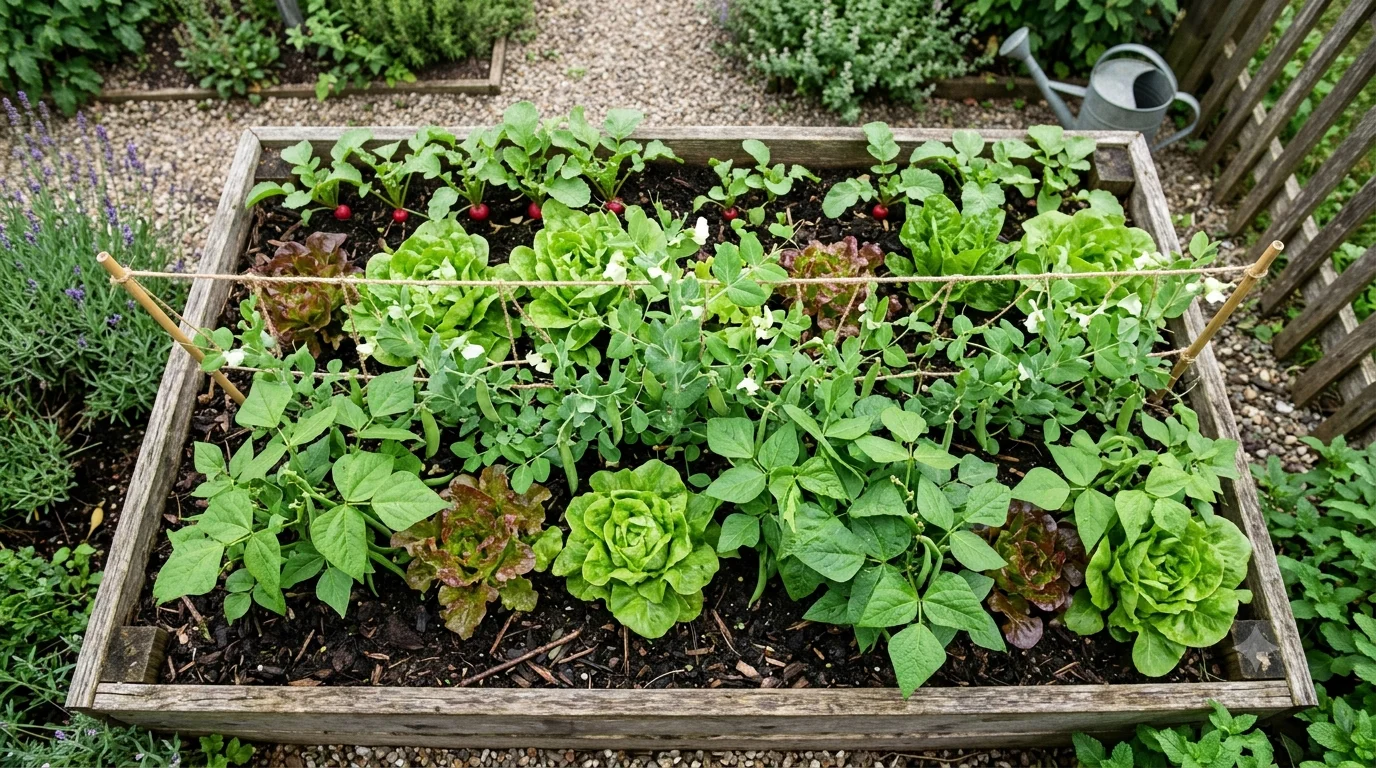
Grow what your household actually eats. It’s easy to end up with a bed of turnips nobody wants.
Prioritise crops that are:
- Eaten regularly (lettuce, tomatoes, onions, potatoes, carrots, herbs)
- Noticeably better fresh (peas, sweetcorn, salad leaves, new potatoes)
- Expensive or hard to find (coloured chard, heritage tomatoes, specialist chillies)
For beginners, the most forgiving crops are radish, lettuce, rocket, chard, beetroot, spring onions, peas, broad beans, dwarf French beans, courgettes, potatoes, kale and most herbs. Cauliflower, celery, aubergines, melons and long-season chillies are more demanding and reward a bit more experience.
Sowing: Seeds, Modules and Timing
Direct sowing, putting seed straight into its final position, suits root crops like carrots, parsnips, beetroot and radish, along with peas, beans and spinach, since these dislike having their roots disturbed.
Indoor or module sowing works better for tomatoes, peppers, aubergines, courgettes, squash, brassicas and leeks, letting you get a head start while another crop still occupies the bed outside.
A useful rule of thumb: sow at a depth roughly two to three times the size of the seed, and always sow thinly to save on later thinning. Leggy, pale seedlings usually mean too little light or too much warmth relative to the light available, move them somewhere brighter and slightly cooler.
Before planting tender, indoor-raised seedlings outside, harden them off gradually over around two to three weeks, a spell outside during the day, back in at night, with gradually increasing exposure to sun and wind.
A Practical Growing Vegetables Calendar

Local frost, altitude and exposure will shift these dates, but as a general framework for lowland gardens:
Late winter-early spring (Feb–Mar): broad beans, peas, radish, early lettuce under cover, onion sets, early potatoes, leeks, brassicas.
April: a major sowing month, beetroot, carrots, chard, lettuce, radish, spring onions, peas, spinach outdoors; courgettes, squash, cucumbers, sweetcorn and tomatoes indoors.
May: harden off and plant out tomatoes, courgettes, squash and sweetcorn after frost risk passes; sow French and runner beans; install supports; begin regular pest checks.
June: plant leeks and winter brassicas; sow more beans, peas, beetroot, carrots and salads; tie in tomatoes and remove side shoots on cordon types.
July: sow autumn and winter salads, spring cabbage, turnips, pak choi and mizuna; keep carrots covered; water deeply and watch for blight.
August: sow spinach, winter salads, radish and spring onions; plant overwintering brassicas; keep watering consistent to avoid split tomatoes and blossom-end rot.
September-October: plant garlic and overwintering onion sets, sow winter salads under cover, clear finished crops, mulch empty beds, harvest maincrop potatoes and squash.
November-December: harvest leeks, kale and sprouts, protect winter salads, avoid working waterlogged soil, and use the quiet months to review your records and plan next year’s rotation.
Watering and Feeding Without Overdoing It

More plants suffer from poor watering habits than from a simple lack of feed. Check moisture roughly 15cm down rather than trusting the surface, and water deeply but less often for established plants, rather than a light daily sprinkle that only encourages shallow roots. Containers are the exception, they may need watering daily in hot or windy weather.
Water the soil rather than the leaves, ideally in the early morning, and mulch afterwards (not before) to lock moisture in. Irregular watering is behind many common problems, split roots, bitter leaves, blossom-end rot and poor pod set are almost all watering-related rather than feeding-related.
When it comes to feeding, match it to the crop rather than the calendar. Leafy crops like cabbage and kale want more nitrogen; fruiting crops like tomatoes and peppers want more potassium once they’re flowering. Container plants depend on you entirely for nutrients, since their roots can’t forage beyond the pot.
Keeping Pests and Disease Under Control

The most effective approach layers several light-touch methods rather than reaching straight for a spray:
- Identify the actual cause before treating anything, a hole in a leaf could be a slug, a caterpillar, flea beetle or simple wind damage.
- Prevent with healthy soil, correct timing, proper spacing and resistant varieties.
- Monitor weekly, checking under leaves and around growing points.
- Physical control, hand-picking, mesh, collars and hosing off aphids, solves most problems without any spray at all.
Fine mesh before pests arrive is far more effective than netting after the damage is done, this is especially true for cabbage-white caterpillars and carrot fly, both of which are much easier to exclude than to cure.
Crop Rotation, Simplified
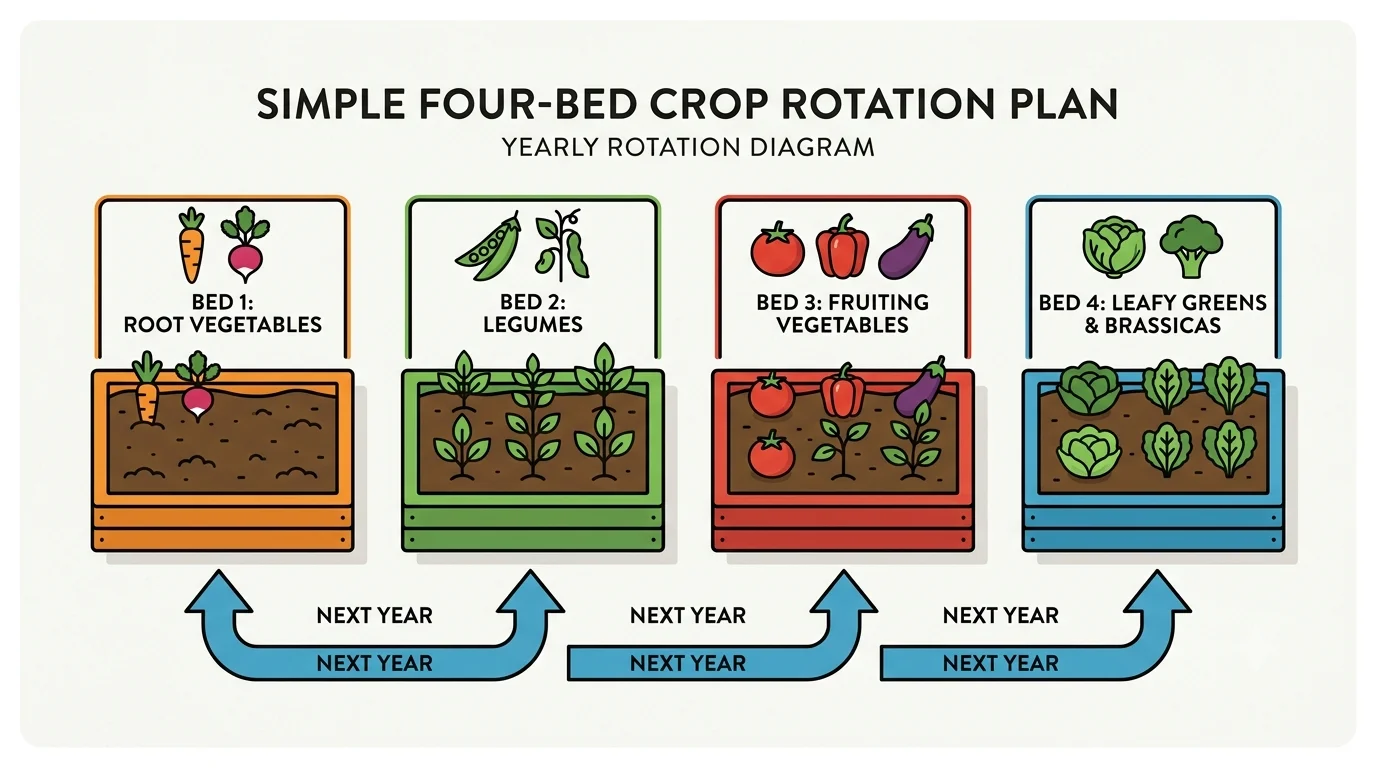
Moving related crop families to a different bed each year helps control soil-borne pests and disease. A simple four-year rotation works well:
- Potatoes and tomatoes
- Roots and alliums (carrots, onions, garlic, leeks)
- Peas and beans
- Brassicas (cabbage, kale, broccoli)
Then repeat from year one. It’s not a cure-all, it won’t help against pests that fly in from neighbouring gardens, but it’s genuinely valuable against persistent soil issues like clubroot and onion white rot.
The Mistakes Nearly Every Beginner Makes
- Planting too much of one thing. Two well-tended courgette plants beat twenty struggling ones.
- Sowing everything on a single date, creating a glut followed by a gap.
- Starting tender crops too early without enough light, producing weak, leggy seedlings.
- Watering only the surface, leaving roots dry underneath.
- Protecting crops too late, netting and mesh work best before pests arrive, not after.
- Walking on beds, compacting the soil and squeezing out air and drainage.
A Sensible First-Year Plan

In year one, the goal is to learn your space, not achieve self-sufficiency. A realistic starting list might include two salad crops, two root crops, one pea or bean crop, a courgette plant, a few tomatoes, one leafy winter crop and a handful of herbs. Success in year one looks like understanding where the sun falls, how fast your soil dries, and which vegetables your household actually eats, not a full harvest of everything at once.
Frequently Asked Questions
What is the easiest way to start a vegetable garden for beginners?
Begin small, with forgiving crops like lettuce, radish, beetroot, peas and dwarf beans, in whatever space you have, pots, a raised bed or a small patch of ground. Focus on decent sunlight, reliable water and soil that drains, rather than trying to grow everything at once.
Can I grow vegetables at home in pots if I don’t have a garden?
Yes. Tomatoes, peppers, salad leaves, radishes, beetroot, dwarf beans, potatoes and herbs all do well in containers, provided the pot is large enough and has drainage holes. Bigger containers need less frequent watering than small ones.
What are the best vegetables to grow in small spaces?
Salad leaves, radishes, spring onions, dwarf beans, beetroot and courgettes are all productive in a small footprint, especially when sown in succession rather than all at once.
Do I need to test my soil before planting?
It’s worth doing, particularly on a new plot or if plants are underperforming for no obvious reason. A pH around 6.5 suits most vegetables, and testing prevents you adding lime or feed you don’t actually need.
When is the best time to start a vegetable garden?
There’s no single start date. Spring is the busiest sowing period, but many crops, salads, spring cabbage, turnips, pak choi and even a late crop of beans, can still be sown well into summer.
Starting a vegetable garden isn’t about doing everything at once, it’s about matching a small number of crops to the space, light and time you actually have, watching what happens, and adjusting next season. Get that cycle right on a small scale, and scaling up becomes the easy part.