Reviewed and last updated on August 30, 2026 by Awais Ahmed, Founder & Editor-in-Chief, Urban Scope News.
Taro is a starchy tropical plant best known for its edible underground corm, commonly called taro root. Mild, slightly sweet and nutty when cooked, taro appears in everything from soups and curries to chips, desserts and the familiar purple taro milk tea found in bubble tea shops.
Botanically, taro is Colocasia esculenta, a member of the Araceae family. It has been cultivated for food for centuries and is now grown throughout tropical and subtropical regions. The plant is valued not only for its corm but, in some food traditions, for its leaves and stems as well. These parts are eaten after proper cooking.
What Is Taro Root?
Despite the common name taro root, the part most people eat is technically a corm, a swollen underground plant stem that stores starch and energy for the plant.
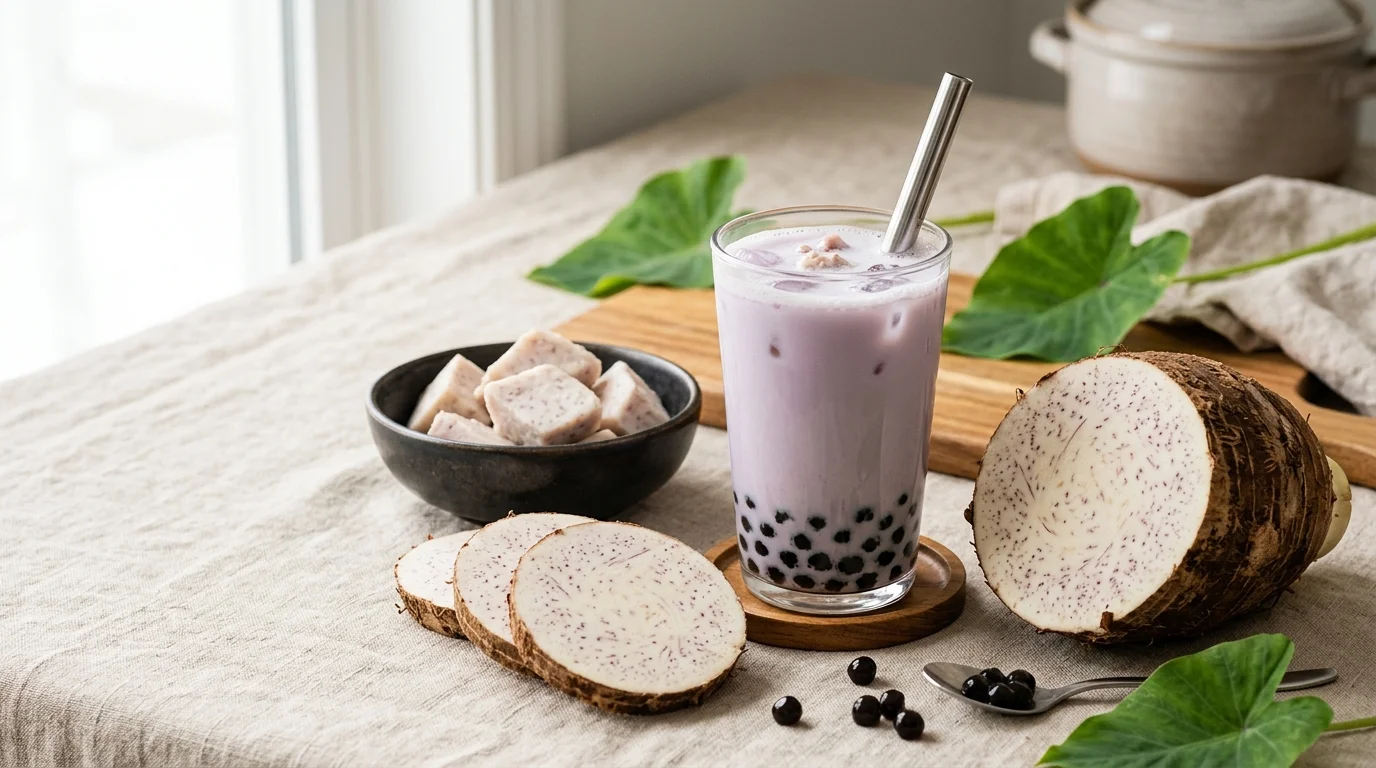
From the outside, taro usually has rough, brownish skin marked with rings or small fibres. Once cut open, the flesh is commonly white or cream with small pink, lilac or purple flecks, although appearance varies between varieties.
Taro is primarily a starchy food. It can be boiled, steamed, baked, fried, mashed or added to savoury and sweet dishes. Because its texture becomes soft and creamy when cooked, it works particularly well in soups, stews, mashed dishes and desserts.
What Does Taro Taste Like?
Taro has a mild, earthy and slightly nutty flavour with gentle natural sweetness. Its taste is sometimes compared with a combination of potato, sweet potato and chestnut, although taro has its own softer, slightly creamy character.
Fresh cooked taro does not taste strongly sugary or vanilla-like.
That is worth remembering if your first experience with taro is a bubble tea or dessert. Commercial taro drinks often contain sugar, milk or creamer, flavouring and sometimes vanilla, so their flavour can be much sweeter than the vegetable itself.
What Does Taro Root Taste Like?
Cooked taro root is starchy, smooth and mildly nutty. Depending on how it is prepared, it can become fluffy like a potato or soft and almost creamy.
Its gentle flavour makes it suitable for both savoury and sweet recipes.
Is Taro Sweet?
Taro has a mild natural sweetness, but it is not as sweet as most taro-flavoured drinks and desserts suggest.
Sugar, condensed milk, syrups, vanilla and other flavourings are often added to commercial taro products, creating a much sweeter flavour profile.
What Colour Is Taro?
Real taro is not usually bright purple inside.
Many varieties have pale white or cream flesh with tiny pink, lilac or purple markings. Some varieties can show stronger pigmentation, but the vivid lavender colour commonly associated with taro bubble tea is not a reliable picture of what fresh taro looks like.
Commercial drink powders vary considerably. Some contain actual taro powder alongside flavourings and added colours, while others rely more heavily on flavouring and colouring ingredients. Current commercial examples show just how different one taro mix can be from another.
Why Is Taro Milk Tea Purple?
The familiar light-purple colour of taro milk tea can come from several sources depending on the recipe.
A drink may contain taro, taro powder, purple plant-derived colouring, food colouring or a combination of ingredients. This means a very bright purple drink does not necessarily contain more real taro than a pale one.
The ingredient list or information provided by the café is a better guide than colour alone.
Is Taro a Fruit or Vegetable?
Taro is not a fruit.
In everyday cooking, it is usually described as a root vegetable because its main edible part grows underground. Botanically, however, the food commonly called taro root is a corm.
So if you are wondering whether taro is a potato, fruit or yam, the answer is none of these. It is its own plant species, Colocasia esculenta.
Is Taro a Potato?
No. Taro is not a potato.
Both are starchy underground foods and can be boiled, mashed, baked or fried, which explains why they are sometimes compared. Botanically, however, they come from completely different plant families.
Taro also tends to develop a slightly creamier, nuttier flavour when cooked.
What Is Taro Milk Tea?
Taro milk tea is a sweet, creamy drink flavoured with taro or taro-style flavouring. Depending on the recipe, it may contain milk, non-dairy creamer, sugar, tea, cooked taro, taro paste or commercial taro powder.
It is often served cold with ice and can be combined with tapioca pearls to make taro bubble tea or taro boba.
There is no single universal recipe. Some shops use real cooked taro, some use dehydrated taro powder, while others use prepared mixes containing sugar, creamer, flavourings and colouring. Commercial ingredient lists confirm that formulations can differ substantially.
What Does Taro Milk Tea Taste Like?
Taro milk tea usually tastes sweet, creamy and mildly nutty, often with vanilla-like notes.
The taste is normally more dessert-like than plain cooked taro because milk tea recipes frequently contain added sugar, creamer and flavouring.
If a drink is made with fresh taro or taro paste, you may notice a thicker texture and a more earthy, starchy taste.
What Is Taro Boba?
Taro boba generally means a taro-flavoured bubble tea served with chewy tapioca pearls.
The word boba may refer either to the tapioca pearls themselves or to the finished bubble tea drink. Therefore, taro boba, taro bubble tea and taro milk tea with pearls often describe very similar drinks.
The pearls themselves are usually made primarily from tapioca starch rather than taro.
Does Taro Have Caffeine?
Taro itself does not contain caffeine.
However, taro milk tea can contain caffeine if it is prepared with black tea, green tea, oolong tea or another caffeinated tea base.
A taro drink prepared without tea may be caffeine-free, while another taro drink from the same café could contain caffeine. The recipe matters more than the word “taro” on the menu.
Does Taro Boba Have Caffeine?
Possibly.
Tapioca pearls do not normally provide the caffeine in a taro boba drink. Caffeine generally comes from the tea, coffee or another caffeinated ingredient used in the drink.
If avoiding caffeine is important, check whether the taro drink is made with a tea base rather than assuming all taro bubble tea is caffeine-free.
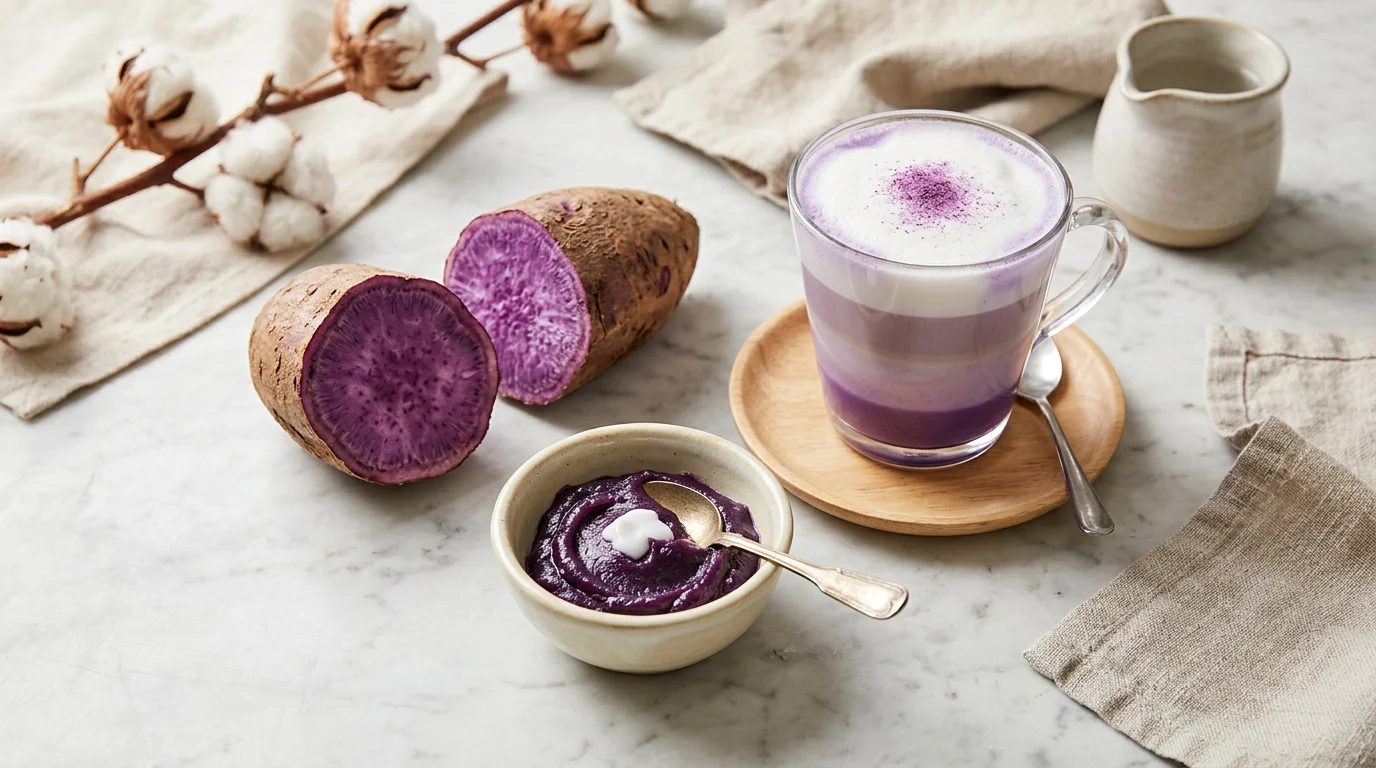
Taro vs Ube: Are They the Same?
No. Taro and ube are different plants.
Taro is Colocasia esculenta and belongs to the Araceae family. Ube is Dioscorea alata, a true yam belonging to the Dioscoreaceae family.
| Feature | Taro | Ube |
|---|---|---|
| Botanical name | Colocasia esculenta | Dioscorea alata |
| Plant type | Corm | Yam/tuber |
| Typical flesh | Pale with pink or purple flecks | Can be strongly violet |
| Taste | Mild, earthy, nutty | Mildly sweet, nutty, often described as vanilla-like |
| Uses | Savoury and sweet dishes | Especially well known in desserts |
| Same ingredient? | No | No |
The two can appear similar in colourful desserts, but they should not be treated as interchangeable ingredients.
If you want the full comparison, read our guide to what ube is and how purple yam differs from taro.
Is Taro Healthy?
Plain cooked taro is primarily a carbohydrate-rich starchy food. Research on different taro varieties shows that its corms provide starch and can contribute fibre and minerals, although nutritional composition varies between cultivars.
Whether a taro dish is particularly nutritious depends heavily on preparation.
Boiled taro served as part of a meal is nutritionally very different from deep-fried taro chips or a large taro milk tea containing sugar, creamer and tapioca pearls.
For that reason, it is better to judge the complete dish rather than assuming every food with “taro” in the name has the same nutritional value.
Is Taro Gluten-Free?
Plain taro is naturally gluten-free.
However, taro-flavoured powders, chips, desserts, sauces and drinks can contain additional ingredients. Anyone who needs to avoid gluten should check the product label and consider possible cross-contact during preparation.
Can You Eat Taro Raw?
Taro should be properly cooked before eating.
The plant naturally contains compounds including oxalates. Research on taro and related preparations shows that heat treatment can substantially reduce oxalate levels, which is one reason cooking is important.
Raw or inadequately prepared taro can cause an unpleasant irritating sensation in the mouth and throat.
How to Prepare Taro Root
Start by washing the outside to remove soil. Peel away the rough skin, then cut the flesh into pieces appropriate for your recipe.
Because raw taro can irritate the skin of some people, using gloves while peeling can make preparation more comfortable.
Once peeled, taro can be boiled, steamed, baked or added directly to dishes that will cook it thoroughly.
How to Cook Taro
The best method depends on what you want to make.
Boiling Taro
Cut peeled taro into evenly sized chunks and place them in water. Simmer until the pieces are fully tender when pierced with a fork.
Cooking time varies with the size and variety, so tenderness is a better guide than relying only on the clock.
Boiled taro can then be mashed, seasoned, added to soups or used as the base for desserts.
Baking Taro
Peeled taro can be sliced or cubed, lightly coated with oil and baked until tender inside and browned around the edges.
Baked taro works well anywhere you might otherwise serve another roasted starchy vegetable.
Steaming Taro
Steaming helps produce soft taro without adding much extra moisture. The cooked pieces can be eaten as they are or mashed for sweet and savoury recipes.
What to Do With Frozen Taro
Frozen taro is useful when fresh corms are difficult to find.
Depending on how the product was processed, it can usually be boiled, steamed or added to soups, stews and desserts. Follow the instructions on the package, particularly if the taro has been partially cooked before freezing.
Frozen grated or mashed taro can also be useful for recipes where texture matters less than flavour.
What Are Taro Chips?
Taro chips are thin slices of taro that are fried or baked until crisp.
They resemble potato chips in appearance and texture but usually have a slightly nuttier, earthier taste.
As with potato chips, their nutritional profile depends heavily on the amount of oil, salt and seasoning used.
Where Does Taro Come From?
Taro has a very long history of cultivation.
Modern botanical references place the native range of Colocasia esculenta broadly within tropical Asia, while centuries of human cultivation have spread it throughout tropical and subtropical regions around the world.
Today, taro appears in many different food traditions, which is why its name, preparation and preferred varieties can change from place to place.
Where Can You Buy Taro?
Fresh taro is commonly found in Asian grocery stores, international food markets, specialist produce shops and tropical food retailers.
Depending on availability, you may also find:
- whole fresh taro
- frozen taro chunks
- frozen grated taro
- taro flour
- taro powder
- taro chips
- taro paste
- bubble tea powder
If you are buying taro powder specifically for drinks, read the ingredient list. “Taro powder” can mean dehydrated taro, a sweetened drink mix, or a blend containing only a relatively small amount of taro.
How Do You Pronounce Taro?
Taro is commonly pronounced “TAH-roh”, although pronunciation can vary slightly between languages and regions.
Frequently Asked Questions
What is taro made of?
Fresh taro is not manufactured from other ingredients. It is the edible corm of the Colocasia esculenta plant. Taro-flavoured drinks and powders, however, can contain sugar, creamer, flavourings and colouring in addition to taro.
What is taro flavour?
“Taro flavour” generally describes the mild, creamy, earthy and slightly nutty taste associated with cooked taro. Commercial taro flavour can taste considerably sweeter and more vanilla-like.
Is taro purple?
Some taro contains purple pigmentation, but fresh taro is often mostly white or cream with coloured flecks. The bright lavender shade seen in drinks is frequently enhanced by other ingredients.
Is taro the same as ube?
No. Taro and ube are different plants with different botanical identities, appearances and flavour profiles.
Does taro tea have caffeine?
Taro itself has no caffeine. A taro tea contains caffeine when it includes a caffeinated tea base.
Is taro good for you?
Plain cooked taro can form part of a balanced diet as a source of starchy carbohydrate, fibre and minerals. Its nutritional value changes considerably when it is fried or combined with large amounts of sugar and creamer.
The Bottom Line
So, what is taro? Taro is the edible corm of Colocasia esculenta, a tropical plant with a mild, earthy, nutty flavour and a soft, starchy texture when cooked.
It is neither ube nor a potato, and fresh taro is usually far less purple than the colourful drinks associated with its name. Taro itself contains no caffeine, although taro milk tea may contain caffeine depending on its tea base.
From soups and roasted dishes to desserts and bubble tea, taro’s mild flavour and adaptable texture explain why this centuries-old ingredient continues to appear in so many different forms.