Reviewed and last updated on November 23, 2026 by Awais Ahmed, Founder & Editor-in-Chief, Urban Scope News.
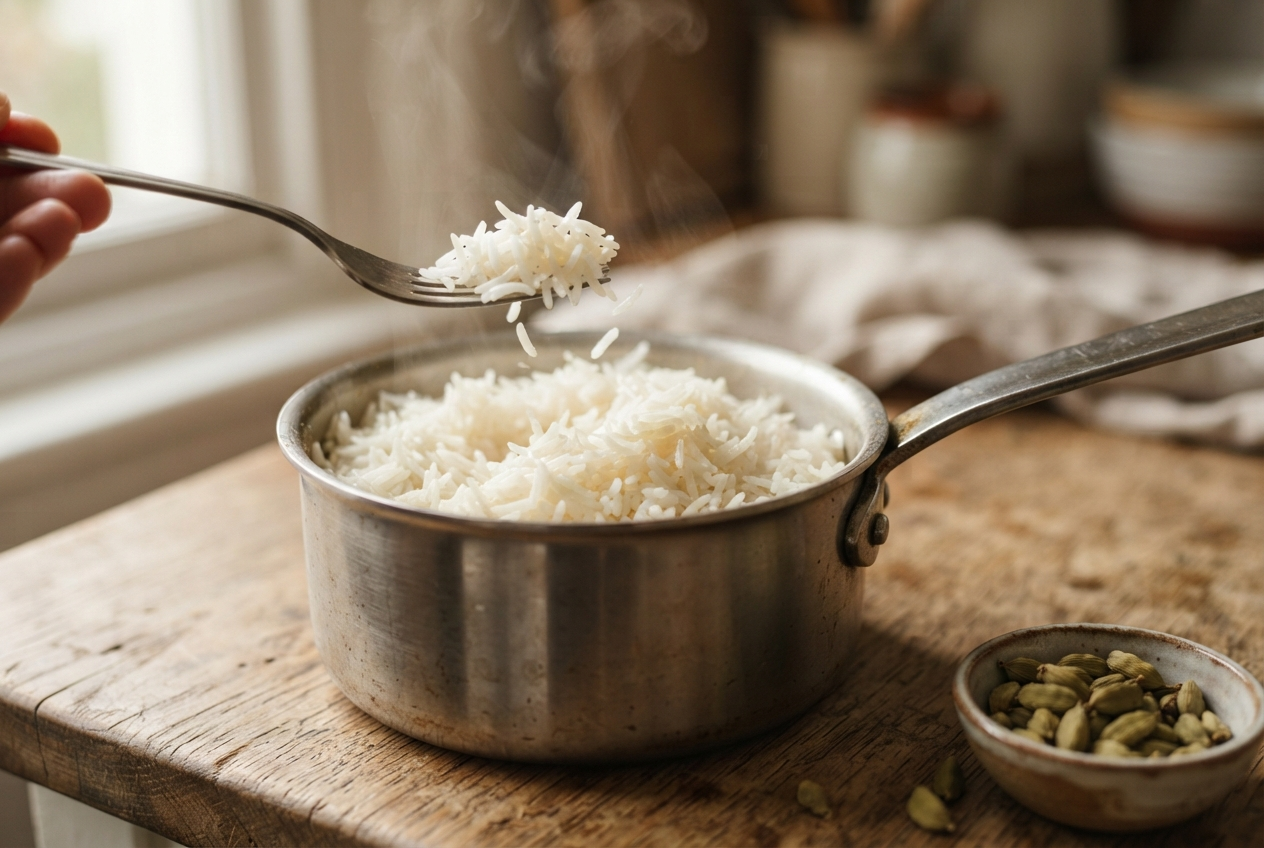
To cook basmati rice on the stove, rinse 1 cup of rice, soak it for 20 to 30 minutes and drain it well. Add 1½ cups of fresh water, bring the pot to a boil, then cover it and simmer on the lowest heat for 10 to 12 minutes. Switch off the heat and leave the lid on for another 10 minutes. Fluff the grains with a fork and serve.
That is the short version of how to cook basmati rice, and it suits most white basmati. The details still matter. Rice that skips the soak needs a little more water. A rice cooker, a pressure cooker and a microwave each call for different measurements. Leftover rice also needs careful handling, because cooked rice carries a food safety risk that many home cooks overlook.
This guide takes each method in turn, with ratios, timings and fixes for the usual problems.
Why the Water Ratio Changes From Pot to Pot
Basmati has long, slender grains that absorb water quickly and break easily. That is why it needs less water than many other rice types, and why the amount shifts with how you prepare it.
Rice that has been rinsed and soaked has already taken up some water, so 1 part rice to 1½ parts water works well. Rice that goes straight from the sieve to the pan usually needs 1½ to 1¾ parts. Older, drier grain drinks more as well. A wide pan, a loose lid or a fierce flame lets steam escape, so the rice may need a splash extra.
Measure the rice and the water with the same cup. The size of the cup does not matter, because the ratio is what counts. If you prefer metric, a 180 ml rice cup holds about 150 g of rice, and that amount takes about 270 ml of water.
| Uncooked basmati rice | Water for soaked, drained rice |
|---|---|
| ½ cup | ¾ cup |
| 1 cup | 1½ cups |
| 1½ cups | 2¼ cups |
| 2 cups | 3 cups |
| 3 cups | 4½ cups |
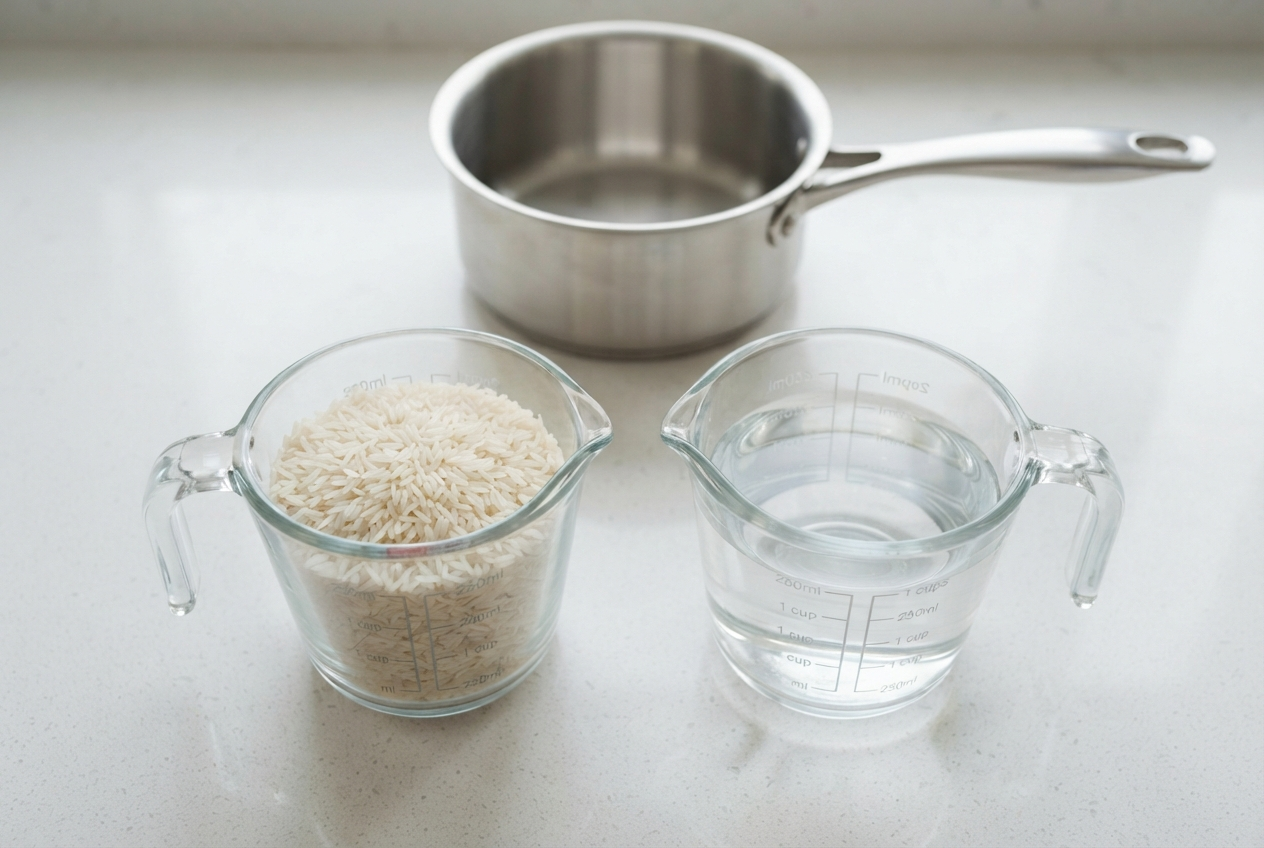
Treat the table as a starting point, not a rule. Brands differ, and the packet may suggest its own amount. Small batches also cook better in a small pan, because rice in a very large pan loses water before the grains soften. Let your first batch show whether the next one needs a tablespoon or two more or less.
Stovetop Basmati Rice, Step by Step
For about three side portions, you need 1 cup of white basmati rice, 1½ cups of water, half a teaspoon of salt and, if you like, a teaspoon of butter or oil. A saucepan with a tight lid matters more than any other equipment. A fine sieve and a fork complete the kit.
Rinse and soak the grains
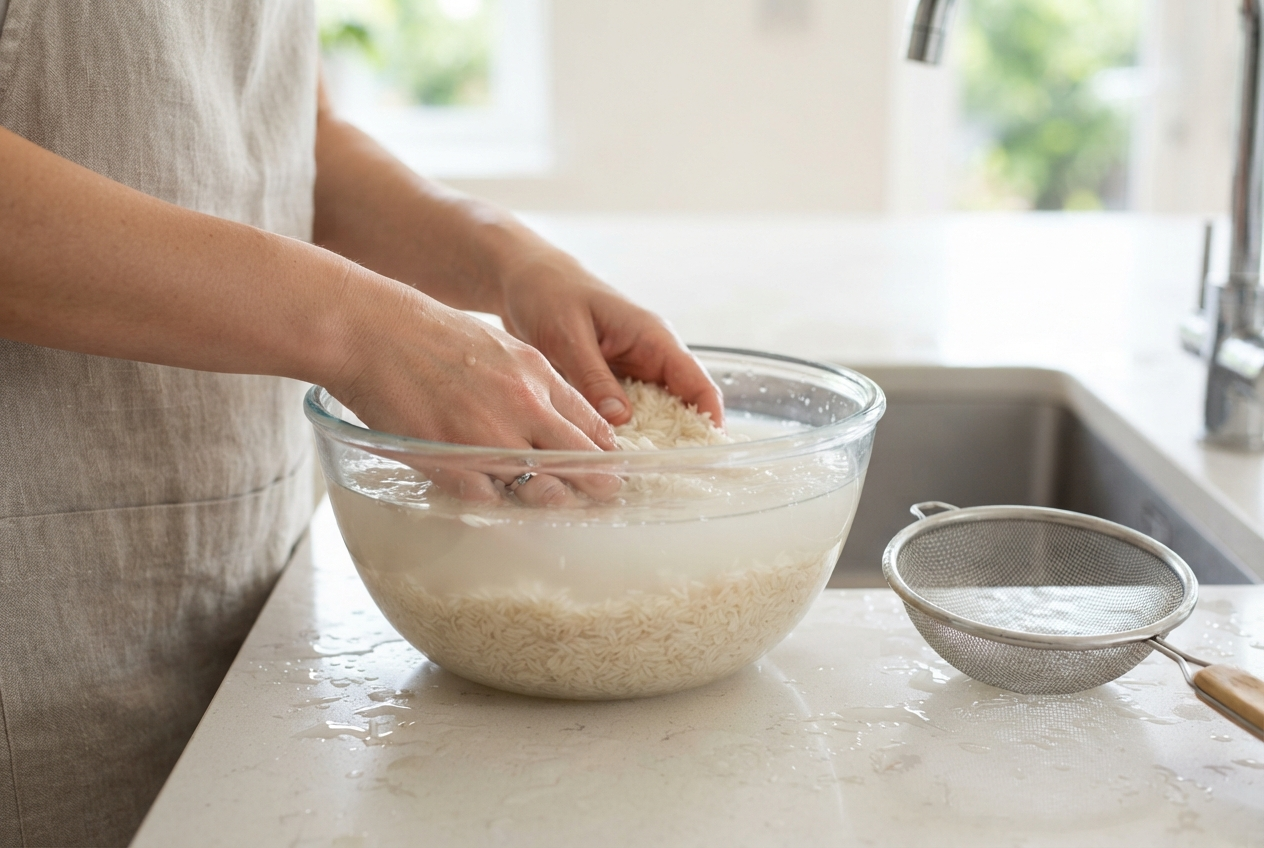
Put the rice in a bowl, cover it with cold water and swish it gently with your fingers. The water turns cloudy as loose starch washes off. Pour it away and repeat. The water never runs perfectly clear, and three or four rinses is normally enough to avoid a gluey texture.
Next, cover the rice with fresh water and leave it for 20 to 30 minutes. Soaking is optional. It helps the grains swell evenly and shortens the cooking time. It also suits fragrant rice, because less time on the heat keeps more of the aroma. Do not soak for much longer than 30 minutes, since the grains turn fragile and snap during cooking.
Drain the rice in a sieve and shake off the excess water. Leftover water changes your ratio, so give it a few minutes.
Simmer, then rest
Tip the drained rice into the pan with 1½ cups of water, the salt and the butter or oil. Bring it to a boil over medium-high heat and give it one gentle stir. Then stop stirring, because extra movement breaks the grains and releases more starch.
As soon as the water boils, turn the heat to its lowest setting and put the lid on. Cook for 10 to 12 minutes without lifting it. Steam does the work, and every peek lets some escape. Rice that skipped the soak needs closer to 12 to 15 minutes.
Turn off the heat and leave the lid on for 10 minutes. This rest lets moisture spread through the grains. Without it, the top layer can stay damp while the bottom turns firm.
Fluff and serve
Lift the lid and run a fork around the edge of the pan. Lift the grains instead of pressing them down. Taste one. It should be tender all the way through, with no chalky centre, and it should hold its shape.
If the rice still has bite and the pan has dried out, sprinkle in two or three tablespoons of hot water, cover the pan and give it five more minutes on the lowest heat. One cup of dry rice makes about three cups of cooked rice.
How Long Basmati Rice Takes to Cook
White basmati takes about 10 to 15 minutes at a gentle simmer, plus a 10 minute rest. Soaked rice sits at the shorter end of that range. Start the clock when the pot boils and the lid goes on, not when the pan first meets the heat.
A timer only gets you close, so taste a grain near the end. The rice is ready when it is soft throughout but still firm enough to separate.
Brown basmati keeps its bran layer, so it needs more water and far more time. A common starting point is about 2 cups of water per cup of rice and 20 to 25 minutes of simmering, followed by a rest. Packets vary, so check yours.
Basmati Rice in a Rice Cooker
People use the word cooker for two different machines. Some mean an electric rice cooker, and others mean a pressure cooker. This section covers the first, and the next covers the second.
Measure the rice with the cup that came with your machine. Most hold 180 ml, which is about 150 g of rice. Rinse the rice, drain it and put it in the inner pot. Then fill the pot with water to the line that matches the number of cups of rice. If you soaked and drained the rice, stop just below the line, because the grains have already absorbed some water.
Select the white rice setting, or a basmati or aromatic setting if your model has one. Leave the lid closed until the cooker clicks over to keep-warm. Then let the rice rest for 5 to 10 minutes before you fluff it with a rice paddle.
Do not treat keep-warm as a storage method. Serve the rice soon after it finishes, and chill any leftovers as described in the safety section below.
Basmati Rice in a Pressure Cooker
A sealed pot loses almost no steam, so a pressure cooker needs much less water than an open pan. For an electric pressure cooker, a common starting point is 1 cup of rinsed rice to 1 cup of water. Use 1¼ cups if you like softer grains.
Add a pinch of salt, seal the lid and cook on high pressure for 6 minutes. Let the pressure drop naturally for 10 minutes, then release what is left. Open the lid carefully, fluff the rice and serve. Brown basmati needs roughly 15 to 22 minutes at high pressure, depending on the model.
Stovetop pressure cookers behave differently. Their pressure levels and whistle counts vary, and every model has a minimum amount of liquid it needs to work safely. Follow the maker’s chart for rice, and never force the lid while the pot is still under pressure.
Basmati Rice in the Microwave
The microwave is the least forgiving method, because wattage and bowl shape change the result. It works best for a single cup of rice at a time.
Rinse 1 cup of rice and put it in a large, deep microwave-safe bowl with 2 cups of water. Choose a bowl that is much taller than the water level, since the water bubbles up as it heats. Cover it with a lid or plate, leaving a small vent. A widely used pack method is 5 minutes on high, then 15 minutes at 50% power, followed by 5 minutes of standing time with the cover on.
Take care when you lift the cover, because hot steam escapes quickly. If the grains are still hard, add a little hot water and heat for a few more minutes.
Indian-Style Basmati Rice and Rice to Serve With Chicken
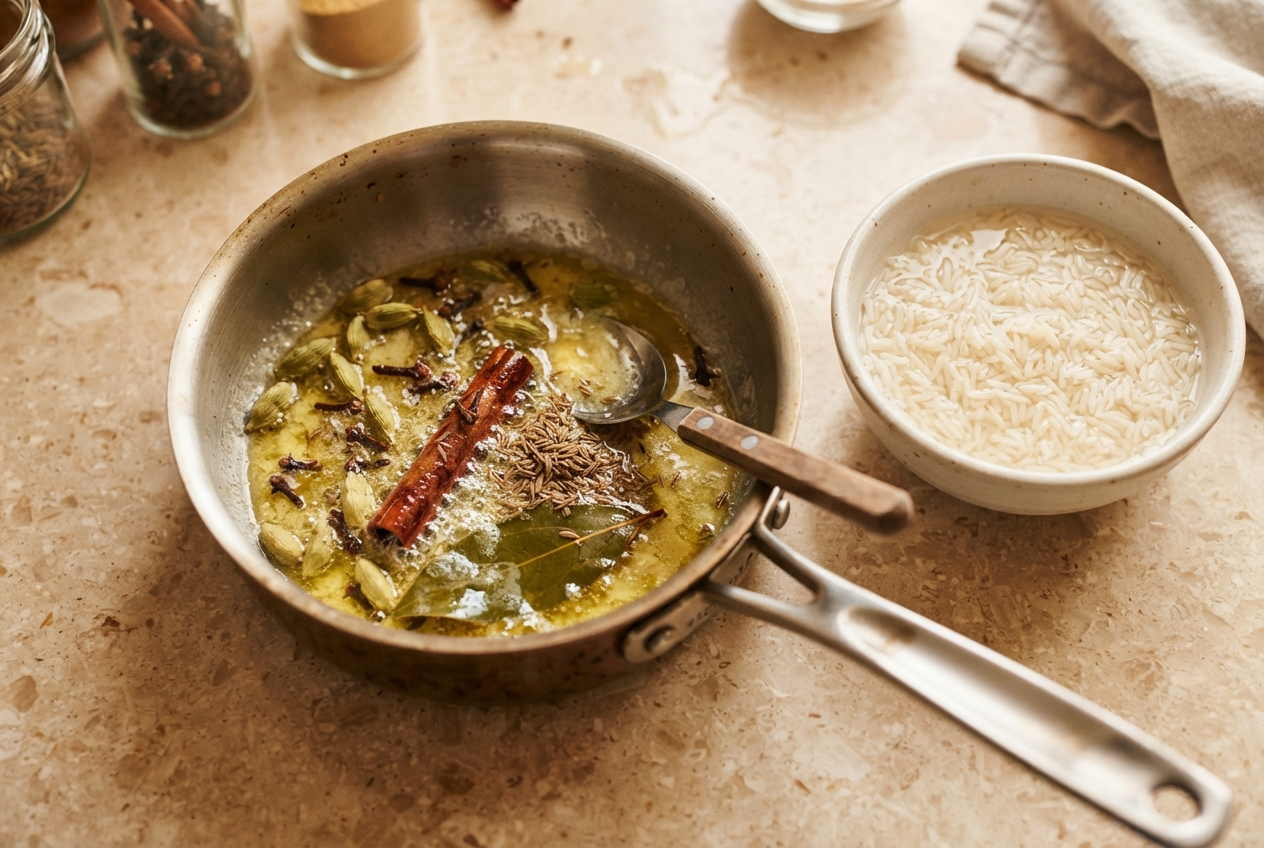
Indian-style basmati follows the same method, with one extra step at the start that builds flavour. Rinse and soak the rice as usual. Heat a tablespoon of ghee or oil in the pan over medium heat. Add two green cardamom pods, two cloves, a small cinnamon stick, half a teaspoon of cumin seeds and, if you like, a bay leaf. Let them sizzle for 30 to 60 seconds until they smell fragrant.
Tip in the drained rice and turn it gently for a minute, so each grain picks up a little fat. Add 1½ cups of water and half a teaspoon of salt, bring it to a boil, then cover and cook on low for 10 to 12 minutes. Rest the rice for 10 minutes, fluff it and finish with chopped coriander or mint. The whole spices stay in the pot, and diners simply push them aside.
Plain basmati is the usual partner for chicken curry, tikka or grilled chicken, and it needs no change to the method. Cooking chicken and rice together in one pot, as in pulao or biryani, is a different job. The meat and the grains need different amounts of time, so follow a recipe written for that dish instead of adapting the plain method. In either case, cook chicken until the thickest part reaches 75°C (167°F) and the juices run clear.
Cooking Basmati for Fried Rice
Basmati works well in fried rice because its grains stay separate. Cook it as usual, but check a minute or two early and stop while it is just tender, since it softens a little more in the pan.
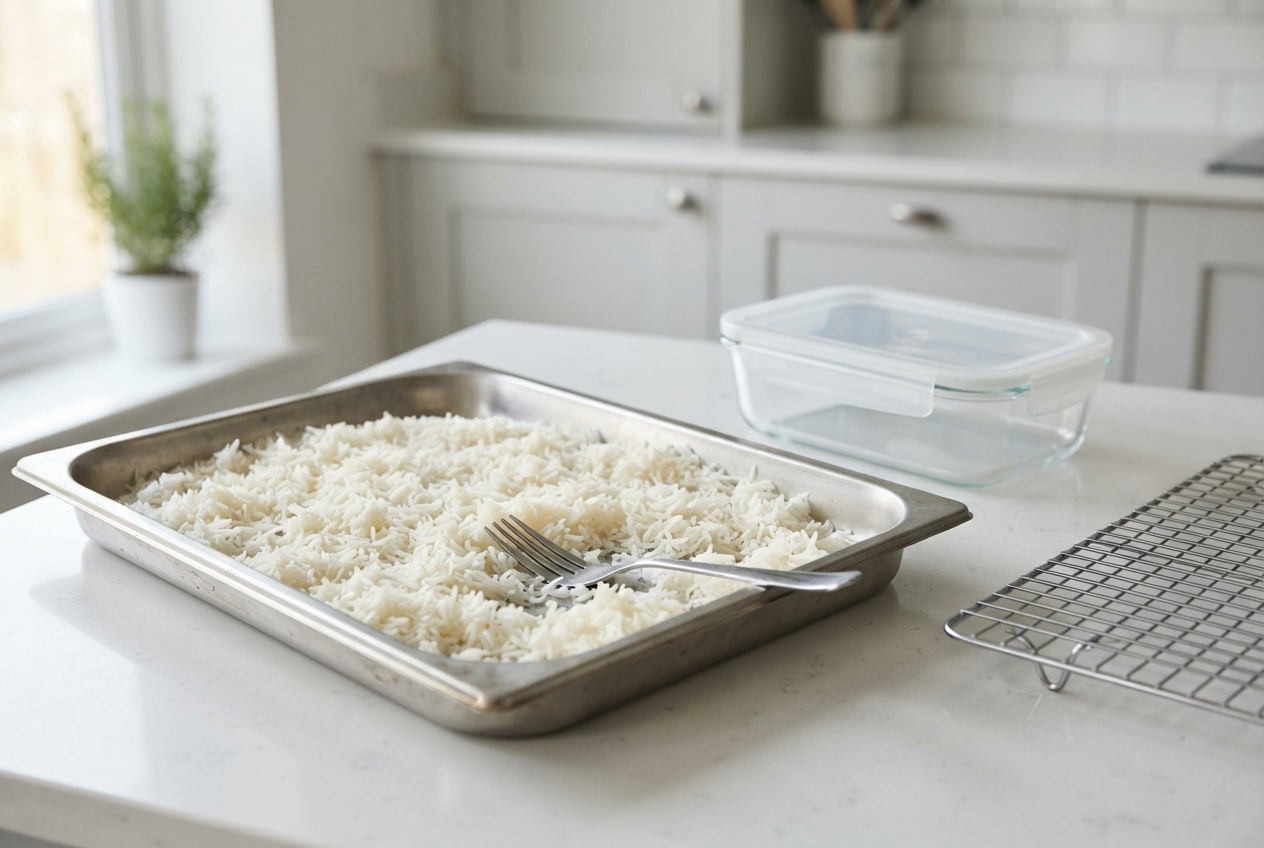
Cool it fast. Spread the rice on a tray or a wide dish and let the steam escape for a few minutes. Then cover it and chill it within an hour, and use it the next day at the latest. Cold rice has a drier, firmer surface, so it stir-fries without clumping.
Heat the oil until it is very hot, break up the rice with a spatula and add your vegetables and seasoning. Cook any egg or chicken all the way through, and make sure the finished dish is steaming hot. Do not reheat fried rice a second time.
How Much Basmati Rice Per Person
Plan on about 60 to 75 g of uncooked rice per person as a side dish. When rice is the centre of the plate, go up to roughly 100 g. One cup of dry rice makes about three cups of cooked rice, which feeds around three people as a side.
Adjust for the rest of the meal. A table with two curries, a lentil dish and a vegetable side needs less rice per head than a simple bowl of rice and sauce. Cook only what you expect to eat, because a smaller pot is easier to cool safely if any is left over.
Why Basmati Turns Out Sticky, Hard or Broken
Sticky, gluey rice usually has one of three causes: too much water, too little rinsing or too much stirring. Measure with the same cup, rinse until the water is mostly clear and leave the spoon alone after the first stir. Rice that has already turned gluey cannot be rescued, but you can still serve it as a base for a saucy dish.
Hard or chalky grains mean the rice ran out of water or steam. The heat may have been too high, the lid may have been loose or you may have lifted it too often. Add a few tablespoons of hot water, cover the pan tightly and give it another five minutes.
Broken grains come from long soaking, vigorous stirring or rough fluffing. Keep the soak under 30 minutes and lift the grains with a fork instead of stirring them.
A burnt base points to heat that was too high or a thin pan. Use the lowest flame once the water boils. A heavy-bottomed pan spreads the heat more evenly.
Storing and Reheating Cooked Rice Safely
Uncooked rice often carries spores of Bacillus cereus, a bacterium linked to food poisoning. The spores survive cooking. If cooked rice sits at room temperature, they wake up, multiply and release a toxin. Reheating does not destroy that toxin, and rice that carries it looks and smells normal. The risk comes from how rice is stored, not from warming it up again.
Serve rice soon after it finishes cooking. For leftovers, divide the rice into shallow containers so it cools quickly, and get it into the fridge within an hour. The Food Standards Agency’s advice on reheating rice says to keep it in the fridge for no more than one day, and to make sure it is steaming hot all the way through when you reheat it. Reheat it once only.
You can freeze rice for longer storage. Cool it quickly first, freeze it in portions and heat each portion until it is steaming hot throughout.
Testing the Ratio With Your Own Rice
No single measurement suits every brand, pan and stove. Use the ratios above as a starting point, then make a note of how your first pot turned out. If the grains were firm, add a tablespoon or two of water next time. If they were soft or sticky, take a little away.
After two or three batches, you will know exactly what your rice and your pan need. From then on, fluffy basmati stops being a gamble and becomes routine.